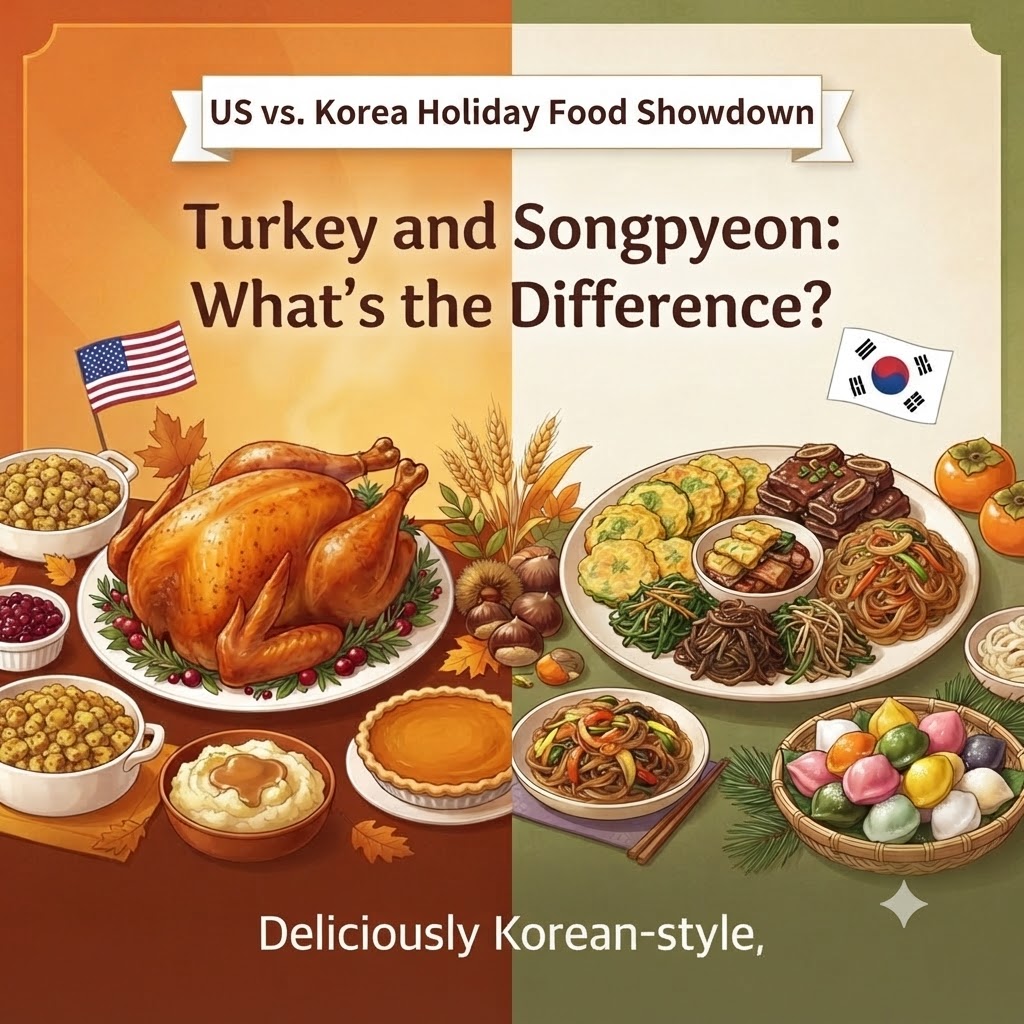
American Thanksgiving vs. Korean Chuseok | Why Do People Eat Turkey? Tips to Enjoy It with a Korean Twist
“Do Americans eat turkey instead of songpyeon for Chuseok?”
Have you ever wondered about this?
While Korea has Chuseok, the U.S. has Thanksgiving.
Both holidays are quite similar in that families gather in one place, set up a generous spread of food, and enjoy a meal together.
However, the foods that end up on the table are completely different.
For Korean Chuseok, you will find songpyeon, jeon, galbi-jjim, japchae, seasoned vegetables (namul), and fruits, whereas the center of an American Thanksgiving table almost always features one staple dish.
However, it might feel a bit unfamiliar to Koreans.
“Is turkey really that good?”
“How is it different from chicken?”
“Why do Americans roast a whole, massive turkey?”
Today, we will compare American Thanksgiving and Korean Chuseok foods while exploring everything from turkey to stuffing, gravy, cranberry sauce, and pumpkin pie—dishes that might be a bit foreign in Korea.
(US) Thanksgiving vs. (Korea) Chuseok: What Do They Have in Common?
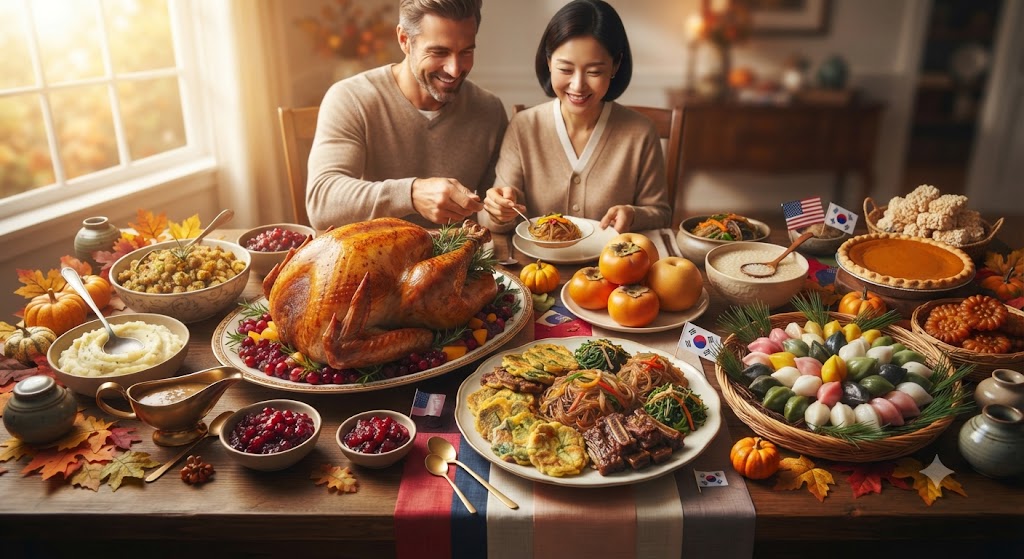
First, what's interesting is the nature of both holidays.
American Thanksgiving has generally established itself as a holiday to share a meal with family and express gratitude.
Similarly, Korea's Chuseok is an important holiday to look back on a year of harvest and abundance while gathering with family and relatives.
The National Folk Museum of Korea describes Chuseok as a holiday tied to the rich autumn harvest, introducing the tradition of offering food and liquor made from newly harvested crops to ancestors.
| (US) Thanksgiving | (Korea) Chuseok |
|---|---|
| Turkey | Songpyeon |
| Stuffing | Jeon · Japchae |
| Mashed Potatoes | Galbi-jjim · Namul |
| Gravy | Soy Sauce Seasoning · Broth Dishes |
| Cranberry Sauce | Fruit · Sikhye |
| Pumpkin Pie | Songpyeon · Yakgwa · Hangwa |
Keep in mind that this isn't a strict one-to-one mapping of identical foods, but rather a comparison of representative dishes commonly found in each holiday.
🦃 The Star of American Thanksgiving: Turkey
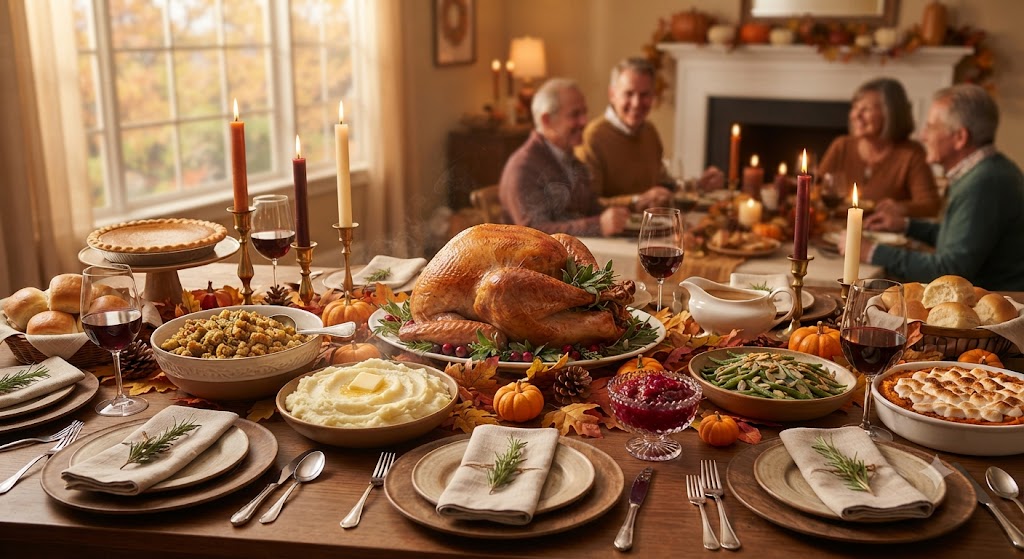
When you think of American Thanksgiving, the first dish that comes to mind is undoubtedly Roast Turkey.
Interestingly, the giant turkey we see in movies and American TV shows wasn't always a fixed staple of Thanksgiving from the very beginning.
According to Smithsonian records, the foods reliably documented in connection with the so-called first Thanksgiving in 1621 looked quite different from today's Thanksgiving table. While wild fowl, venison, and corn were known to be present, we cannot assume that today's common mashed potatoes or pumpkin pie were served back then.
Today, turkey, potatoes, pumpkin, corn, and cranberries have firmly cemented themselves as iconic symbols of Thanksgiving. The Smithsonian explains how many of these ingredients integrated into American food culture through interactions and exchanges with Native American communities.
The Thanksgiving turkey is closer to a symbol of the modern American holiday table than just a simple 'meat dish'.
😋 But Is Turkey Actually Delicious?
Here is something Koreans often say when they try turkey for the first time:
“It's drier than I expected, right?”
That's right.
Because turkeys are large and different parts cook at varying rates, simply roasting one for a long time doesn't automatically make it delicious.
The breast meat, in particular, is relatively low in fat and can easily become dry if overcooked.
Therefore, the secret to enjoying turkey at Thanksgiving is the combination of inherent meat flavor + juiciness + sauce.
🧈 The Easiest Way to Keep Turkey Moist
- Thaw the turkey completely.
- Pat the surface completely dry.
- Season generously with salt and pepper.
- Mix minced garlic and herbs into butter, and slide it under the skin of the turkey.
- Rub a thin layer of butter over the outer skin as well.
- Initially use foil to prevent the breast meat from drying out excessively, then remove the foil near the end to crisp up the skin to a golden brown.
In particular, the combination of butter + garlic + pepper + rosemary or thyme pairs wonderfully with the clean, savory flavor of turkey.
Instead of sticking strictly to just butter and herbs,
try adding depth with a mix of soy sauce, garlic, honey or oligosaccharide, pepper, and a touch of sesame oil.
While it's not a traditional Thanksgiving method, it adds a savory, Korean bulgogi-style umami punch to the mild turkey meat.
🌡️ Temperature Matters More Than Time
Roasting times for turkeys vary significantly based on their size.
Therefore, rather than thinking “just bake it for X hours and you're done,” checking the internal temperature is crucial.
The USDA recommends checking the thickest part of the breast, thigh, and wing joints to ensure the internal temperature reaches at least 165°F (approx. 74°C).
Also, it's essential not to carve it the moment it comes out of the oven.
Letting it rest for about 20 minutes allows the juices to redistribute, making it much easier to slice.
🍞 What on Earth Is Stuffing?
If you look at pictures of Thanksgiving, you'll often see what looks like bread stuffed inside the turkey.
This is Stuffing.
True to its name, it is traditionally known as a dish cooked inside the turkey cavity.
It is typically made by cutting bread into small pieces and moistening them with a mixture of chopped onions, celery, herbs, butter, and broth.
If you had to describe the taste, it's close to “a warm, moist, butter-infused herbal bread dish.”
Stuffing might feel surprisingly approachable.
Well-made stuffing combines the simplicity of bread with the flavors of onion, butter, herbs, and broth, feeling much like a warm side dish meant to be eaten alongside meat.
However, due to food safety concerns, the USDA recommends cooking stuffing in a separate casserole dish rather than inside the turkey. If you do stuff it inside, the center of the stuffing must also reach 165°F (approx. 74°C).
🥔 Mashed Potatoes + Gravy: An Indispensable Combo on the American Holiday Table
Just as galbi-jjim or japchae is a must-have for Korean Chuseok, Mashed Potatoes are almost always present at American Thanksgiving.
It's a dish made by boiling potatoes and mashing them smooth with butter, milk, or cream.
However, eating them plain can feel a bit underwhelming.
That's where Gravy comes in.
Made using the juices and broth rendered from roasting the turkey, this rich, savory sauce is generously drizzled over the mound of mashed potatoes.
+
🥣 Gravy
+
🦃 Turkey
= The Ultimate Thanksgiving Plate
It's slightly different from the Korean style of eating rice and side dishes separately.
When you mix smooth potatoes with savory, rich gravy and pair it with turkey, it creates a much richer, rounded flavor profile.
🍒 Why Eat Sweet Cranberry Sauce Next to Meat?
For Koreans encountering Thanksgiving food for the first time, this is one of the most unfamiliar combinations.
“Why is there jam-like stuff sitting next to the meat?”
That is Cranberry Sauce.
Because raw cranberries are quite tart, they are cooked with sugar and other ingredients to turn them into a sweet and tangy sauce.
Since turkey is relatively lean and has a firm texture, the sweet-and-sour punch of cranberry sauce refreshes the palate.
Think of it as similar to the 'role' of serving tangy pickled radish salad (mu-saengchae) or jangajji when eating galbi-jjim or heavy meat dishes.
While the taste itself is entirely different, it serves to cut through the richness of heavy meats and brighten up the meal.
🎃 How Is Pumpkin Pie Different from Korean Songpyeon?
The quintessential Thanksgiving dessert is Pumpkin Pie.
It's made by baking a spiced pumpkin filling—blended with mashed pumpkin, eggs, milk or cream, and sugar—inside a pastry crust.
Because it often features warm spices like cinnamon and nutmeg, it offers a completely different flavor profile from Korean sweet pumpkin dishes.
In short, if songpyeon is the representative dessert of Korean Chuseok, pumpkin pie plays that exact role for American Thanksgiving.
That said, historically speaking, today's Thanksgiving menu didn't stay completely unchanged since 1621. The Smithsonian notes that we cannot definitively state today's common pumpkin pie was present on that original table.
🌕 So, What Is the Representative Dish of Korean Chuseok?
If America has turkey, Korea has Songpyeon.
Songpyeon is a staple food symbolizing Chuseok: half-moon-shaped rice cakes stuffed with fillings like beans, sesame seeds, or chestnuts, steamed over a bed of fresh pine needles.
Why a half-moon shape, you ask?
While there are various explanations and folk interpretations regarding its shape, the songpyeon we know carries deep symbolism representing the abundance of Chuseok and the tradition of families making them together.
In particular, the process of family members shaping songpyeon together is a crucial part of the Chuseok food culture. Korea.net highlights this collaborative activity as a symbol of family harmony and cooperation.
🥢 Why Are There So Many Dishes for Chuseok?
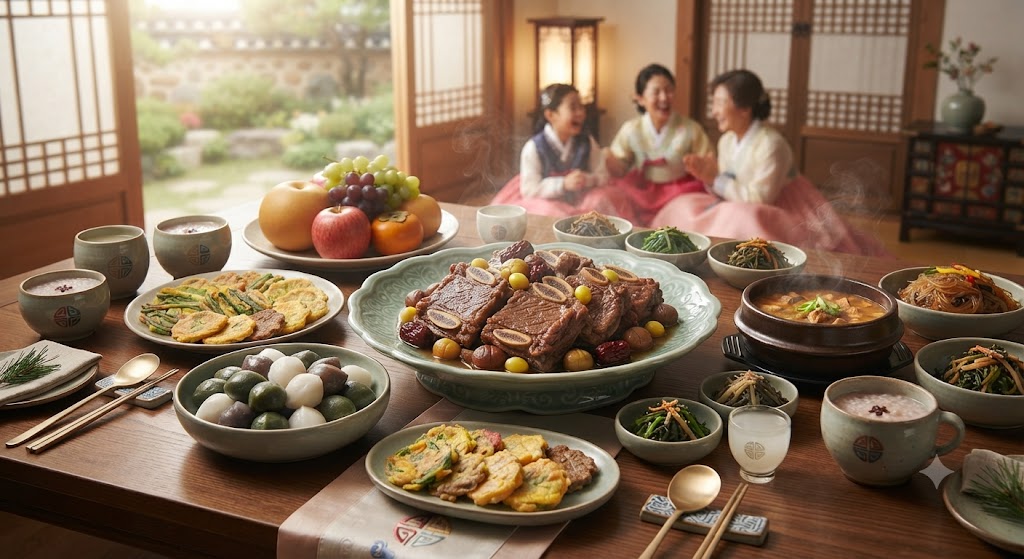
This is where an interesting contrast arises between Thanksgiving and Chuseok.
American Thanksgiving usually focuses on one massive turkey at the center of the table, complemented by potatoes, stuffing, vegetables, sauces, and pies clustered around it.
Conversely, Korean Chuseok leans heavily toward a spread featuring a wide variety of different dishes all at once rather than just one focal point.
| Dish | Role |
|---|---|
| Songpyeon | The iconic rice cake representing Chuseok |
| Jeon | Pan-fried battered meats, fish, or vegetables |
| Galbi-jjim | Tender, braised short ribs |
| Japchae | Stir-fried glass noodles with vegetables and meat |
| Namul | Various seasoned mountain greens and vegetables |
| Sikhye & Fruits | Sweet post-meal refreshments |
Traditional ancestral ritual tables (charyesang) also feature a combination of seasonal foods, songpyeon, fruits, meats, fish, vegetable dishes, and alcohol. However, exact spreads vary depending on the region and household.
American and Korean Holiday Foods: Surprisingly Similarities
On the surface, turkeys and songpyeon seem to have nothing to do with each other.
Yet, if you look closer, you'll find a charming common thread.
Families gather
to share a big roast turkey.
Families gather
to share songpyeon and various holiday dishes.
Ultimately, what matters more than the differences in individual foods is the cultural core: “gathering with family during the harvest season to share an abundant meal.”
🍽️ What If You Wanted to Set Up a Thanksgiving Table in Korea?
If prepping an entire whole turkey feels overwhelming, you don't have to go that far.
If you want to capture that Thanksgiving vibe in Korea, opting for more manageable cuts like turkey breasts or turkey legs works wonderfully.
Recommended Menu Combo
- 🦃 Herb Butter Roast Turkey
- 🥔 Butter Mashed Potatoes
- 🥣 Gravy Sauce
- 🍞 Herb Stuffing
- 🍒 Cranberry Sauce
- 🌽 Roasted Corn
- 🎃 Pumpkin Pie
And mixing in a bit of Korean flair makes it even more fun.
Turkey + Garlic Butter
Turkey + Soy-Garlic Glaze
Mashed Potatoes + Kimchi
Turkey + Tangy Mu-Saengchae
Of course, this isn't a traditional American Thanksgiving spread, but there's a unique joy in blending different culinary cultures to craft a brand-new holiday feast.
⚠️ Things to Keep in Mind When Cooking Turkey
When cooking a large turkey at home for the first time, flavor is important, but safety always comes first.
- Thaw the turkey completely before cooking.
- Roate it at an oven temperature of at least 325°F (approx. 163°C).
- Don't just rely on cooking time; verify the internal temperature with a food thermometer.
- The safe minimum internal temperature for turkey is 165°F (approx. 74°C).
- If you stuff the turkey, the center of the stuffing must also reach 165°F.
- Letting it rest for about 20 minutes after roasting makes carving easier and keeps the juices locked in.
The USDA likewise recommends cooking stuffing in a separate dish rather than stuffing it inside a whole turkey.
🎯 Bottom Line: How Do Thanksgiving and Chuseok Differ?
| Category | (US) Thanksgiving | (Korea) Chuseok |
|---|---|---|
| Representative Image | 🦃 Turkey | 🌕 Songpyeon |
| Main Dish | Turkey | Songpyeon |
| Sides | Stuffing, Potato, Gravy | Jeon, Japchae, Namul, Galbi-jjim |
| Dessert | Pumpkin Pie | Songpyeon, Yakgwa, Hangwa, Fruits |
| Core Theme | Gratitude & Family | Harvest · Gratitude · Family |
🍂 Wrapping Up
When looking at an American Thanksgiving table, the turkey naturally catches your eye first.
To Koreans, a massive turkey might seem unfamiliar; conversely, to Americans, a Korean Chuseok spread piled high with songpyeon and jeon might look equally foreign.
Yet, if you step back a bit, a fascinating commonality emerges.
Giving thanks for a good harvest, gathering with family, and enjoying a richer-than-usual meal together.
Ultimately, holiday food isn't just about 'what you eat.'
Whether it's a whole roast turkey or a tiny, half-moon-shaped songpyeon, it's the food that anchors our memories of time spent with family.
🔎 Frequently Asked Questions (FAQ)
Q. Do people always eat turkey on Thanksgiving?
While it's the signature traditional dish, not every household serves the exact same menu. Thanksgiving food traditions vary widely by region and family preference.
Q. Does turkey taste similar to chicken?
They are similar in that they are both lean poultry, but their textures and flavors differ based on size and cuts. The breast meat, in particular, can easily feel dry if overcooked, making temperature management crucial.
Q. What is the signature Thanksgiving dessert?
One of the most iconic desserts is pumpkin pie. Because it's typically made by blending pumpkin with spices like cinnamon, it offers a distinct flavor profile from Korean sweet pumpkin porridge or sweet pumpkin desserts.
Q. What is the representative food of Korean Chuseok?
The most iconic food is songpyeon. Made with newly harvested grains, it is the definitive half-moon-shaped rice cake of Chuseok.
※ The historical and cultural content in this post was compiled referencing materials from the Smithsonian, USDA, Korea.net, and the National Folk Museum of Korea. Holiday food selections and cooking methods may vary by region and household.
#Songpyeon #SongpyeonOrigins #ChuseokOrigins #PumpkinPie #Stuffing #Gravy #CranberrySauce #AmericanHolidays #KoreanHolidays #HolidayFood #WorldFoodCulture
Related Posts You Might Like:
10 Times Tastier Than Chuseok Pollack Jeon: Red Cod Fillet Pancake
10 Times Tastier Than Chuseok Pollack Jeon: Red Cod Fillet Pancakes (Hongmegisal Jeon)|Why Once You Try It, It's Hard to Go Ba
10 Times Tastier Than Chuseok Pollack Jeon: Red Cod Fillet Pancakes (Hongmegisal Jeon)|Why Once You Try It, It's Hard to Go Back to Pollack Jeon“Of course, pollack jeon is an absolute must for the holidays!”I used to think that way, too.Every Chuseok
zoomcook.co.kr


