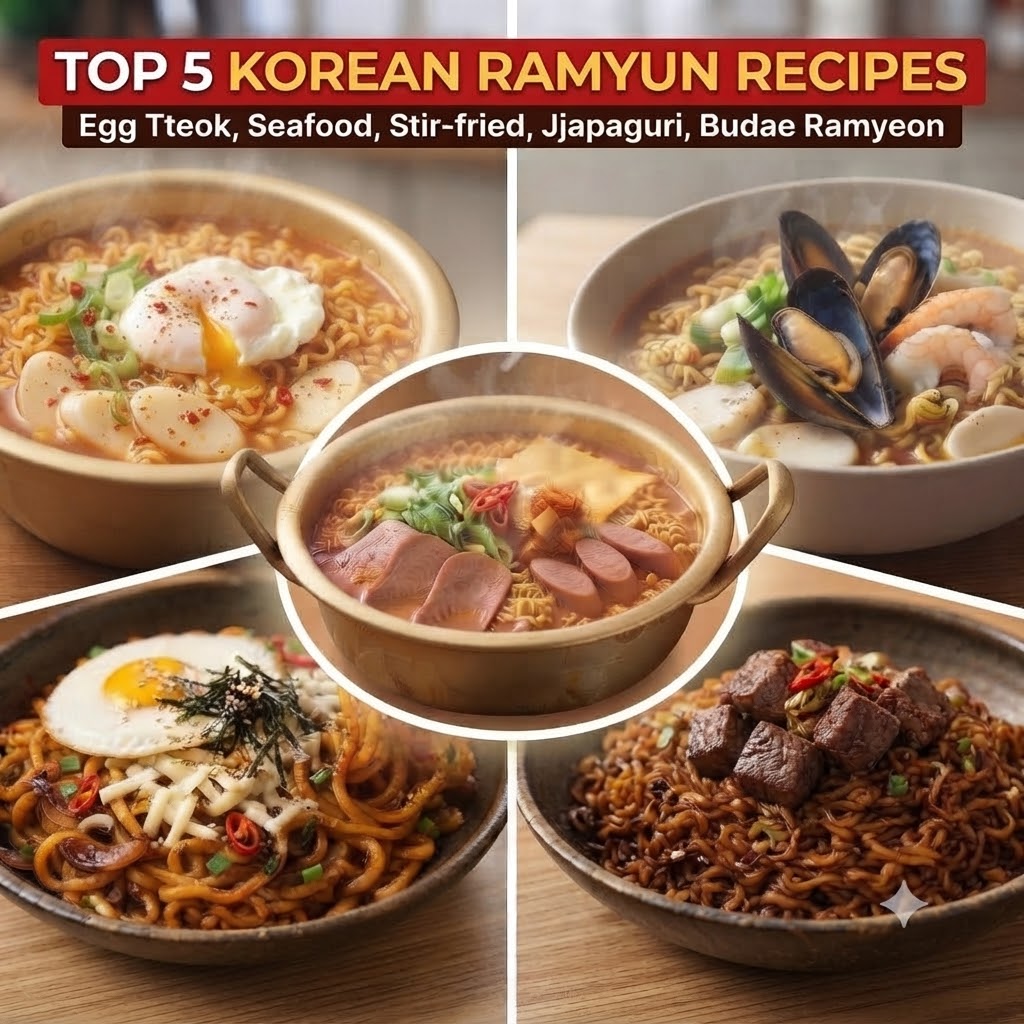
Top 5 Korean Ramyeon Upgrade Recipes
Authentic Korean Ramyeon Culture Every Foreigner Must Try
When foreign visitors plan a trip to Korea, iconic foods like Samgyeopsal (grilled pork belly), Korean fried chicken, Tteokbokki (spicy rice cakes), and Kimchi stew are always at the top of the list.
However, if you ask local Koreans, "What do you actually eat most frequently?", one of the most common answers is surprisingly Ramyeon (instant noodles).
In Korea, ramyeon is far more than just a quick, basic instant meal.
It is a comforting dish that accompanies people through exhausting days, rainy afternoons, camping trips, travels with friends, and even late-night study sessions for exams.
That is why almost every Korean has their own signature ramyeon recipe.
From dropping in a single egg to layering melted cheese, or adding savory ham and tangy kimchi—
These small touches transform an ordinary package of instant noodles into an entirely different culinary experience.
In this post, we introduce the Top 5 National Ramyeon Upgrade Recipes that Koreans have loved and perfected over generations.
If you are planning a trip to Korea, add these dishes to your bucket list even before famous restaurants—you will never regret it.
Why Do Koreans Customize Their Ramyeon?
While Koreans often enjoy plain ramyeon straight out of the pot, everyone knows that adding a few common household ingredients makes it infinitely more delicious.
Leftover green onions, kimchi, eggs, cheese, luncheon meat, rice cakes, or bean sprouts sitting in the refrigerator—
When these ingredients meet ramyeon, an entirely new masterpiece is born.
In fact, there is a popular saying in Korea: "Ramyeon is a proper meal/cooking."
This is also what surprises international visitors the most when they visit Korea.
"You put cheese in ramyeon?"
"You eat it together with kimchi?"
"Even luncheon meat?"
Yet, once people taste these combinations, almost everyone says the exact same thing:
"It's hard to ever go back to plain ramyeon."
🥉 BEST 5 Ramyeon with Egg and Rice Cakes ( 계란떡라면 )
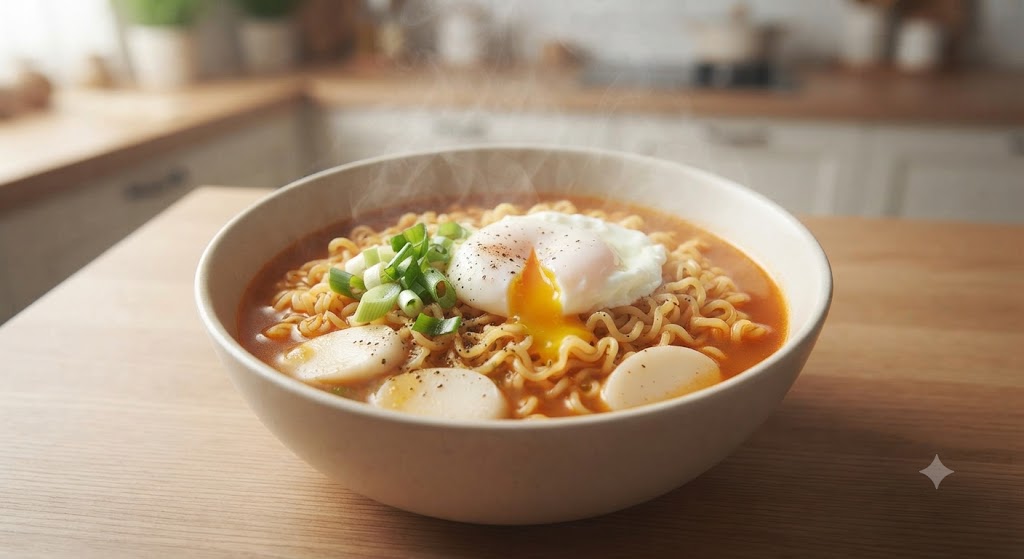
This is the ultimate, fuss-free combination that anyone can easily make.
In Korea, almost every household keeps a bag of sliced rice cake (tteokguk-tteok) in their freezer.
Therefore, tossing a handful of rice cakes into boiling ramyeon is second nature.
Add a fresh egg to the mix, and you have a thoroughly satisfying and hearty meal.
Ingredients Needed
- 1 package of ramyeon
- 1 handful of sliced rice cakes (tteok)
- 1 egg
- A small amount of green onion
- A pinch of black pepper
Secret to Making It Delicious
The rice cakes should be added right from the start so they can fully absorb the flavorful broth.
Drop the egg in toward the end and cook for only 30 to 40 seconds; the gently melting yolk will enrich the soup with a deep, velvety texture.
Most people prefer dropping the egg in without whisking to keep it semi-soft. Bursting the rich yolk and eating it coated on the noodles delivers an incredible nutty and savory flavor.
🏅 BEST 4 Seafood Ramyeon ( 해물라면 )
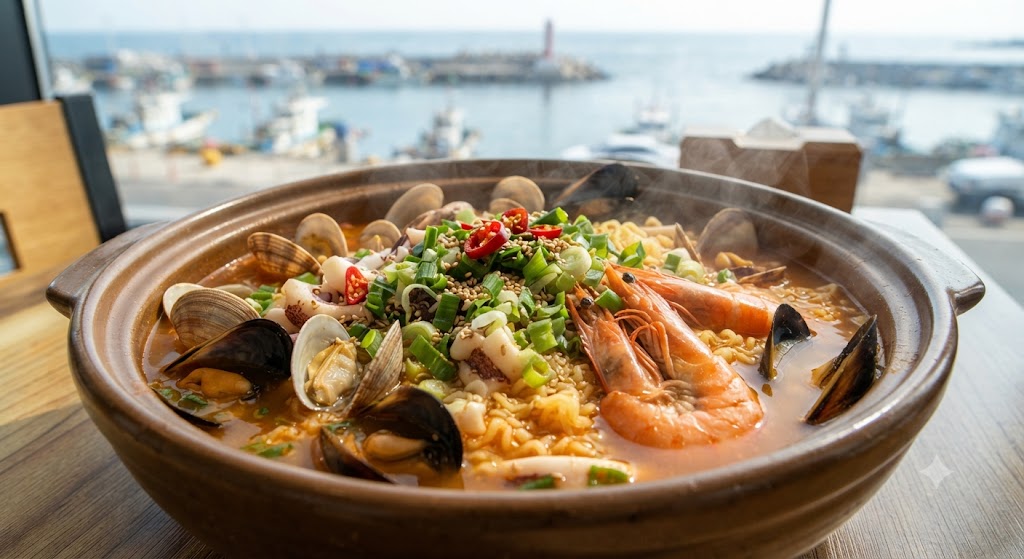
Anyone who has traveled along Korea’s coastal regions has likely encountered seafood ramyeon at least once.
It is especially famous in coastal cities and islands like Gangneung, Jeju Island, Busan, Sokcho, and Yeosu, where fresh marine catch is abundant.
Tossing just a few clams, mussels, shrimp, and squid into standard ramyeon completely transforms the broth.
It creates such a deep umami flavor that you can hardly believe it originated from instant noodles.
Recommended Ingredients
- Manila clams (or littleneck clams)
- Mussels
- Shrimp
- Squid
- Cheongyang red pepper (spicy chili)
- Green onion
How to Make It Even Better
Boil the seafood for 2 to 3 minutes before adding the noodles to let the natural juices infuse the broth; adding the noodles afterward yields a remarkably rich and robust taste.
You can easily find restaurants serving fresh seafood ramyeon near small harbors in Gangneung, Sokcho, Busan, and Jeju. If you are traveling through Korea, it is an absolute must-try menu item.
🥉 BEST 3 Stir-fried Ramyeon ( 볶음라면 )
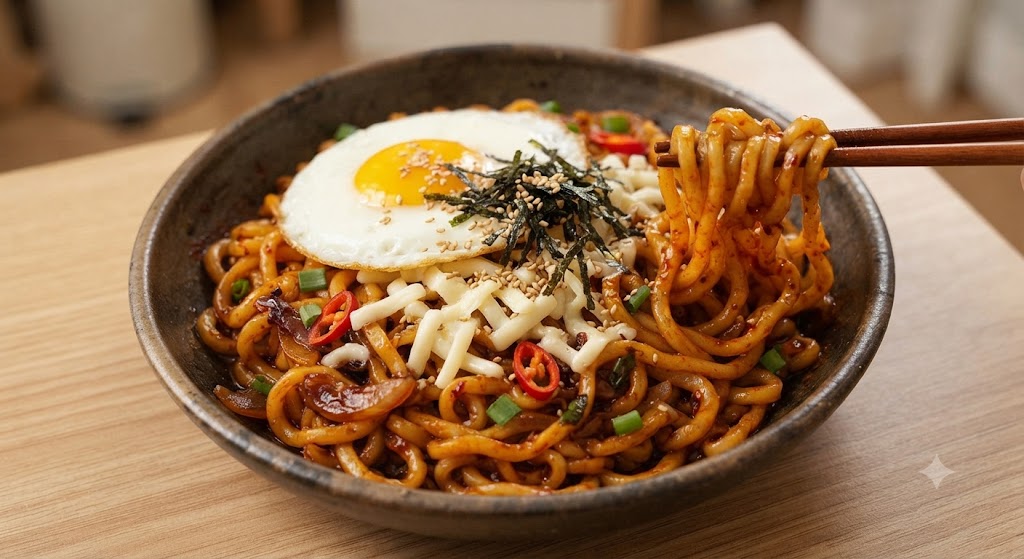
When most foreigners think of ramyeon, they picture a noodle soup.
However, stir-fried ramyeon—cooked down with almost no remaining broth—is an immensely popular menu item in Korea.
First-timers are often amazed by how drastically the texture and flavor differ, wondering, "Is this really the same ramyeon?"
With virtually no broth, the noodles remain exceptionally chewy, and the concentrated seasoning clings directly to every strand for an intense burst of flavor.
Ingredients Needed
- 1 package of ramyeon
- Mozzarella cheese or a slice of processed cheese
- 1 egg
- Green onion
- 1 teaspoon of sesame oil
- A pinch of toasted sesame seeds
Cooking Instructions
- Boil the noodles for about 30 seconds less than standard cooking time.
- Drain the water, leaving only about 2 to 3 tablespoons in the pot.
- Add the powder seasoning and quickly stir-fry over high heat.
- Finish by mixing in the cheese and sesame oil.
Adding a tiny pat of butter deepens the aroma and richness significantly. Top it with a soft-boiled fried egg, and you get a gourmet dish that rivals specialized restaurants.
🥈 BEST 2 Jjapaguri ( 짜파구리 )
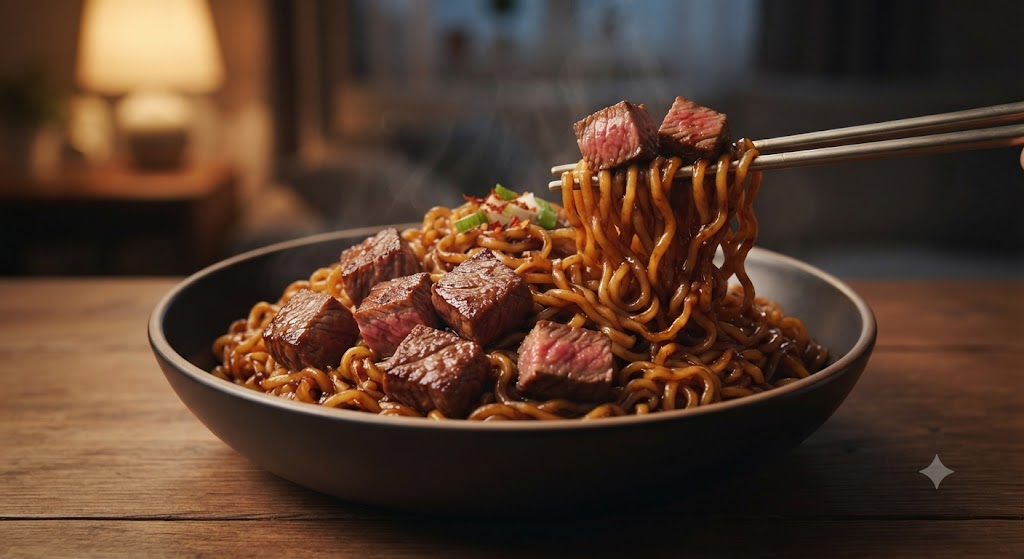
It is no exaggeration to say Jjapaguri is now one of the most famous ramyeon recipes worldwide, transcending Korea.
Ever since the movie Parasite won the Academy Award for Best Picture, Jjapaguri became globally recognized as a representative Korean dish.
However, for Koreans, it was already a beloved national favorite long before the film's release.
The deep black bean (Jajang) flavor of Chapagetti meets the spicy seafood broth of Neoguri to create an entirely novel taste sensation.
While mixing two completely different instant noodle brands might seem novel to international guests, mixing and matching ramyeon has long been a natural part of Korean food culture.
Ingredients Needed
- 1 package of Chapagetti
- 1 package of Neoguri
- Approx. 550ml of water
- Olive oil
How to Make It Even Better
Boil the noodles from both packages together, making sure not to leave too much water when draining.
Use all of the Chapagetti powder packet, but only about half of the Neoguri spicy seasoning packet to reduce sodium while maximizing umami depth.
Toss in the included olive oil at the end and mix thoroughly for a glossy, smooth finish.
Just like in the movie Parasite, searing premium Hanwoo beef sirloin or chuck flap tail to top the noodles turns this into a gourmet restaurant-quality meal. Of course, most Korean households enjoy it just as deliciously without the meat!
Why Do Foreigners Find Korean Ramyeon Culture Surprising?
In many countries, instant noodles are viewed simply as a quick snack or emergency survival food.
In Korea, however, it is quite different.
A culture of treating ramyeon like a proper culinary dish by simply adding an egg, a slice of cheese, a side of kimchi, or a few leftover vegetables has naturally taken root.
Consequently, when boiling ramyeon, Koreans naturally think first: "What should I toss in today?"
This exact mindset is what makes Korean ramyeon culture so uniquely special.
🥇 BEST 1 Budae Ramyeon ( 부대라면 )
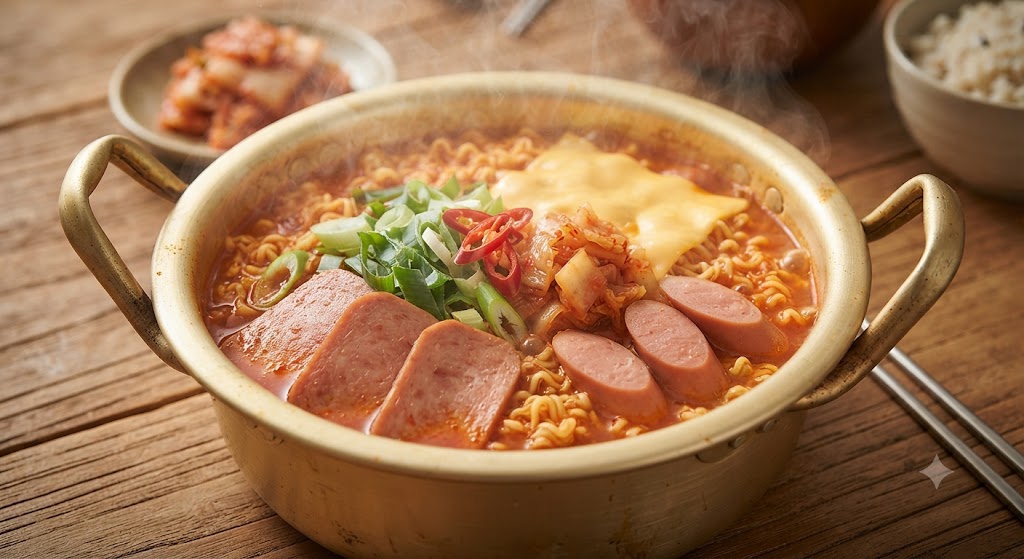
It is no exaggeration to call Budae Ramyeon the most beloved ramyeon upgrade recipe in Korea.
First-time international visitors often express shock: "You put ham in ramyeon?" "Even cheese?"
Yet once they taste it, opinions change immediately because the savory oils from the ham, the rich creaminess of cheese, and the spicy broth combine to create a depth of flavor worlds apart from standard instant noodles.
Budae Ramyeon draws inspiration from Budae-jjigae (Army Stew). Because it is simmered with various ingredients like ham, sausages, cheese, and kimchi, a single bowl serves as a deeply satisfying and hearty meal.
Ingredients Needed
- 1 package of Shin Ramyun or Jin Ramyeon
- Vienna sausages
- Spam or luncheon meat
- 1 slice of processed cheese
- Green onion
- Kimchi (optional)
- Cheongyang red pepper (recommended if you love spicy food)
How to Cook It Even More Deliciously
- Briefly boil the ham and sausages first to draw out their savory flavors into the water.
- Add the ramyeon noodles and seasoning packets and boil.
- Place the cheese on top at the very end to let it melt naturally.
- Add a generous handful of green onions for a cleaner, crisper broth.
Using about 50ml less water than usual concentrates the broth for a punchier taste. Adding a small amount of kimchi further enhances the tangy zest and umami—a favorite trick among many Koreans.
Why Do Koreans Put Cheese in Ramyeon?
One of the food customs that foreigners find most fascinating is placing a slice of cheese on top of ramyeon.
While it might seem unfamiliar at first, cheese softens the fierce spicy kick and imbues the broth with a velvety, savory depth.
Spicier ramyeon pairs particularly well with cheese, making this combination a natural fixture in Korean households for many years.
Today, cheese toppings are so popular that you can easily find them at any convenience store across the country.
Ramyeon Culture Experiences You Must Try in Korea
In Korea, ramyeon is not restricted to home dining.
- Boiling instant ramyeon on the banks of the Han River
- Pairing convenience store cup ramyeon with tuna triangle gimbap
- Cooking ramyeon at a campsite under the stars
- Enjoying a hot bowl alongside crispy kimchi on a rainy day
- Slurping steaming hot ramyeon at a winter ski resort
In this way, ramyeon embodies the daily routines, travels, and cherished memories of Korean life.
This is precisely why many international visitors unexpectedly name ramyeon when asked, "What food did you find most memorable during your trip to Korea?"
Most Popular Ramyeon Toppings Added by Koreans
| Topping | Flavor Transformation |
|---|---|
| Egg | Smooth and nutty flavor profile |
| Green Onion | Cool, refreshing, and clean broth |
| Cheese | Mellows out spice, adds rich creaminess |
| Kimchi | Adds tangy umami and zesty punch |
| Ham & Sausage | Rich meatiness and hearty chew |
| Rice Cakes (Tteok) | Chewy texture and satisfying fullness |
| Bean Sprouts | Crunchy texture and refreshing soup |
Korean Ramyeon Bucket List for International Travelers
- ✅ Cook instant ramyeon at the Han River park
- ✅ Make authentic Budae Ramyeon yourself
- ✅ Try Jjapaguri (Chapagetti + Neoguri)
- ✅ Eat ramyeon paired with aged kimchi
- ✅ Experience the Korean convenience store ramyeon bar combo
- ✅ Visit a specialized seafood ramyeon restaurant
Conclusion
Korean ramyeon is far more than a hasty, processed snack.
To some, it holds the memories of late-night exam cramming; to others, a weekend meal shared with family; and to travelers, the warmest meal enjoyed on the road.
That is why Koreans infuse their personal preferences into every pot: whether to drop in an egg, melt cheese, garnish with kimchi, or add ham—every small choice reflects an individual story.
If you are planning a trip to Korea, rather than chasing only famous restaurants, step into a local convenience store, pick out a package of ramyeon, and add your own favorite toppings.
In that single bowl, you will naturally understand why Koreans lovingly call ramyeon their ultimate "soul food."
Frequently Asked Questions (FAQ)
Q. What are the most popular ramyeon brands in Korea?
A. Shin Ramyun, Jin Ramyeon, Neoguri, Ansungtangmyun, and Samyang Ramyun have remained steady favorites for decades.
Q. Which recipes are easiest for foreigners to try?
A. Egg & Rice Cake Ramyeon and Budae Ramyeon use easily accessible ingredients with simple steps, making them ideal for first-timers.
Q. If you could recommend only one uniquely Korean ramyeon, what would it be?
A. We highly recommend Budae Ramyeon. The harmonious blend of ham, cheese, and kimchi perfectly showcases Korea's distinctive culinary ingenuity.
#KoreanRamyeon #RamyeonRecipe #KoreanFood #KFood #KoreanFood #Ramyeon #BudaeRamyeon #Jjapaguri #SeafoodRamyeon #StirFriedRamyeon #KoreaTravel #KoreaTravelBucketList #SeoulTravel #HanRiverRamyeon #ConvenienceStoreFood #KoreanEats #KoreanCulture #KoreaTravelRecommendation #HowToCookRamyeon #KoreaTravel


