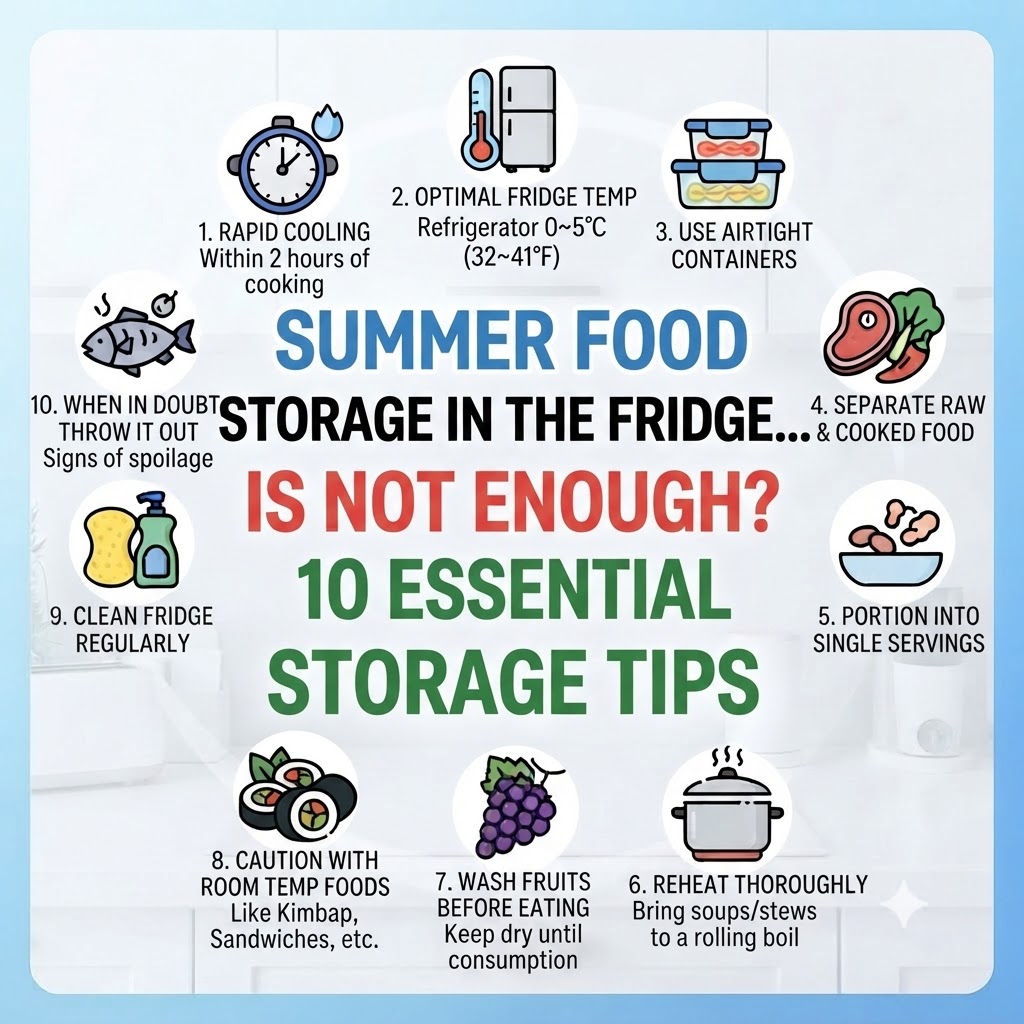
Why Does Food Spoil Fast in Summer? 10 Essential Storage Tips
When summer arrives, one of the biggest concerns for everyone is food preservation.
Have you ever experienced putting food neatly into the refrigerator, only to find it spoiled, vegetables wilted, or side dishes emitting an off-odor shortly after?
I've definitely been guilty of thinking, "It should be fine for a bit," only to end up throwing away good food during warm months.
The truth is, high temperatures and humidity in summer allow bacteria to multiply much faster than usual. With just a little proper care, you can keep your food fresh much longer and significantly reduce the risk of food poisoning.
Today, let's look at 10 practical summer food storage tips that anyone can easily follow at home.
1. Refrigerate Cooked Food Promptly
It is surprisingly common to leave hot food sitting out on the dining table for a long time. However, this is the most dangerous window during summer.
Foodborne bacteria multiply rapidly in warm environments, so it is best to place cooked food into the refrigerator within 2 hours. On days when temperatures exceed 32℃ (90℉), this window shrinks to just 1 hour.
2. Check Your Refrigerator Temperatures
It's easy to assume everything is safe once it's inside the fridge, but if the temperature isn't properly maintained, food can spoil easily.
- Refrigerator (Fridge) Section: 0~5℃ (32~41℉)
- Freezer Section: -18℃ (0℉) or lower
Another crucial point is not overloading your fridge. If cool air cannot circulate freely, the temperature inside rises, reducing overall freshness.
3. Use Airtight Containers Instead of Plastic Wrap
Using proper airtight containers is far more hygienic than simply covering plates with plastic wrap.
- Reduces bacterial contamination
- Prevents odor mixing between foods
- Prevents moisture evaporation
- Maintains long-term freshness
Soups, stews, and side dishes stored in airtight containers stay fresh noticeably longer.
4. Never Store Raw Meat and Vegetables Together
Juices leaking from raw meat can harbor various bacteria. If these juices touch other foods, the risk of cross-contamination skyrockets.
Therefore, organizing zones within your refrigerator is essential:
- 🥩 Raw Meat → Bottom shelf
- 🥬 Vegetables & Fruits → Dedicated crisper drawers
- 🍱 Cooked/Ready-to-eat Food → Upper shelves
This single habit drastically cuts down the risk of foodborne illnesses.
5. Portion Food into Single-Meal Servings
Repeatedly opening and closing a large container raises its internal temperature and increases exposure to air.
Dividing meals into individual portions right from the start allows you to take out only what you need, making food handling much safer and cleaner.
6. Reheat Leftovers Thoroughly Before Eating
"I boiled it once yesterday, so it should be fine."
That thought can be surprisingly risky during summer.
Leftovers must be reheated all the way to the center until piping hot. Soups and stews should be brought to a full rolling boil before consumption.
When using a microwave, stirring midway through ensures even heating and eliminates cold spots where bacteria survive.
7. Pre-Washing Fruits Can Cause Premature Spoilage
While washing produce ahead of time sounds convenient, residual moisture actually accelerates mold growth.
Fruits intended for storage should be washed right before eating. If you must wash them beforehand, dry them completely before putting them in the fridge.
8. Exercise Extreme Caution with Kimbap and Sandwiches
Kimbap (rice rolls) frequently tops summer food poisoning news reports.
Because cooked rice, eggs, ham, and vegetables are rolled together, they create an ideal breeding ground for bacteria.
- Consume within 2 hours of preparation whenever possible.
- Always use insulated cooler bags with ice packs during outdoor activities.
9. Keep Your Refrigerator Clean
Spilled sauces or food debris lingering on fridge shelves become hotspots for bacteria and mold growth.
- Wipe down shelves about once a week.
- Regularly check and discard expired items.
- Clean up spills and strong odors immediately.
A clean refrigerator naturally helps keep all stored foods fresh much longer.
10. When in Doubt, Throw It Out
During summer, thinking "It's too wasteful to throw away" is your biggest enemy.
If you notice any of the following signs, discard the food immediately without hesitation:
- A sour taste or smell
- Unusual or abnormal odors
- A slimy or sticky texture
- Discoloration
- Visible mold growth
- Bulging food containers or lids
That gut feeling is usually right. Food poisoning can cause days of misery, so prioritizing your health over saving leftovers is always the wisest choice.
Conclusion
Proper summer food storage doesn't require advanced skills. A little mindfulness goes a long way in protecting your family's health and reducing food waste.
We hope you found these tips helpful—whether you were already practicing some of them or picking up new habits today.
Remember the big three: prompt refrigeration after cooking, using airtight containers, and separating raw meat from vegetables. These simple rules alone will drastically minimize your risk of foodborne illness.
Related Articles :
Food Poisoning Prevention & Norovirus Guide - Essential Health Tips
식중독 예방법과 노로바이러스와의 구분법 - 건강 지키는 음식 정보
1. 식중독은 이렇게 예방합니다식중독은 음식에 있는 세균이나 바이러스, 독소가 몸 안에 들어와서 발생하는 질병입니다.특히 더운 여름철에는 음식이 쉽게 상하기 때문에 식중독 발생 위험이
zoomcook.co.kr


