
The Ultimate Guide to Persimmon Types & How to Eat Them | Sweet vs. Regular Persimmons, and Making Soft & Dried Persimmons at Home
When autumn deepens, there is one fruit that immediately comes to mind: the persimmon.
If you visit a local market or grocery store, you will encounter a wide variety of persimmons—from firm and crunchy sweet persimmons to soft, melt-in-your-mouth soft persimmons (hongsi), and chewy dried persimmons (곶감). But have you ever wondered why some persimmons should be eaten while they are firm, while others require you to wait until they become soft?
The truth is that the time it takes for the astringency to disappear and the best way to eat them vary depending on the variety. Understanding the differences between sweet persimmons and regular astringent persimmons will help you enjoy them much more deliciously.
- What is the difference between regular persimmons and sweet persimmons?
- Why do persimmons taste astringent?
- How to deliciously eat sweet and astringent persimmons
- How to make soft persimmons (hongsi) at home
- How to make traditional dried persimmons (곶감)
- Persimmon storage methods and precautions when eating
1. What Is the Biggest Difference Between Regular and Sweet Persimmons?
What we commonly refer to as regular persimmons are generally astringent varieties. Representative examples include Daebong (Daebonggam), Dungsi, and Cheongdo Bansi.
On the other hand, sweet persimmons can be eaten right away after harvesting, even when they are firm, because they have virtually no astringency. Popular varieties include Fuyu (Buyu), Charang, and Taechu.
The main difference between the two is not simply their sugar content, but whether water-soluble tannins—the compounds responsible for the astringent taste—are still active.
| Category | Sweet Persimmons | Astringent Persimmons |
|---|---|---|
| Representative Varieties | Fuyu, Charang, Taechu | Daebong, Dungsi, Bansi |
| When Firm | Crisp and sweet | Strongly astringent |
| Texture | Crunchy and crisp | Tender after ripening |
| How to Consume | Eat fresh right away | As hongsi, soft persimmons, or dried |
| Storage Focus | Maintain crispness | Ripening or drying |
Here is one important thing to keep in mind: Daebong persimmons look like sweet persimmons because of their large, beautiful appearance, but they are actually a typical astringent variety. Eating them while they are still firm will leave your mouth feeling dry and puckery, so they must be fully ripened before consumption.
2. Why Do Persimmons Make Your Mouth Feel Astringent?
The astringent taste of persimmons is caused by a compound called tannin.
Astringent persimmons, in particular, contain water-soluble tannins. When these compounds bind with proteins in your saliva, they create a puckering, dry sensation on your tongue and inside your mouth.
However, as the persimmon ripens or goes through a proper de-astringency process (talsap), the tannins transform into an insoluble form that does not dissolve easily in water. The tannins don't entirely vanish; rather, they become locked in a state where your mouth no longer perceives the astringent taste.
This refers to the process of removing the astringency from persimmons. Astringency can be reduced through natural post-harvest ripening, drying, or artificial de-astringency treatments.
Because of this scientific principle, even an astringent persimmon—though intensely puckery right after harvest—can be enjoyed with a sweet flavor once fully ripened into a hongsi or peeled and dried.
3. How to Enjoy Sweet and Regular Persimmons Deliciously
① Sweet persimmons are best enjoyed when crunchy
The main charm of sweet persimmons lies in eating them before they become too soft. You can peel them or wash them thoroughly and eat them skin and all.
- Chilling them in the refrigerator makes them extra refreshing and crisp.
- Rinse them thoroughly under running water right before eating.
- Trim around the stem and core, then slice them into bite-sized pieces.
- Adding them to salads brings a wonderful sweetness and crisp texture.
Sweet persimmons pair exceptionally well with apples, nuts, and baby greens. Tossing finely chopped sweet persimmons into plain yogurt also makes a fantastic snack.
② Astringent persimmons should be fully ripened
Astringent varieties like Daebong or Dungsi are best left to ripen fully rather than eaten while firm.
Once they soften up, the astringency fades, the flesh becomes tender, and a deep, luscious sweetness emerges. This stage is precisely what we love as hongsi (soft persimmons).
4. How to Make Soft Persimmons (Hongsi) at Home
Making hongsi at home is much easier than you might think. If you bought astringent persimmons, the key is not to rush, but to let them ripen slowly.
- Astringent persimmons (such as Daebong or Dungsi)
- A clean basket or wide container
- Kitchen towels or paper
- Optional: 1 apple
Step-by-Step Guide to Making Hongsi
Step 1. Select the right persimmons.
Choose flawless persimmons with no blemishes and not overly mushy. Persimmons with intact, sturdy stems work best.
Step 2. Arrange them without touching each other.
Line your basket or container with kitchen towels and place the persimmons in a single layer. Leave enough space so they do not bump into or press against one another.
Step 3. Ripen in a cool, indoor space.
Keep them away from direct sunlight in a well-ventilated indoor spot. Depending on the room temperature and the ripeness of the fruit, this process usually takes anywhere from a few days to 1–2 weeks or more.
Step 4. Use an apple to speed up ripening.
Ethylene gas emitted by apples can accelerate fruit ripening. Placing persimmons together with an apple inside a paper bag and checking them daily can fast-track the ripening process. Just make sure not to seal them for too long to avoid excess moisture buildup.
Step 5. Enjoy once they turn soft.
When they yield gently to a light touch and the entire fruit feels tender throughout, they are ready to eat as hongsi. Discard any persimmons that develop an off-flavor or mold.
Ripe hongsi bruise and spoil easily. If you don't plan to eat them right away, store them in the refrigerator or peel and freeze them. Partially thawed frozen hongsi taste just like a refreshing fruit sherbet.
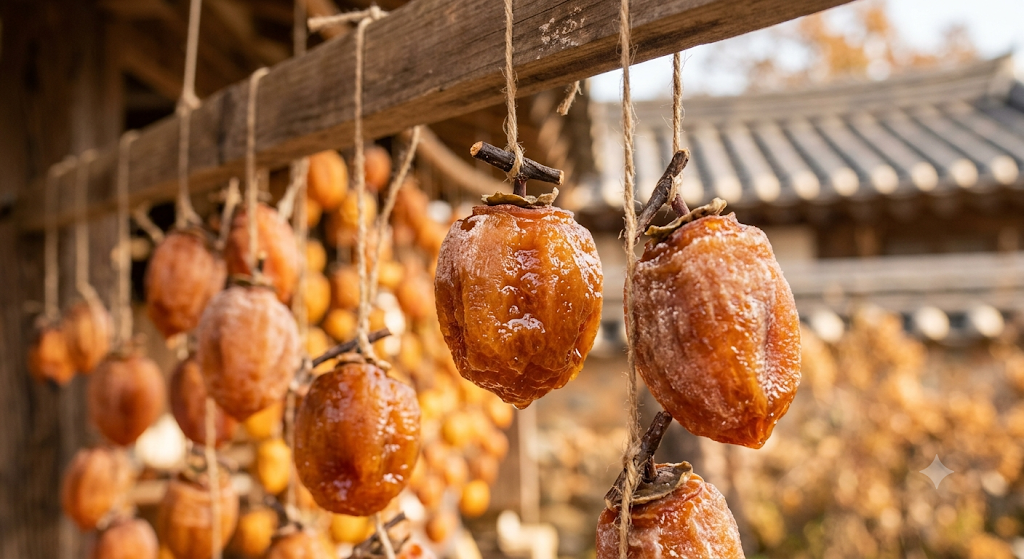
5. How Are Traditional Dried Persimmons (곶감) Made?
Dried persimmons (gotgam) are a traditional preserved food made by peeling and drying fresh persimmons. As moisture evaporates, their sweetness intensifies and they develop a delightfully chewy texture.
Gotgam are typically made using astringent persimmon varieties rather than firm sweet ones. The size, shape, and final texture of the dried persimmons vary depending on whether varieties like Daebong or Dungsi are used.
Peeling Skins → Trimming Stems → Hanging → Air Drying → Aging
Step-by-Step Guide to Making Gotgam at Home
Step 1. Prepare persimmons suitable for drying.
Select firm, unblemished astringent persimmons that aren't overly mushy. Using persimmons of similar size and ripeness makes it easier to manage the drying process evenly.
Step 2. Wash thoroughly and dry off moisture.
Rinse them under running water, then wipe them completely dry with a clean cloth or kitchen towel. Leaving residual moisture increases the risk of mold growth during drying.
Step 3. Peel the skins thinly.
Using a vegetable peeler or paring knife, peel the skin from top to bottom. Be careful not to shave away too much of the flesh.
Step 4. Hang them by their stems or place them on drying racks.
For persimmons with sturdy stems, tie a string around the stem and hang them so they don't touch one another. If the stems are weak or detached, place them on hygienic drying racks and rotate their positions frequently.
Step 5. Dry in a well-ventilated, shady area.
It is best to dry them in a shaded, airy spot rather than under direct sunlight. Protect them from rain, high humidity, dust, and insects by using screens or a dedicated drying enclosure.
Traditional natural drying can take several weeks or more depending on weather, fruit size, and humidity. Rather than rushing the drying process from the start, you need to manage it so the surface dries while internal moisture gradually reduces.
Step 6. Age while monitoring their condition.
Once the persimmons have dried to a certain degree, you can gently massage them with your hands to loosen and soften the flesh inside. Continue checking their dryness until they reach your desired level of chewiness.
- Pay extra attention to the drying environment on humid or rainy days.
- Maintain adequate space between persimmons so they never touch.
- Never dry them in poorly ventilated, airtight spaces.
- Discard any persimmons that show signs of mold or develop an unusual odor.
- Store finished gotgam in airtight packaging in the freezer for maximum convenience.
6. What's the Difference Between Hongsi, Yeonsi, and Gotgam?
Their names sound quite similar and can easily be confusing, but understanding their definitions makes it simple.
| Type | Characteristics | Texture |
|---|---|---|
| Hongsi | Naturally ripened to a deep red | Extremely tender and soft |
| Yeonsi | Softly ripened post-harvest | Melt-in-your-mouth soft |
| Gotgam | Peeled and sun-dried persimmons | Chewy and deeply concentrated |
| Ban-geonshi (Semi-dried) | Gotgam retaining partial moisture | Chewy outside, moist inside |
Hongsi and yeonsi are often used interchangeably in everyday conversation. Generally speaking, hongsi highlights the state of being deeply reddened by ripening, while yeonsi emphasizes the soft, delicate texture.
7. Good Things to Keep in Mind When Eating Persimmons
Persimmons are sweet and delicious, but it is worth keeping portion sizes and their condition in mind.
① Dried persimmons (gotgam) are higher in calories than fresh persimmons.
Because moisture evaporates during the drying process, gotgam contain a higher concentration of sugars and calories gram-for-gram than fresh fruit. Since their sweetness is intense, it's best to enjoy them in moderate portions rather than eating too many at once.
② Always consume astringent persimmons fully ripened.
It is best to avoid forcing yourself to eat persimmons that still retain strong astringency. Make sure they are fully ripened or properly processed before eating.
③ Avoid overeating if you are prone to constipation.
The tannins in persimmons can affect gut health and bowel movements. In particular, eating large amounts of persimmons that still harbor astringency can aggravate constipation. If you struggle with constipation, avoid consuming excessive amounts and monitor how your body reacts.
④ Mind your iron intake.
Tannins can bind to iron and hinder iron absorption. Individuals with iron deficiency, anemia, or those taking iron supplements should avoid eating persimmons at the same time as their supplements and consult a healthcare professional regarding appropriate timing.
8. Summary of Storage Methods by Persimmon Type
| Type | Storage Method |
|---|---|
| Sweet Persimmons | Store in the refrigerator, ensuring they don't press against each other |
| Astringent Persimmons | Ripen at room temperature or refrigerate |
| Hongsi (Soft Persimmons) | Refrigerate for short term; freeze for long-term storage |
| Gotgam (Dried Persimmons) | Store in airtight packaging in the freezer |
Conclusion: Even Same Persimmons Require Different Approaches
Sweet persimmons are best enjoyed when firm and crisp, whereas astringent varieties like Daebong or Dungsi shine brightest when fully ripened into hongsi or dried into gotgam.
What makes persimmons particularly fascinating is how completely different flavors and textures you can experience depending on how they are ripened. In autumn, you can relish crisp sweet persimmons, and as time passes, you can savor velvety soft hongsi and chewy gotgam.
If you plan to buy persimmons this fall, check first whether they are sweet or astringent varieties. Depending on which type you choose, the ideal way to enjoy them will change!
Q. Can sweet persimmons also be turned into hongsi?
Sweet persimmons can become soft if left for a long time, but astringent persimmons are the standard choice for making proper hongsi. Sweet persimmons are best eaten while they are crisp.
Q. Can Daebong persimmons be eaten right away?
Daebong persimmons are a classic astringent variety, so eating them while firm will taste unpleasantly puckery. It is standard practice to let them fully ripen into hongsi before consuming.
Q. Can hongsi be frozen?
Yes, absolutely. Cleaning and freezing fully ripened hongsi is a convenient way to store them long-term, and eating them half-thawed offers a wonderful sherbet-like treat.
Q. How long should gotgam be dried?
It varies depending on the size of the persimmons, temperature, humidity, and airflow. Natural drying can take several weeks, so it is important to visually and texturally check whether they have reached your preferred moisture level and chewiness.
Related Posts You May Like :
Just Like Street Vendors! My Secret to Perfection with Oven-Roaste
Just Like Street Vendors! My Secret to Perfection with Oven-Roasted Sweet Potatoes
Homemade Winter Snacks · Oven Cooking · Sweet Potato RecipeJust Like Street Vendors! My Secret to Perfection with Oven-Roasted Sweet PotatoesWhenever I grab a warm roasted sweet potato from a street vendor during winter, I always wonder if I can recreate
zoomcook.co.kr


