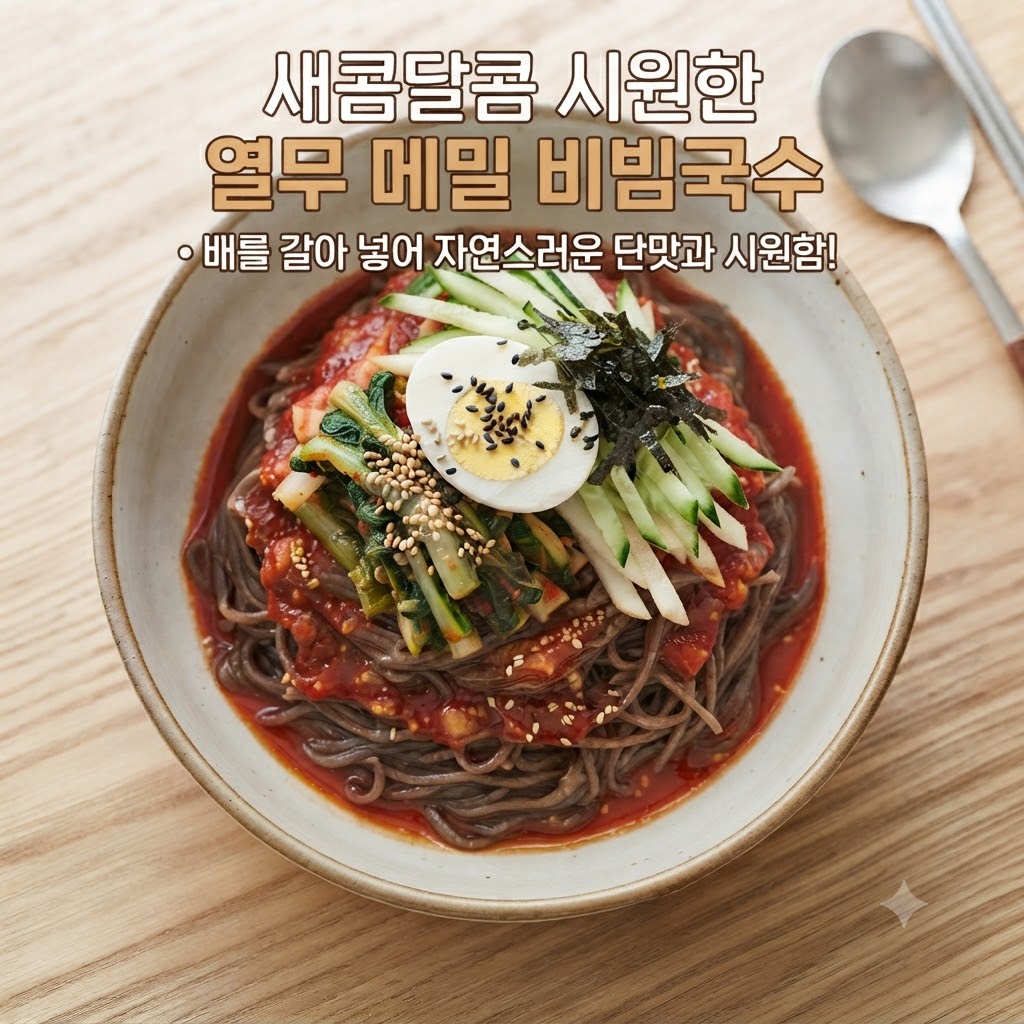
The Ultimate Cravings Fix: Yeolmu Bibim Guksu with Blended Pears for a Sweet, Tangy, and Refreshing Kick!
After indulging in greasy foods like fried chicken, pork belly, savory pancakes, or deep-fried dishes, you might suddenly find yourself craving something refreshing and tangy.
Whenever that happens, spicy Yeolmu Bibim Guksu (cold mixed noodles with young radish kimchi) immediately comes to mind. The crunchy Yeolmu kimchi, sweet-and-sour sauce, and chilled noodles combine to instantly revitalize your palate.
Today, however, we are giving this classic dish a slight upgrade: blending fresh pears into the sauce and swapping regular wheat noodles for soba noodles.
① Blending pears into the sauce for a naturally sweet and refreshing flavor
② Using soba noodles instead of regular somyeon for a cleaner texture
③ Checking the buckwheat content when purchasing soba noodles
④ Adapting the recipe for anyone wanting a lighter meal or a senior-friendly option
🥢 Why Yeolmu Bibim Guksu Hits the Spot After Greasy Foods
Heavy, oily meals often leave a rich, lingering coating in your mouth, which naturally drives the craving for sour, cold dishes to cut through the grease.
Yeolmu kimchi, in particular, offers a crisp, zesty profile that pairs exceptionally well with mixed noodles. When combined with the acidity of vinegar, the heat of chili powder, and a touch of sweetness, it creates the ultimate dish to revive your appetite.
Because of this, Yeolmu Bibim Guksu isn't just for summer—it makes a fantastic special treat the day after a heavy meal or whenever your appetite needs a boost.
🍐 The Secret Weapon: Blend Fresh Pears into Your Yeolmu Bibim Guksu Sauce
Here is the star tip for today: blending fresh pears directly into the sauce.
Unlike using plain sugar or corn syrup for sweetness, blended pears provide a natural, subtle sweetness and extra moisture that pair wonderfully with cold noodle dishes.
🍐 Simple Way to Use Pears
Peel and finely blend about 1/4 to 1/3 of a pear. Mix it into the sauce and let it rest in the refrigerator for a bit to yield an even more refreshing and smooth flavor.
Since the size and sugar content of pears can vary, it is best to add the blended fruit gradually rather than all at once, tasting as you go.
🌶️ Sweet, Sour, and Refreshing Yeolmu Bibim Guksu Sauce Recipe
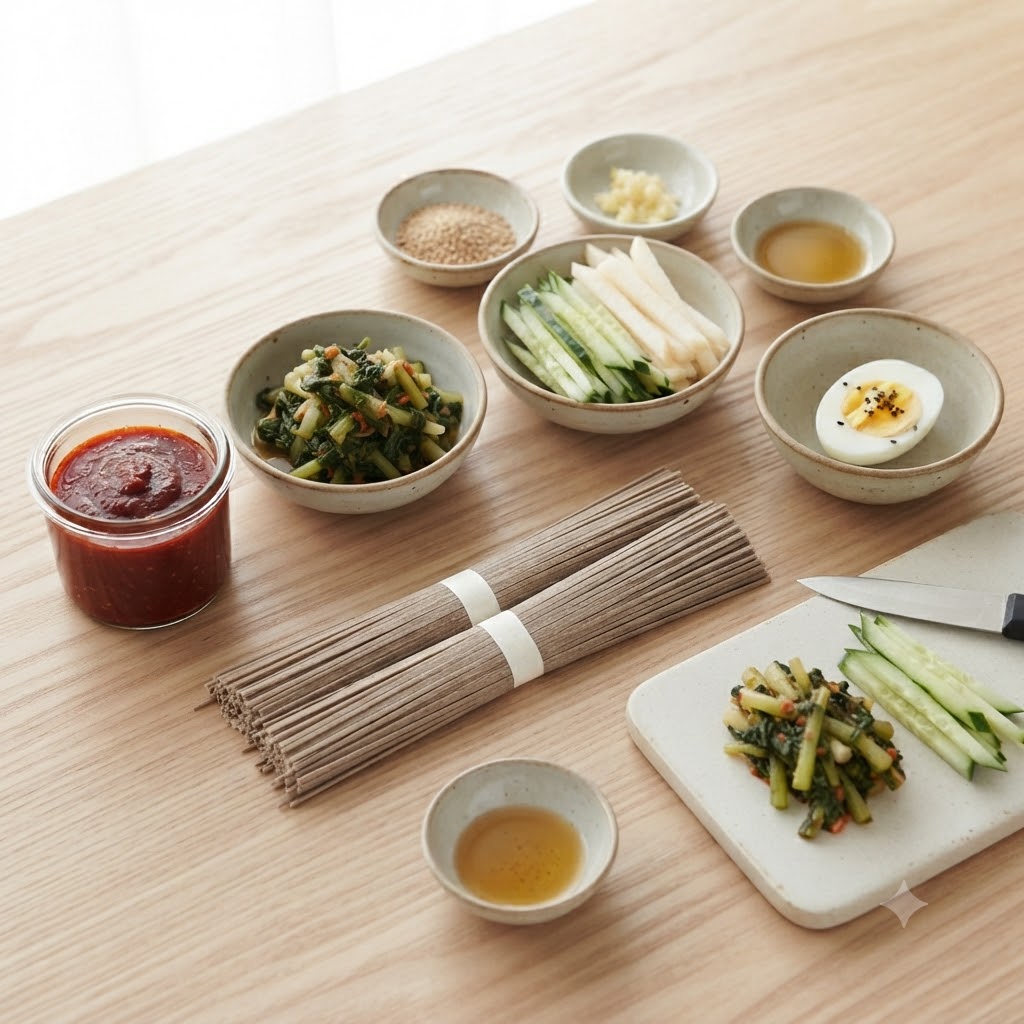
Here is an easy-to-follow ratio for 2 servings. Feel free to adjust the amount of vinegar and chili powder to suit your personal taste.
| Ingredient | 2 Servings | Role |
|---|---|---|
| Gochujang | 2 tbsp | Base seasoning |
| Gochugaru | 1 tbsp | Heat and color |
| Vinegar | 1.5~2 tbsp | Tangy flavor |
| Plum extract | 1 tbsp | Subtle sweetness |
| Soy sauce | 1/2 tbsp | Umami depth |
| Sesame oil | 1 tsp | Nutty aroma |
| Blended Pear | 1/4~1/3 pear | Cool sweetness and moisture |
Rather than using the sauce right away, letting it rest in the refrigerator for 10~20 minutes makes a big difference.
Also, if your Yeolmu kimchi is already quite salty or sour, avoid adding too much vinegar and soy sauce from the start. Tasting the kimchi first and adjusting the sauce accordingly is key.
🍜 What Happens When You Switch to 'Soba Noodles' Instead of Regular Somyeon?
Let's switch up the noodles next. While regular wheat somyeon noodles are typically used for Yeolmu Bibim Guksu, using soba noodles containing buckwheat introduces a wonderful twist.
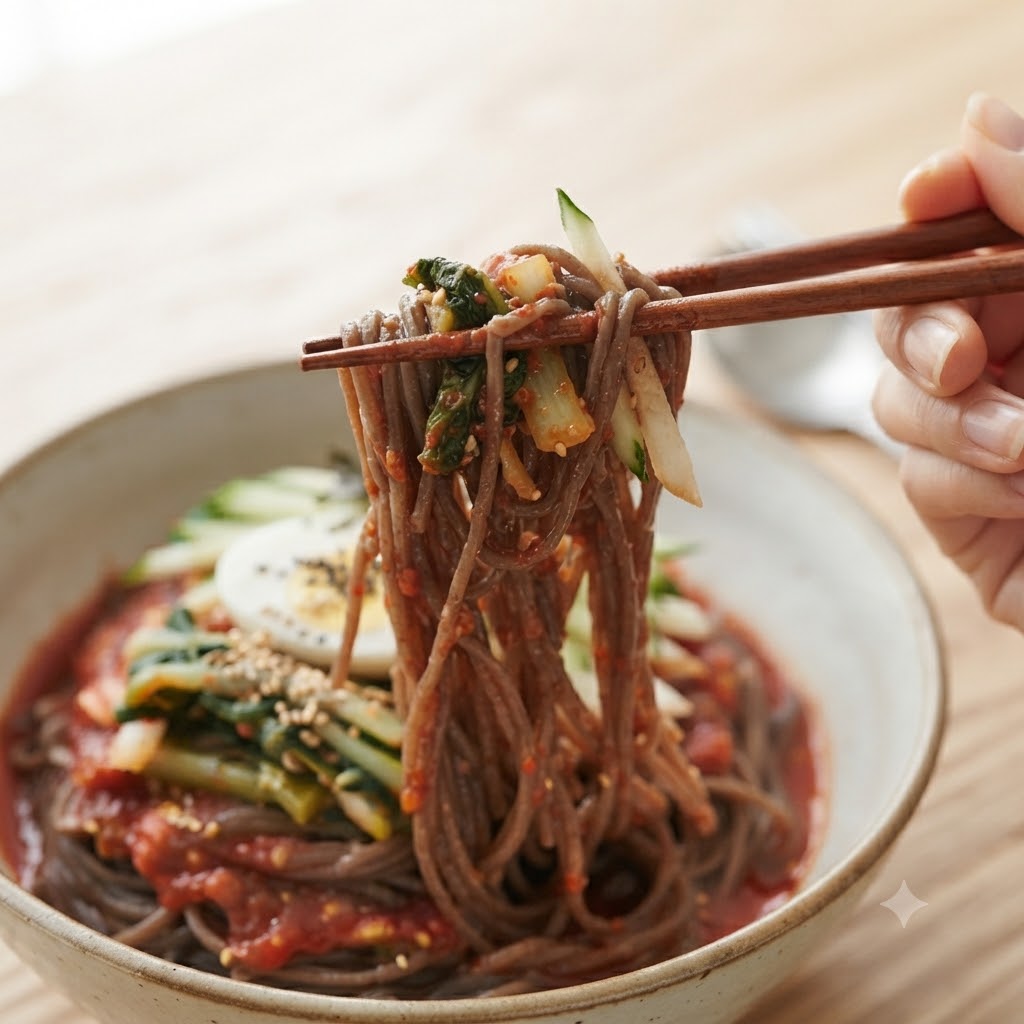
The distinct earthy aroma and savory flavor of buckwheat complement the spicy-tangy sauce brilliantly, and chilling them in cold water creates a wonderfully clean texture distinct from regular wheat noodles.
- Find the heavy starch taste of regular somyeon burdensome
- Are looking for a lighter, more wholesome noodle option
- Enjoy the earthy, nutty fragrance of buckwheat
- Want to experience bibim guksu with a unique twist
🔎 Are All 'Soba Noodles' Actually Made Entirely of Buckwheat?
There is an important detail to keep in mind here: just because a package says 'soba' doesn't mean it has a high buckwheat content.
Instead of relying solely on the words on the front of the package, get into the habit of checking the ingredient list and percentage breakdown on the back.
Because different products use varying ratios of wheat flour to buckwheat, you need to verify the exact percentage of buckwheat.
| What to Check | Why It Matters |
|---|---|
| Buckwheat Content | The ratio of buckwheat varies widely by brand |
| Wheat Flour Content | Crucial for anyone who needs to avoid wheat |
| Ingredient List | Reveals the true raw materials used |
| Allergy Warnings | Checks for allergens like wheat and buckwheat |
Crucially, 'buckwheat noodles' do not mean 'zero wheat.' Wheat flour is often blended into these noodles, so anyone restricting wheat intake must double-check the product labels.
👵 Great for Seniors Too? Tailor Your Noodle Choice Carefully
As we age, digesting familiar foods can become harder, or certain textures might make noodle dishes less appealing.
In such cases, Yeolmu Bibim Guksu made with soba noodles offers a refreshing, alternative meal option with a different texture profile compared to rice or standard noodles.
However, a quick word of caution: just because something contains buckwheat doesn't automatically mean it is universally easier to digest or a health cure-all. Suitability varies depending on individual dental health, swallowing capacity, and digestion.
For seniors or anyone with weakened chewing and swallowing functions, avoid making the noodles overly cold or chewy; instead, adjust the boiling time slightly to ensure they are soft and tender. Similarly, cut any tough stems of the Yeolmu kimchi into manageable, bite-sized pieces.
Buckwheat can trigger severe allergic reactions in some individuals. Exercise caution if you are trying it for the first time or suspect an allergy, and always check labels for wheat and buckwheat declarations if you have dietary restrictions.
🥒 Ingredient Pairings to Elevate Your Yeolmu Bibim Guksu
While Yeolmu kimchi and pear sauce alone are delicious, adding a few fridge staples transforms this into a truly hearty meal.
- Cucumber — Adds a crunchy and refreshing texture
- Boiled egg — Provides a protein boost
- Seaweed flakes — Adds a savory depth
- Sesame seeds — A nutty finishing touch
- Shredded pear matchsticks — Heightens the cooling sweetness when added to the garnish
Especially when recovering from a greasy meal, avoid overloading on sesame oil. The true charm of Yeolmu Bibim Guksu lies in the balanced harmony of tangy, refreshing flavors rather than heavy richness.
🍜 Foolproof Steps to Make Yeolmu Bibim Guksu
- Peel and blend the fresh pear.
- Combine gochujang, gochugaru, vinegar, plum extract, and soy sauce to form the base sauce.
- Mix the blended pear thoroughly into the sauce.
- Cook the soba noodles according to the package instructions.
- Rinse the noodles thoroughly in cold water to remove excess starch.
- Drain as much excess water as possible.
- Lightly toss the Yeolmu kimchi and noodles in the prepared sauce.
- Top with cucumber, a boiled egg, seaweed flakes, and sesame seeds.
- Garnish with a small handful of fresh pear matchsticks right before serving.
The most important step here is thoroughly draining the noodles!
If too much water remains clinging to the noodles, it will dilute the sauce and cause the dish to taste watery and bland very quickly. After rinsing in cold water, shake them out and let them sit in a fine-mesh strainer to drain completely.
❄️ Want It Even Colder? Chill the Sauce First
The temperature of the sauce impacts the overall flavor of Yeolmu Bibim Guksu far more than the noodles do.
If time permits, prepare the pear-infused sauce ahead of time and chill it in the refrigerator. The combination of ice-cold sauce, thoroughly chilled noodles, and crisp Yeolmu kimchi yields a clean, invigorating flavor that hits the spot on hot days or after heavy meals.
🥢 Today's One-Bowl Formula
Refreshing Yeolmu Kimchi + Sweet-and-Tangy Pear Sauce + Chilled Soba Noodles
Top with cucumber and a boiled egg for a simple yet satisfying meal.
💡 Perfect Days to Make This Dish
- The day after eating plenty of pork belly or grilled meats
- After enjoying greasy foods like savory pancakes or fried dishes
- When hot weather kills your appetite
- When you want a quick meal instead of heavy rice
- When you are tired of standard somyeon bibim guksu
- When you love the earthy, clean flavor of buckwheat
Conclusion — Elevate Your Yeolmu Bibim Guksu with Just 'One Pear'
Yeolmu Bibim Guksu doesn't require a long list of complicated ingredients. You can whip it up using just the Yeolmu kimchi and noodles you already have in your fridge.
However, blending in a fresh pear completely changes the game. The subtle sweetness and cooling nature of the pear soften the sharp edge of the vinegar and spicy gochugaru, elevating the entire flavor profile.
Choosing soba noodles over regular somyeon introduces a delightful texture and aroma. Remember, though, not to judge soba noodles by their name alone—always flip the package over to check the ingredients and buckwheat content.
Especially when preparing this for seniors, keep individual chewing and swallowing conditions, allergy risks, and noodle tenderness in mind.
On a day like today when you've indulged in something greasy and find a jar of Yeolmu kimchi in your fridge, give this a try. Sweet-and-tangy pear sauce paired with chilled soba noodles—it works much better than you might think.
📌 Helpful Food Information to Keep in Mind
Yeolmu Bibim Guksu is a straightforward noodle dish, but its flavor varies significantly depending on the noodle variety, sauce sweetness, vinegar quantity, and kimchi saltiness. When selecting buckwheat noodles in particular, build the habit of checking the ingredient list and ratios before looking at the nutrition facts.
※ This article provides general cooking information, and dietary choices should be adapted to individual health needs. Take special care if you have a buckwheat allergy or experience difficulty swallowing.
Related Posts :
Foreign Desserts Made Even Better with Korean Ingredients? / 7 Aut
Foreign Desserts Made Even Better with Korean Ingredients? / 7 Autumn Desserts You Must Try in September and October
Foreign Desserts Made Even Better with Korean Ingredients?7 Autumn Desserts You Must Try in September and October As September and October roll around, the vibe of American and European desserts shifts away from light summer fruits.Ingredients that instant
zoomcook.co.kr


