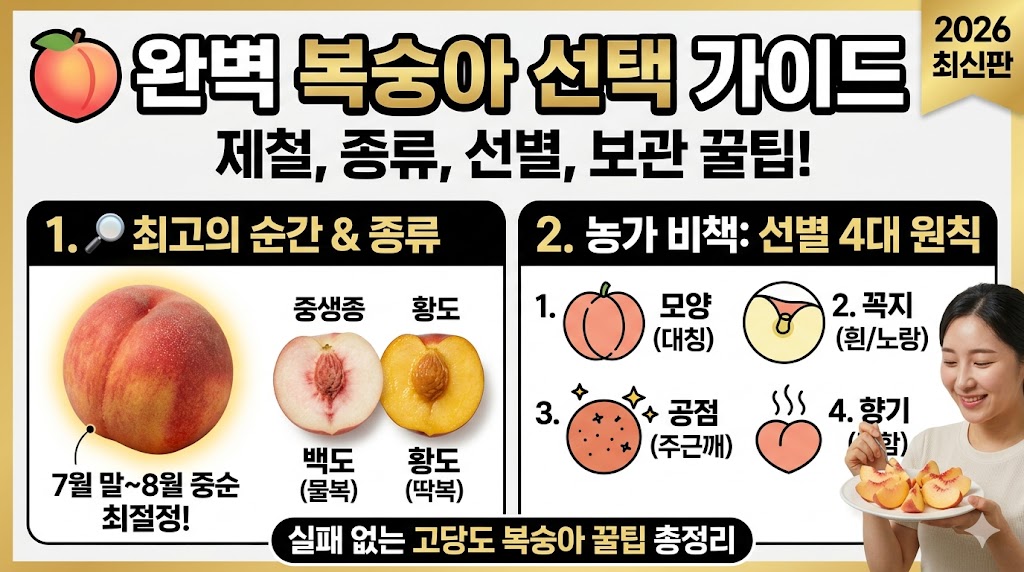
The Ultimate 2026 Peach Guide: Seasonality, Varieties, and the 4 Golden Rules for Picking the Perfect Peach Every Time
Peaches are the quintessential herald of summer. With their fragrant aroma and luscious, dripping juice, they top the grocery list for millions of fruit lovers every year. Depending on the variety and when they are harvested, peaches present an incredible spectrum of textures—ranging from crisp and crunchy to velvety, meltingly soft.
Yet, almost everyone has experienced that crushing disappointment: you buy a basket of peaches from a local market or an online orchard delivery that looks beautifully blushed and smells heavenly, only to bite into it and find a completely "bland, watery, or flavorless disappointment." This happens because peaches are remarkably sensitive crops. Their harvest windows are strictly segregated by variety, and their sugar content swings wildly depending on climate patterns, especially the seasonal monsoon or heavy rainfall levels right before picking.
In this guide, we bypass the generic, cliché advice like "just look for a pretty fruit." Instead, leveraging the latest 2026 agricultural harvest data and sugar-density trends, we deliver a definitive roadmap to catching peaches at their absolute peak flavor. We resolve the ultimate texture debates (White vs. Yellow, Melting vs. Crunchy), share the 4 structural screening rules used exclusively by master growers, and provide an actionable, step-by-step ripening blueprint capable of doubling your fruit's sweetness at home. Let’s dive in!
📌 Table of Contents
- 1. Peak Timing & Modern Harvesting Timelines
- 2. The Color Spectrum: White vs. Yellow Peaches
- 3. The Texture Showdown: Melting vs. Crunchy (Crisp) & Exotic Cultivars
- 4. [Farmer's Secret] The 4 Golden Selection Rules for Maximum Sugar Content
- 5. Step-by-Step Actionable Storage & Ripening Guide to Maximize Sweetness
- 6. Frequently Asked Questions (Q&A)
1. Peak Timing & Modern Harvesting Timelines
A common consumer misconception is that peaches maintain a uniform level of quality throughout the entire summer. This is fundamentally incorrect. Peaches are strictly categorized into early-season (mid-June to early July), mid-season (mid-July to mid-August), and late-season cultivars (late August to mid-September). Each phase yields drastically different moisture metrics and Brix (sugar density) baselines.
| Classification | Harvest & Market Window | Cultivar Profile & Characteristics | Average Sugar Density (Brix) | Recommendation Rating |
|---|---|---|---|---|
| Early-Season | Mid-June ~ Early July | Cultivars like Shinbi, Green Yellow. Smaller sizing, high water content. | 9.5 ~ 11.0 Brix | ★ ★ ☆ ☆ ☆ |
| Mid-Season (The Zenith) | Late July ~ Mid-August | Cultivars like Daechang, Cheonjungdo, Great. Premium high-sugar, large-fleshed premium fruit. | 12.5 ~ 14.5 Brix | ★ ★ ★ ★ ★ |
| Late-Season | Late August ~ Mid-September | Cultivars like Elbart, Janghowon Yellow. Denser, tightly packed flesh structure. | 11.5 ~ 13.0 Brix | ★ ★ ★ ★ ☆ |
According to recent research data from the National Institute of Horticultural and Herbal Science, mid-season peaches harvested between late July and mid-August exhibit the highest average sugar profile (averaging 13.5 Brix) of the entire annual crop cycle. This peak occurs due to maximized daily sun exposure combined with a day-to-night temperature variance exceeding 8°C.
Conversely, early-season crops frequently collide with regional rainy seasons. The trees absorb excessive groundwater, inducing an osmotic dilution effect within the flesh—often referred to as "water bloating." Therefore, if you desire an intensely sweet, rich, authentic peach experience, aim squarely for the mid-season window just after the seasonal rains conclude. This ensures the fruit's starches have fully converted into pure sugars via unchecked sunlight absorption.
2. The Color Spectrum: White vs. Yellow Peaches
Standing in front of a market display, every shopper pauses: "Should I buy White or Yellow peaches today?" This isn't merely an aesthetic choice; it marks a structural difference in cellular composition, organic acidity ratios, and flavor development.
⚖️ White Peaches (Juice Explosion) vs. Yellow Peaches (Deep, Concentrated Richness)
The baseline separation between White and Yellow peaches stems from the density of carotenoids within the flesh. Beyond the visual shift, the way they release sugar on the palate is entirely distinct.
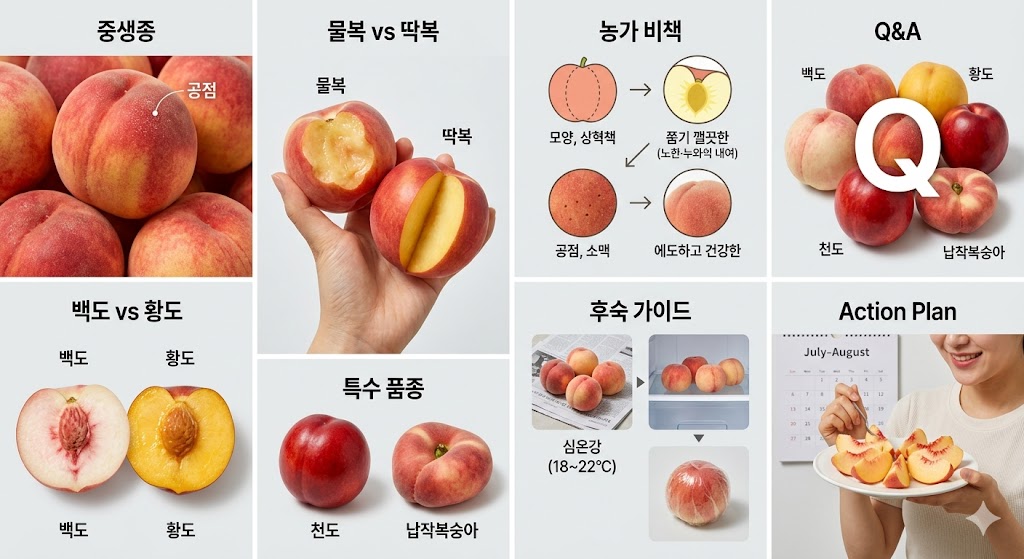
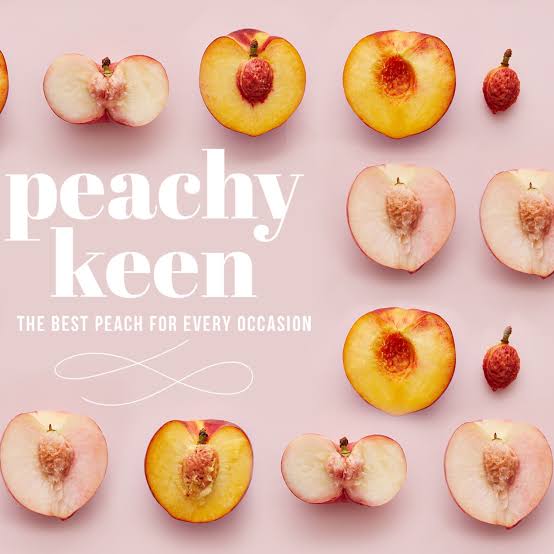
- White Peaches (The Standard of Sweetness): Featuring pale, milky-white flesh often blushed with pink, this is the crowd favorite. When fully ripe, the skin slips off effortlessly, revealing exceptionally delicate fibers that weep juice at the slightest pressure. Because its natural organic acid (tartness) level is significantly lower than that of Yellow varieties, it hits the tongue with an immediate, clear, unadulterated sweetness and a soft, floral bouquet.
- Yellow Peaches (The Gourmet Profile): Packed with beta-carotene, these display a deep golden or amber interior. Yellow peaches possess a much tighter, denser cellular framework, yielding a distinctly jammy, chewy, and rich mouthfeel. They are not merely sweet; they carry a robust, full-bodied peach punch characterized by an initial surge of heavy sugar followed by a perfectly balanced, vibrant tang. While their structural integrity makes them the gold standard for baking and canning, eating a premium yellow peach raw offers a depth of flavor that many connoisseurs rank above White varieties.
| Metric / Feature | White Peaches | Yellow Peaches |
|---|---|---|
| Flesh Coloration | Milky alabaster to soft rose-pink tint | Deep golden-yellow to vibrant saffron-orange |
| Primary Texture | Ultra-soft, delicate, exceptionally high juice yield | Firm, dense, velvety with a chewy, substantive bite |
| Flavor Signature | Low acidity; clean, crisp, light floral sweetness | High brix-to-acid balance; heavy, complex, concentrated flavor |
| Shelf Stability | 2~3 days post-harvest (highly bruising) | 3~5 days post-harvest (superior structural retention) |
💡 Editor's Pick:
If your priority is an explosive burst of pure juice and a mild, gentle sweetness, choose White Peaches. If you favor a rich, substantive chew accented by an aromatic, sweet-and-tart depth, investing in Yellow Peaches during this peak window is your best move.
3. The Texture Showdown: Melting vs. Crunchy (Crisp) & Exotic Cultivars
Among fruit aficionados, an ongoing debate rages every summer: Melting/Soft Peaches ("Mul-Bok") vs. Crunchy/Crisp Peaches ("Ttak-Bok"). This stylistic division isn't merely a matter of how long the fruit sat on the counter; it is dictated entirely by genetic lineage.
⚖️ The Structural Split: Custard-like Melting Varieties vs. Clean-Snapping Crisp Varieties
As a peach ripens, water-insoluble protopectin in the cell walls converts into water-soluble pectin via enzymatic activity. The speed and extent of this degradation determine whether a peach melts or stays crunchy.
⚠️ Dispelling a Major Consumer Myth!
Many people mistakenly believe that "crunchy peaches are just under-ripened soft peaches that will eventually melt if left at room temperature." This is false. While melting varieties (like Daechang or Cheonjungdo) start firm and rapidly soften into a juicy custard, true crisp varieties (like Yumei or Gyeongbong) possess an altered gene sequence that keeps their cell-wall structures intact. They will never melt; instead, they remain crisp until they eventually dehydrate or spoil. True crunchiness is a permanent varietal trait, not a stage of immaturity.
- Melting Peaches: Fully ripened melting peaches offer an ultra-delicate, near-liquid texture that dissolves smoothly across the palate. This soft texture makes them ideal for young children or seniors, and their extreme juice content offers incredible hydration. However, their delicate nature makes them highly susceptible to bruising, requiring immediate consumption upon peak ripening.
- Crunchy / Crisp Peaches: These varieties deliver a satisfying, clean, apple-like snap when bitten. They offer mess-free peeling and slicing without dripping juice everywhere. Their sugar release is gradual; the sweetness deepens with every chew as the dense physical cells break down in your mouth. They also boast an incredibly long shelf life, making them excellent for extended storage.
✨ Trendy, High-Demand Specialty Varieties
Two specialized variations have captured the cultural spotlight recently, driving seasonal sell-outs across online premium markets.
- Nectarines (Fuzz-Free Peaches): Lacking the recessive gene responsible for surface fuzz, nectarines feature a glossy, perfectly smooth skin. They can be washed thoroughly and eaten whole without peeling—a huge plus for anyone with peach-fuzz allergies. While historically tagged as overly tart, modern variations like the 'Shinbi Nectarine' feature a smooth nectarine skin concealing an ultra-sweet, white-fleshed center.
- Flat Peaches (Donut / Saturn Peaches): Once an exotic treat found only on European vacations, flat peaches are now successfully grown and distributed by premium domestic orchards. Squat and indented like a small donut, these fruits boast highly concentrated sugars due to their low water-to-solute ratio, frequently registering above 15 Brix. With a tiny pit that is only a fraction of the size of standard peach seeds, they offer maximum edible flesh with virtually zero waste.
4. [Farmer's Secret] The 4 Golden Selection Rules for Maximum Sugar Content
Does a bright red, perfectly blushed peach always guarantee a sugary sweet taste? "Absolutely not, and this is where most buyers get tricked." A deep crimson blush simply indicates that specific side received direct sunlight, turning on its anthocyanin pigments; it does not map directly to sweetness. Master brokers and veteran orchardists check structural markers instead. Here are the 4 golden rules to identify a high-sugar peach in under 5 seconds.
🎯 High-Sugar Selection Checklist: Success vs. Failure Metrics
- The Winner (Guaranteed 13+ Brix): Flawless symmetrical sphere + Stem cavity colored cream-white or rich gold + Skin speckled with tiny white 'sugar freckles' (lenticels) + Intensely rich, pervasive peach perfume.
- The Bland Flop (Under 9 Brix): Asymmetrical or pointed tip + Greenish ring visible around the stem base + Smooth, shiny skin lacking spots + Faint or completely absent aroma.
① Symmetrical Geometry & Stem Cavity Clarity (Morphology)
Begin by assessing the overall shape of the fruit. Look for a plump, uniform, symmetrical sphere. Balanced geometry indicates that the flower underwent uniform pollination and received an equal, steady distribution of nutrients from the branch. Avoid peaches with sharp, pointed tips or warped, lopsided shapes; they usually indicate uneven maturation or a stringy, overly fibrous interior.
Next, flip the peach over to inspect the cavity surrounding the stem attachment. If you notice a lingering greenish ring inside the indentation, the fruit was picked prematurely to survive long shipping journeys, and its starches will never fully convert to sugar. Look for a stem cavity that has completely transitioned into a creamy, buttery white or warm yellow tone. This is proof the fruit ripened naturally on the tree.
② Look Past the Red Blush: Base Color & "Sugar Freckles" (Visuals)
As mentioned, don't let a solid red skin fool you. Look at the underlying base color beneath the red overlay. For White peaches, look for a clear, milky, cream-white background. For Yellow peaches, look for a deep, saturated gold. The red should look like a soft, gradient watercolor overlaying this background, rather than a solid, painted mask.
The ultimate visual secret weapon is the presence of "sugar freckles" (lenticels). When a peach expands with concentrated sugars, the skin stretches to its absolute limit, causing micro-fissures that appear as tiny, pale speckles across the surface. Think of them as a constellation of sugar stars; when you spot a peach covered in these rustic, freckled spots, put it directly in your cart.
③ Smell for Aromatic Density (Olfactory)
Peaches are highly aromatic fruits whose flavor intensity mirrors their scent. When walking past a display box, a premium batch should emit a heavy, sweet, unmistakable fragrance that cuts through ambient air. If a peach looks visually flawless but yields absolutely zero aroma when brought close to your nose, it was likely over-treated with growth regulators or held in cold storage so long that its volatile flavor compounds have degraded. No smell means no taste.
④ Fuzz Distribution & Physical Density (Tactile)
For fuzzy varieties (White and Yellow peaches), the fine hair acts as a natural shield against pests and moisture loss. A healthy, fresh peach will exhibit a fine, uniform, unbroken coat of velvety fuzz. Avoid fruits with bald, patchy, or matted spots, which point to rough post-harvest handling.
Remember: never press or squeeze a peach with your thumbs to check its ripeness! Their delicate cellular walls collapse under pinpoint pressure, causing rapid bruising and rot. Instead, scoop the fruit gently into the palm of your hand. It should feel heavy for its size, indicating a high concentration of juices rather than a hollow, spongy pulp.
5. Step-by-Step Actionable Storage & Ripening Guide to Maximize Sweetness
You can buy the most exceptional peaches available, but if you toss them straight into the refrigerator crisper drawer the moment you get home, you will instantly ruin their flavor. Peaches are stone fruits native to warm, sub-tropical climates. When exposed to temperatures below 10°C before they are fully ripe, they undergo "chilling injury"—a physiological breakdown that arrests sugar development, turns the flesh dry and mealy, and strips away all aroma.
To ensure you enjoy your peaches at their absolute peak, follow this step-by-step ripening and preservation protocol.
🧑🍳 [Beginner Protocol] The Foolproof Countertop Ripening Method
- Step 1: Immediately unbox the peaches and discard any plastic wrapping or foam transit caps. Trapped moisture inside foam sleeves creates a high-humidity microclimate that breeds mold overnight.
- Step 2: Arrange the peaches on a layer of brown paper bags, newspaper, or clean paper towels, ensuring the stem end (the shoulder) points upward. Never rest them stem-down; the shoulders carry the fruit's weight unevenly and flatten out, inviting bruising.
- Step 3: Store them in a cool, well-ventilated space out of direct sunlight, ideally at room temperature (18~22°C), for 1 to 2 days.
- Step 4: Check the base of the fruit near the blossom end. When the flesh yields gently to a soft touch and the sweet aroma peaks, ripening is complete.
👨🍳 [Intermediate Protocol] The Strategic Chill Method for Doubling Perceived Sweetness
- Once room-temperature ripening brings a peach to its absolute peak, leaving it out any longer will trigger over-ripening and fermentation. At this exact junction, you need to use temperature manipulation to optimize your eating experience.
- The Expert Trick: Transfer the fully ripened peach to the refrigerator exactly 1 to 2 hours before you plan to eat it. This drops the flesh temperature to roughly 12°C. At this specific temperature, human taste buds register fructose at its most intense, giving you a remarkably cold, refreshing, and intensely sweet bite without triggering any cold-induced flesh damage.
🏆 [Advanced Protocol] The Individual Wrapping Technique for Extended Storage
- If you buy a large bulk box and need to preserve them for up to a week, you must minimize cellular respiration without dehydrating the fruit.
- Pick out the firmest, unbruised peaches from the batch. Wrap each fruit individually in a clean sheet of paper towel to absorb ambient respiration moisture, then place them gently inside a sealable container or Ziploc bag, pushing out excess air. Store the container in the vegetable crisper drawer. This individual padding shields them from oxygen exposure and friction, keeping them juicy and structurally intact for 7 to 10 days.
6. Frequently Asked Questions (Q&A)
Here are clear, science-backed answers to the most common questions shoppers ask about buying and enjoying peaches.
Q1. I bought a batch during a rainy week and they taste completely watery and bland. Is there any way to salvage them?
A. Standard countertop ripening won't fix peaches that absorbed too much water right before harvest. To salvage them, try the "Dehydration Ripening Method." Wrap the peaches in dry newspaper and leave them in a well-ventilated, shady spot for 2 to 3 days. This coaxes out excess surface moisture, evaporating some water to concentrate the internal sugars. If they still taste bland after a few days, pivot away from raw consumption: use them to make peach preserves, stew them with sugar and lemon juice for compotes, or bake them into rustic tarts and crumbles where heat can concentrate their natural flavors.
Q2. My sliced peaches turn an unappealing brown color almost instantly. How do I stop this?
A. This browning is caused by enzymatic oxidation, which happens when polyphenol compounds in the peach encounter oxygen. You can block this reaction completely by lightly tossing the fresh slices in a splash of lemon, lime, or orange juice—the ascorbic acid acts as a natural antioxidant. Alternatively, you can submerge the slices in a simple sugar-water bath (1 tablespoon of sugar dissolved in 1 cup of water) for 1 minute before serving. This forms a thin physical barrier against oxygen, keeping your slices beautifully bright for party platters.
Q3. Are there any critical food safety or pairing hazards when eating peaches?
A. Never follow a heavy meal of freshwater eel with peaches. Eel is packed with rich fats that slow down digestion in the small intestine. When the organic acids in peaches (like citric and malic acid) collide with these slow-moving fats, they disrupt normal digestive enzyme activity, often triggering acute stomach cramps or diarrhea. Keep peaches clear of high-fat seafood meals.
🎬 Summary & Your Action Plan
From identifying ideal harvest windows to mastering sugar-freckle tracking and storage tricks, you now have the tools to navigate peach season like a pro. Keep these 3 takeaways in mind for your next shopping trip:
- For the absolute sweetest fruit, buy your peaches during the mid-season window from late July through mid-August, right after the heavy summer rains clear.
- Ignore solid red blushes. Look for a clear white or gold base color, a clean cream-toned stem cavity, and plenty of tiny white sugar freckles across the skin.
- Keep them out of the fridge at first! Ripen your peaches at room temperature for 1 to 2 days, then chill them for just 1 to 2 hours before eating to maximize their sweetness.
Peaches are one of summer's finest treats. Keep this guide handy on your phone during your next trip to the grocery store or market stall, pick a perfect batch, and enjoy the season's sweet rewards!
This content is compiled utilizing data from the National Institute of Horticultural and Herbal Science along with current agricultural trade statistics. Unsanctioned duplication or redistribution is strictly prohibited.


