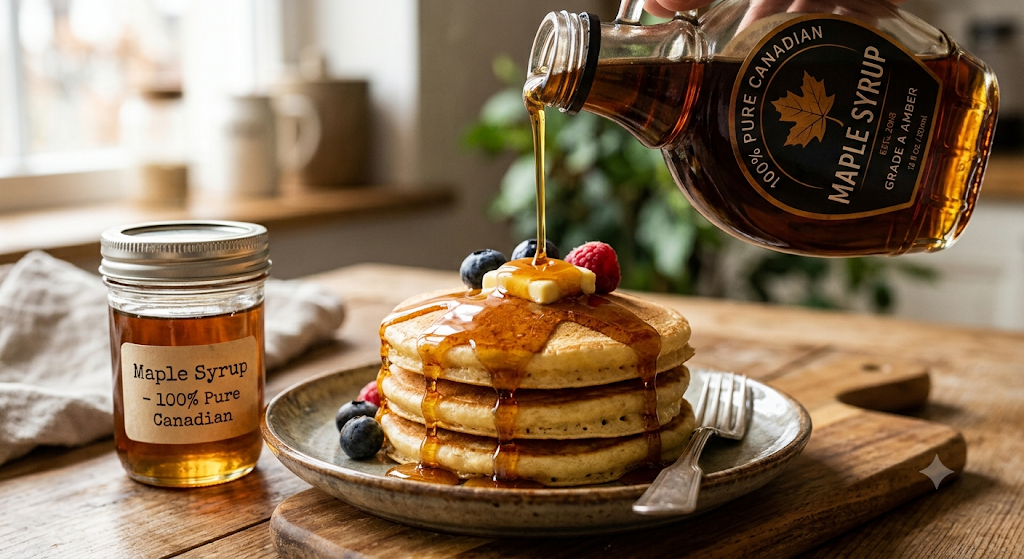
The Shocking Truth About Maple Syrup! Is What We Eat Real? From Fake Identification to Benefits & Pricing
Sweet maple syrup is naturally poured over pancakes and waffles. Many people think of it as a natural sweetener made by concentrating maple sap harvested from Canada's pristine nature.
However, there are quite a few products on the market made without actual maple sap, using sugar or corn syrup mixed with maple flavor and coloring instead.
Even more surprisingly, cases have even been confirmed where products went beyond merely imitating maple flavor and were actually sold with other sugars mixed in while falsely labeled as natural maple syrup.
1. What Actually Happened in the Maple Syrup Market
Canada is the representative producer of maple syrup. The Quebec region, in particular, is famous as a global maple syrup production hub.
The production process of maple syrup itself is quite demanding. This is because the period during which sap can be harvested from maple trees is limited, and a massive amount of sap must be boiled down to obtain just a small quantity of syrup.
This production structure naturally acts as a factor driving up prices. On the other hand, using sugar or corn syrup makes it possible to create similar colors and sweetness much more cheaply.
Allegations of Mixed Maple Syrup Sales Uncovered in Canada in 2026
In April 2026, shocking reports surrounding the maple syrup market emerged in Canada.
During an investigation into a production company in Quebec by the investigative program of the Canadian broadcaster Radio-Canada, it was confirmed that products labeled as pure maple syrup were blended with cane sugar.
It was reported that these products were also sold in major local grocery retail chains such as IGA and Metro. Samples secured during the reporting process were analyzed by the specialized institution Centre ACER, confirming that cane sugar had been added.
The reason this incident is drawing attention is not simply because cheap alternative syrups were sold, but because other sugars were mixed into products that consumers purchased believing them to be pure maple syrup.
Selling pancake syrup containing maple flavor is not illegal in itself. The problem lies in the deceptive practice of selling products containing other sugars while falsely passing them off as 100% pure maple syrup.
That does not mean we can conclude that most products distributed worldwide are fake. In the 2024-2025 inspection by the Canadian Food Inspection Agency (CFIA), all 43 maple syrup samples tested met authenticity standards.
However, this incident shows that consumers must not neglect checking product labels just because items have passed through famous regions and major distribution networks.
2. What is the Difference Between Real and Fake Maple Syrup?
Real maple syrup is a food product created by boiling sap harvested from maple trees to evaporate moisture and concentrate the sugars.
Generally, it is made solely from maple tree sap without adding sugar or flavorings.
When choosing a natural sweetener, checking the ingredient label is important.
| Category | Real Maple Syrup | Alternative Syrup |
|---|---|---|
| Main Ingredient | 100% Maple Sap | Sugar, Corn Syrup, etc. |
| Flavor | Natural woody aroma and caramel flavor | Maple flavoring, etc. |
| Color | Golden to dark brown depending on grade | Color adjustable using food dyes |
| Price | Relatively high | Relatively affordable |
What to keep in mind here is that a low price does not necessarily mean a product is fake. Depending on production efficiency or distribution structures, even genuine products can vary in price.
Conversely, a high price is no absolute guarantee of authenticity. Ultimately, the most important thing is the ingredient list.
3. What Are the Benefits of Real Maple Syrup?
So, is there any reason to purchase natural maple syrup, which carries a higher price tag?
The reason real maple syrup attracts attention is that, beyond mere sweetness, it contains various phytochemicals including polyphenols and trace minerals.
① Contains Antioxidant Compounds
Maple syrup contains phytochemicals associated with antioxidant activity, such as polyphenols.
These components are gaining interest in studies related to oxidative stress. However, it cannot be concluded that simply consuming maple syrup significantly reduces oxidative stress in the body or prevents disease.
② Nutritional Composition Differs from Sugar
While refined sugar consists almost entirely of carbohydrates, maple syrup also contains trace minerals such as potassium, calcium, manganese, and zinc.
In particular, manganese is a nutrient involved in energy metabolism and the normal functioning of antioxidant enzymes.
However, at the level of consuming small amounts of maple syrup, it is difficult to obtain sufficient quantities of these nutrients. It is not a food meant to be consumed in large amounts for nutritional supply.
③ Is the Glycemic Index Lower Than Regular Sugar?
This point is frequently mentioned when introducing maple syrup.
A comprehensive nutritional review published in 2023 reported the glycemic index (GI) of maple syrup to be around 54, compared to approximately 65 for regular sugar.
| Food | Glycemic Index (GI) |
|---|---|
| Regular Sugar | Approx. 65 |
| Maple Syrup | Approx. 54 |
In other words, some data indicates that maple syrup raises blood sugar relatively slower than regular sugar.
However, a lower GI does not mean it has no impact on blood sugar. Since maple syrup also contains a significant amount of sugar, consuming large quantities will affect blood sugar and calorie intake.
④ Can It Replace Refined Sugar?
A randomized controlled crossover trial published in 2024 examined changes when 42 adults with mild metabolic abnormalities consumed maple syrup instead of refined sugar.
Participants replaced a portion of their added sugar calories with either maple syrup or a flavored sugar syrup for 8 weeks. The study observed potential improvements in certain cardiometabolic health indicators.
Of course, because the participant count was small and the study duration was limited, this should not be interpreted as meaning maple syrup cures diabetes or cardiovascular disease.
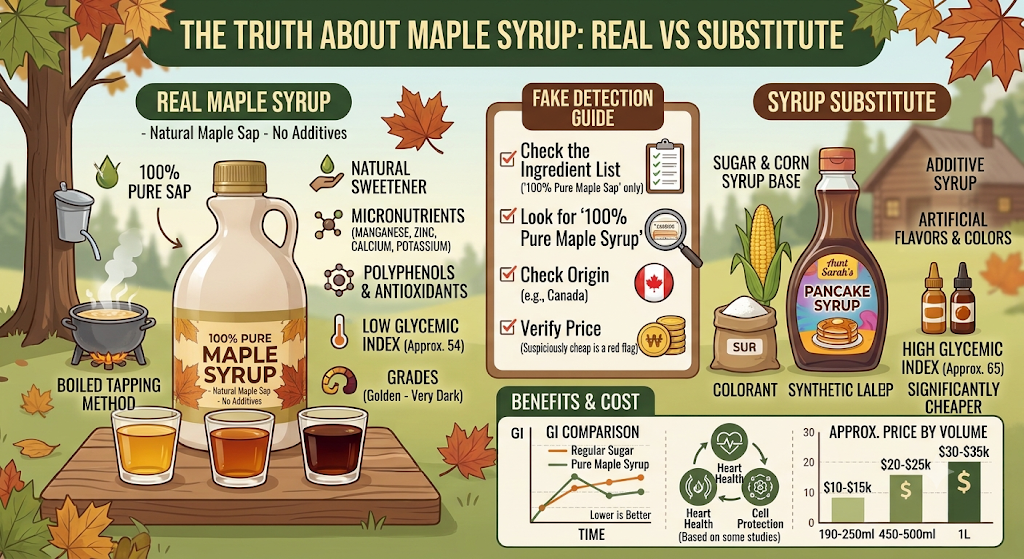
Maple syrup has the advantage of containing certain phytochemicals and trace nutrients compared to refined sugar.
However, it is fundamentally a sweetener high in sugar. Rather than consuming it heavily for health, using it in moderation as a substitute for some existing sugar is the most rational approach.
4. The Most Reliable Ways to Identify Real Maple Syrup
When purchasing a product, you should not rely solely on flashy packaging or phrases claiming it is "Canadian product."
The very first thing you must check is the ingredient list.
Ingredients: 100% Maple Sap
Alternatively, check if it is labeled in English as follows:
100% Pure Maple Syrup
On the other hand, if ingredients like the following are listed, it is a product different from pure maple syrup:
- Corn Syrup
- High Fructose Corn Syrup
- Sugar
- Caramel Color
- Maple Flavor
This does not mean such products are defective foods. However, because their raw materials and manufacturing methods differ from pure maple syrup, they should be purchased with clear distinction.
Check the Grade Indicated on the Product
Maple syrup distributed in Canada and the United States uses grading labels based on color and flavor profile.
| Grade | Characteristics | Recommended Uses |
|---|---|---|
| Golden | Light golden color, delicate flavor | Tea, yogurt |
| Amber | Amber color, rich and well-balanced flavor | Pancakes, waffles |
| Dark | Dark color, robust flavor | Cooking, baking |
| Very Dark | Very dark color, strong, intense flavor | Sauces, culinary cooking |
A darker color does not automatically mean a superior product. Color is better understood as a standard indicating differences in flavor profile rather than a measure of quality.
5. How Much Does Real Maple Syrup Cost?
Now for the most realistic aspect: what price range should you expect when directly purchasing 100% pure maple syrup?
Let us look at pricing cases for 100% Canadian maple syrup verified on domestic online retail platforms as of November 2026.
| Volume | Observed Selling Price | Reference |
|---|---|---|
| 190~250ml | Approx. 9,000~16,000 KRW | Small capacity |
| 450~500ml | Approx. 21,000~24,000 KRW | Household use |
| 1L | Approx. 23,000~27,000 KRW | Large capacity product |
※ This is a reference range summarizing verifiable price cases from online sellers. Actual purchase prices vary depending on brand, origin, organic certification, discounts, and shipping fees. It does not imply identical quality or grade across all products.
Actual Sales Examples
- No Brand 100% Pure Maple Syrup 250ml: Product indicated as 100% maple syrup in domestic product information
- Kirkland Signature Canadian Maple Syrup 1L: Selling price range of approx. 23,600~26,890 KRW
- Allegheny Organic Maple Syrup 250ml: Selling price range of approx. 12,730~14,500 KRW
- Canadian 100% Pure Maple Syrup 500ml: Selling price of approx. 21,830 KRW
Looking at the price alone, the unit price of a 1L large-capacity product can be much more affordable than a 250ml product. Therefore, purchasing a large-capacity product is more economical for frequent users.
However, if the price is excessively cheap, it is necessary to double-check the ingredient list, importer, and manufacturer.
- If buying for the first time, check the taste with a 250ml small capacity container.
- Verify whether the ingredients list 100% maple sap.
- Check the Canadian origin and importing company.
- If you use it frequently, compare the price per 100ml for 500ml to 1L products.
6. How to Best Enjoy Real Maple Syrup
Natural maple syrup is not just a food to use exclusively on pancakes. Because of its unique, subtle flavor, it can be utilized in various dishes.
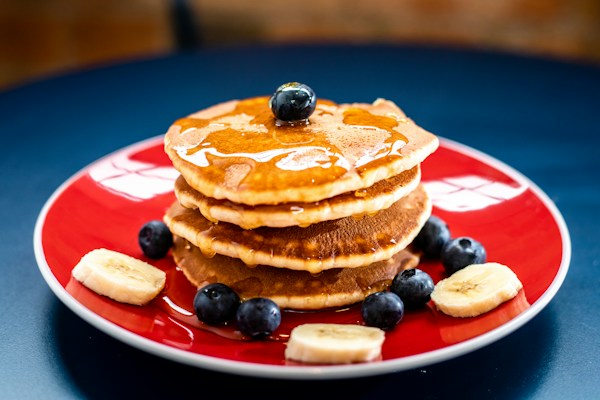 Pancakes and Waffles
The most representative application.
 Greek Yogurt and Fruit
Adding a small amount brings out a natural sweetness.
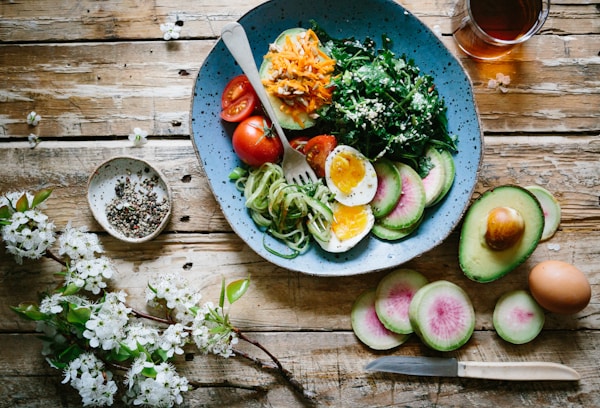 Salad Dressing
Mix a small amount with olive oil and vinegar.
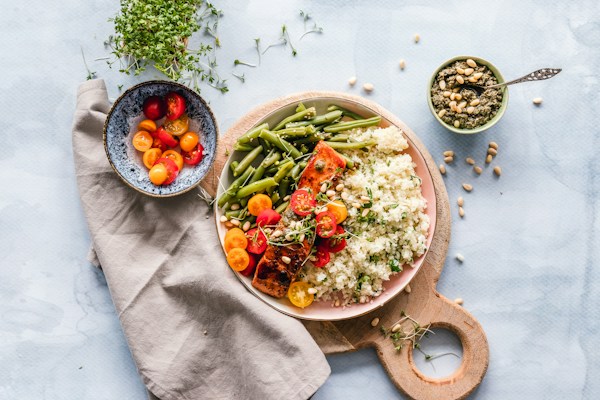 Meat Dishes and Sauces
Can be used in sweet sauces that enhance the flavor of meat.
In particular, because maple syrup carries a distinctive aroma, it adds depth of flavor to dishes rather than just providing simple sweetness like sugar.
However, if you care about your health, using 1 to 2 teaspoons to add flavor rather than using a large amount at once is recommended.
7. Conclusion: Is Expensive Natural Maple Syrup Worth Buying?
Looking into the maple syrup market reveals an interesting reality.
The products we commonly call maple syrup are actually not all of one kind. While there is pure maple syrup made by concentrating actual maple tree sap, there are also alternative products made by adding flavorings to sugar or corn syrup.
Alternative syrups also have the advantage of being cheap and convenient to use. However, the story changes if you purchase them expecting the flavor, raw materials, and nutritional profile of natural maple syrup.
Above all, the mixed-sales allegations reported in Canada in 2026 once again demonstrated that consumers should not trust a product solely based on its name or packaging.
If you want to purchase real maple syrup, there is no need to overcomplicate things.
① Check if the ingredient list states 100% maple sap
② Verify the "100% Pure Maple Syrup" label and origin
③ Compare prices by volume and look closely at products that are excessively cheap
The first step to choosing natural food is developing the habit of checking ingredient lists rather than advertising slogans.
Frequently Asked Questions (FAQ)
Q1. Are all maple-flavored syrups fake?
Not necessarily. Products made by adding maple flavor to sugar or corn syrup can be sold separately as alternative syrups. The problem arises only if they are falsely labeled as 100% pure maple syrup.
Q2. If it says "Product of Canada," does that mean it's automatically real?
No. Country of origin and ingredients are separate pieces of information. In addition to a Canadian origin label, you must check whether it is 100% maple sap.
Q3. Can people with diabetes consume maple syrup?
Maple syrup is also a sweetener high in sugar, so intake must be controlled if blood sugar management is required. Just because it is a natural product does not mean it can be consumed freely.
Q4. Is darker-colored maple syrup a better product?
No. Aroma and flavor vary depending on the color. Lighter colors tend to have a comparatively delicate flavor, while darker colors often possess a stronger flavor.
Q5. How should opened maple syrup be stored?
First check the storage instructions indicated on the product, and generally, it is best to seal and store it in the refrigerator after opening.
References and Sources
- Canadian Food Inspection Agency (CFIA), Food Fraud Annual Report 2024–2025
- Canadian Food Inspection Agency (CFIA), Labelling Requirements for Maple Products
- The Guardian, Alleged maple syrup scam in Quebec uncovered by Canadian broadcaster, 2026.04.02
- Heliyon, Nutritional, pharmacological, and sensory properties of maple syrup: A comprehensive review, 2023
- Journal of Nutrition related research, Substituting Refined Sugars With Maple Syrup, 2024
- Domestic online retailers and product sales information, verified November 2026
※ This article is general information written based on food raw materials and nutritional research, and is not medical advice for disease prevention or treatment. Selling prices are subject to change.
Related Posts:
The Season of Jujubes: Jujube Latte & Jujube Milkshake | A Taste of Rich Jujube at a Songnisan Cafe
The Season of Jujubes: Jujube Latte & Jujube Milkshake | A Taste of Rich Jujube at a Songnisan Cafe
The Season of Jujubes: Jujube Latte & Jujube Milkshake | A Taste of Rich Jujube at a Songnisan CafeWhen autumn deepens, Boeun in Chungcheongbuk-do naturally comes to mind.While it might not be the first fruit you think of like apples or grapes, when it c
zoomcook.co.kr


