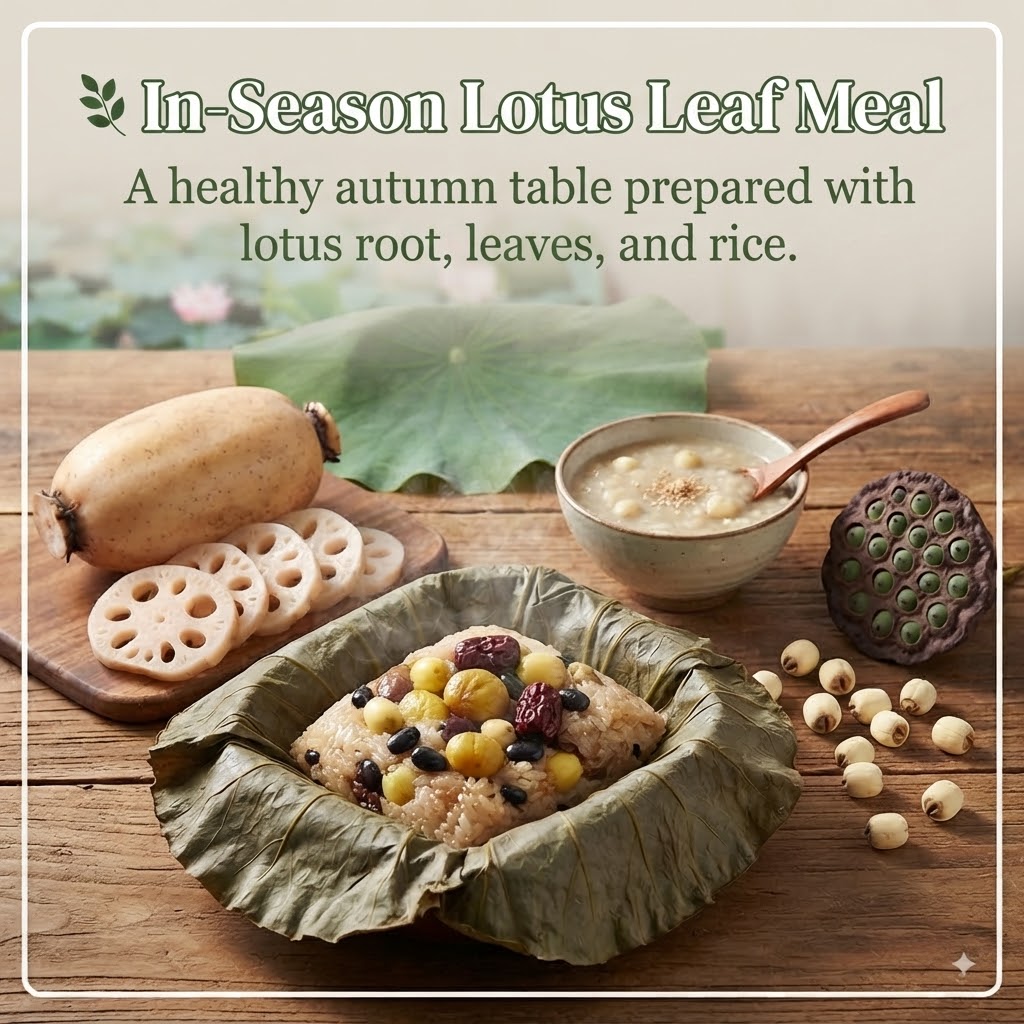
🌿 The Nutritional Value of Seasonal Lotus Seeds & Healthy Recipes with Lotus Root, Leaves, and Seeds
As summer fades and autumn approaches, lotus flowers start to wither and lotus seed pods begin to ripen across ponds. While lotus root is commonly enjoyed as a side dish, lotus seeds and lotus leaves are also essential parts of the lotus plant that have been used as ingredients since ancient times.
In particular, lotus seeds are found as small seeds inside a hard shell. These seeds are dried and used for tea or herbal medicine, or incorporated into rice, porridge, and desserts. Lotus leaves are well known for making wrapped lotus leaf rice, prized for their subtle aroma and unique flavor.
Lotus Root → Known for its crunchy texture and dietary fiber
Lotus Leaf → Used in aromatic lotus leaf rice
Lotus Seeds (Lianzi) → Seeds containing carbohydrates, protein, and dietary fiber
1. What Exactly Are Seasonal Lotus Seeds?
After the lotus flowers fade, the rounded seed pods form multiple seeds inside. These seeds are commonly referred to as lotus seeds (Lianzi).
Because lotus seeds have a hard outer shell, they are usually shelled before use rather than eaten as-is. While fresh lotus seeds can be used, soaking dried lotus seeds is also a common method.
They taste savory and subtly nutty, somewhere between nuts and beans. When boiled or cooked, they turn soft, making them a great addition to porridge, rice dishes, rice cakes, and desserts.
2. What is the Nutritional Value of Lotus Seeds?
Though small, lotus seeds contain carbohydrates, protein, and dietary fiber, making them a valued ingredient through the ages. However, nutritional components can vary depending on whether they are fresh or dried, as well as their variety and growing environment.
| Nutrient | Characteristics |
|---|---|
| Carbohydrates | Serves as the primary energy source of lotus seeds. |
| Protein | Contains plant-based protein. |
| Dietary Fiber | Helps provide a feeling of fullness and supports a balanced diet. |
| Minerals | Contains various minerals such as potassium, phosphorus, and magnesium. |
Particularly because lotus seeds lean closer to a savory seed than a sweet snack, cooking them without adding excessive sugar or syrup helps keep things light. Do keep in mind that dried lotus seeds have their moisture removed, concentrating their nutrients and calories, so it's best to moderate your portion size.
Just because lotus seeds are healthy doesn't mean you need to eat them in large quantities. Dried lotus seeds are more nutrient- and calorie-dense than fresh ones, so instead of eating a lot at once, it's best to toss a moderate amount into rice or porridge.
3. Lotus Root Gets Even More Delicious in Autumn
Along with lotus seeds, lotus root is another major ingredient gathered during the lotus growth cycle. Thanks to its crunchy texture and subtle sweetness, lotus root can be used in braised dishes, stir-fries, tempura, salads, and more.
Lotus root contains carbohydrates and dietary fiber, along with vitamin C and potassium. Soaking sliced lotus root briefly in vinegared water is a great trick to minimize browning.
4. The Most Famous Lotus Leaf Dish: Lotus Leaf Rice (Yennipbap)
Lotus leaves can be used to wrap and steam rice thanks to their distinct aroma and wide surface area. Lotus leaf rice is characterized by the subtle fragrance of the leaf infusing the rice and ingredients, letting you enjoy deep flavors without heavy seasonings.
🍚 Basic Lotus Leaf Rice Recipe
- 1-2 lotus leaves
- Soaked glutinous or regular rice
- Lotus seeds
- Black beans, ginkgo nuts, jujubes, or other preferred ingredients
- A pinch of salt
① Wash the lotus leaves thoroughly and briefly blanch them in boiling water to soften.
② Partially cook the rice, lotus seeds, and beans beforehand.
③ Place the rice mixture on top of the lotus leaf and wrap it tightly.
④ Steam it thoroughly so the fragrance of the lotus leaf permeates the rice.
Since the core of lotus leaf rice is highlighting the natural flavors of the ingredients, it is best not to over-season it. Adding nuts and beans makes the texture even richer.
5. Nourishing Rice with Lotus Seeds
One of the easiest ways to use lotus seeds is right in your rice cooker. Just toss soaked lotus seeds in with your rice.
Prepare 2 cups of rice + a handful of soaked lotus seeds + a few black beans + 2-3 jujubes.
After washing the rice, add slightly less water than usual, top with the lotus seeds and other ingredients, and cook as usual.
Because lotus seeds are hard, soaking them thoroughly beforehand is essential. If you add dried lotus seeds straight in, they won't have enough time to cook through and will stay uncomfortably hard.
6. Craving Something Soft? Lotus Seed Porridge
If you want an easily digestible meal or prefer a soft texture, turning lotus seeds into porridge is a great choice.
🥣 How to Make Lotus Seed Porridge
Combine soaked lotus seeds and rice with plenty of water, and simmer slowly. Once the rice grains have fully expanded and the lotus seeds are tender, season with a pinch of salt.
If you like a nutty flavor, you can sprinkle a little toasted sesame on top at the end. However, adding too much sesame oil or salt can mask the clean taste of the lotus seeds, so keep it light.
7. 3 Easiest Side Dishes Made with Lotus Root
🥢 ① Braised Lotus Root (Yeongeun-jorim)
Slice the lotus root into bite-sized pieces, soak them briefly in vinegared water, and braise them with soy sauce, water, and oligosaccharide. Once they turn glossy and absorb the sauce evenly, they're done. To cut down on sweetness, reduce the amount of sweetener and lean on onions or jujubes for natural flavor.
🥗 ② Lotus Root Salad
Briefly blanch thinly sliced lotus root and chill them in cold water to lock in the crunch. Toss them with cucumbers, carrots, and nuts, then dress with plain yogurt or a vinegar-based dressing for a refreshing salad.
🍳 ③ Pan-Fried Lotus Root Pancakes (Yeongeun-jeon)
Slice lotus root thinly, coat with flour and beaten egg, and pan-fry until golden. For a heartier dish, you can sandwich minced meat or tofu between two slices of lotus root.
8. Combining Lotus Root, Leaves, and Seeds on One Table
Utilizing various parts of the lotus plant lets you build a diverse menu from a single plant category.
| Ingredient | Recommended Dish | Characteristics |
|---|---|---|
| Lotus Seeds | Lotus seed nutrient rice, lotus seed porridge | Savory and nutty flavor |
| Lotus Leaf | Lotus leaf rice, lotus leaf tea | Subtle, elegant aroma |
| Lotus Root | Braised, pan-fried, or salad | Crunchy texture |
9. The Secret to Eating Lotus Seeds Healthily: The Seasoning
What drives up the sugar and sodium in your actual meal is often not the lotus seeds or roots themselves, but the seasonings used during cooking. Dishes that rely heavily on sugar or syrups, like braised lotus root, can rack up higher-than-expected sugar intake.
Therefore, if you care about health, it's best to highlight the natural taste of the ingredients and keep seasonings light. Enjoy lotus seeds in nutrient rice with just a pinch of salt, keep lotus root blanched in a salad, and use lotus leaves for wholesome leaf-wrapped rice to fully appreciate the natural charm of lotus.
🌿 Wrapping Up
It's easy to think of lotus flowers as just pretty blooms, but from roots to leaves and seeds, they offer a wonderful variety of culinary applications.
Seasonal lotus seeds bring a clean taste and unique texture great for rice and porridge, lotus leaves provide aromatic wraps, and lotus roots shine in side dishes like braises, pancakes, and salads.
Rather than viewing lotus seeds as a magic health superfood, it's best to enjoy them as part of a versatile, balanced pantry. Tone down heavy seasonings and naturally savor the seasonal essence of lotus.
※ This post is written based on general nutritional and culinary information and does not replace medical advice for treating or preventing specific conditions.
You might also like:
Top 5 Korean Ramyeon Upgrade RecipesAuthentic Korean Ramyeon Culture Every Foreigner Must Try
Top 5 Korean Ramyeon Upgrade RecipesAuthentic Korean Ramyeon Culture Every Foreigner Must Try
Top 5 Korean Ramyeon Upgrade Recipes Authentic Korean Ramyeon Culture Every Foreigner Must TryWhen foreign visitors plan a trip to Korea, iconic foods like Samgyeopsal (grilled pork belly), Korean fried chicken, Tteokbokki (spicy rice cakes), and Kimchi st
zoomcook.co.kr


