Homemade Winter Snacks · Oven Cooking · Sweet Potato Recipe
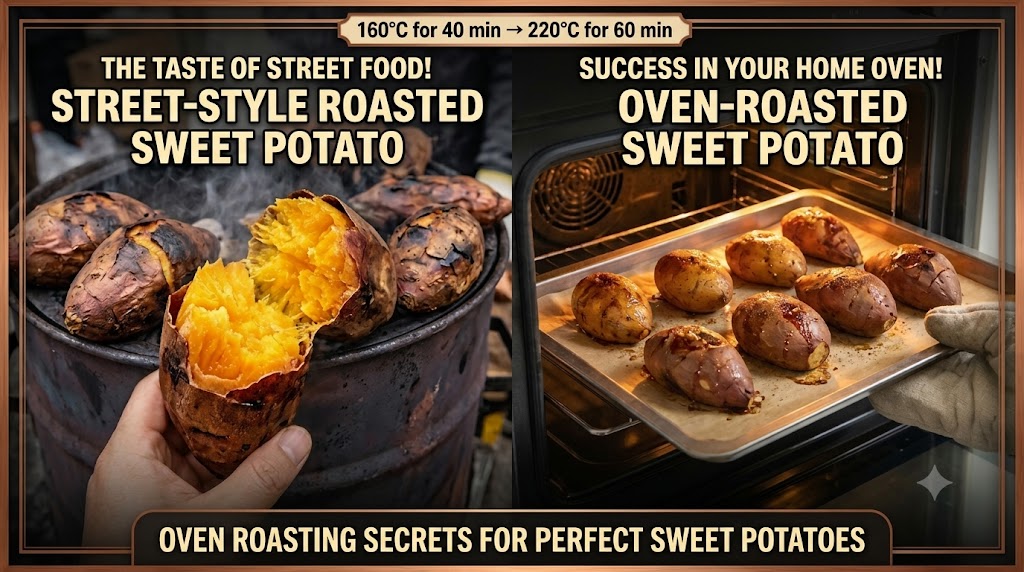
Just Like Street Vendors! My Secret to Perfection with Oven-Roasted Sweet Potatoes
Whenever I grab a warm roasted sweet potato from a street vendor during winter, I always wonder if I can recreate that rich, sweet flavor at home. But whenever I tried baking them in the oven, they would end up dry and tough, or taste no different from steamed sweet potatoes.
Many of you have probably had sweet potatoes turn out half-cooked or underdone inside after following unreliable recipes online.
I tested several temperature combinations myself. I found that baking them first at 160°C (320°F) and then giving them a solid finish at 220°C (430°F) creates a world of difference compared to standard oven recipes. The skin turns beautifully golden and caramelized while the inside stays silky smooth, locking in that deep roasted aroma.
Here is an extra secret tip! I also tried soaking the sweet potatoes in cold water for 30 minutes to an hour before baking. In my experience, preparing them this way made them noticeably sweeter and more delicious.
Today's Key Recipe
✔ Bake at 160°C (320°F) for 40 minutes
✔ Flip over and bake at 220°C (430°F) for 30 minutes
✔ Flip once more and bake at 220°C (430°F) for 30 minutes
Total Time: 100 minutes · Pre-soak in cold water for 30–60 minutes
※ Actual baking time may vary depending on sweet potato size, variety, and oven model.
1. Simple Ingredients & Prep
- 3–5 sweet potatoes
- Clean water for washing and a bowl of cold water for soaking
- Oven and baking sheet
- Chopstick or skewer
For best results, use moist and naturally sweet varieties like Korean honey sweet potatoes (Ggul-goguma) or pumpkin sweet potatoes (Hobak-goguma).
Chestnut sweet potatoes (Bam-goguma) are also tasty, but their fluffier texture will yield a different final result.
Try to pick sweet potatoes of uniform size. If sizes vary too much, smaller ones will overcook while larger ones remain raw in the middle.
2. Soak in Cold Water for 30–60 Minutes
First, wash off any dirt from the surface under cold running water. Next, submerge them in a bowl of cold water for 30 minutes to an hour.
This is a step I personally integrated after experimenting with different methods. Soaking them beforehand made them taste noticeably sweeter and juicier after roasting.
Personal Tip
Cold water soaking is easy to try, so feel free to compare the difference yourself! While it isn't scientifically proven that soaking alone boosts sugar levels, sweetness also depends heavily on the variety, storage conditions, and cooking temperature.
Once removed from the water, make sure to dry the surface thoroughly. Excess surface moisture can prevent the skin from roasting to a nice, crisp texture.
3. Step 1: Bake at 160°C (320°F) for 40 Minutes
Preheat your oven to 160°C (320°F) and place the sweet potatoes on the baking sheet, leaving space between each. Bake for 40 minutes.
Instead of starting at a high heat, this initial slow phase allows heat to gently penetrate all the way to the core. If your sweet potatoes are large or your oven runs cool, you may need a few extra minutes.
The goal here isn't to char the skin, but to ensure the inside is fully cooked before applying intense heat later.
4. Step 2: Increase Heat to 220°C (430°F) for 30 Minutes
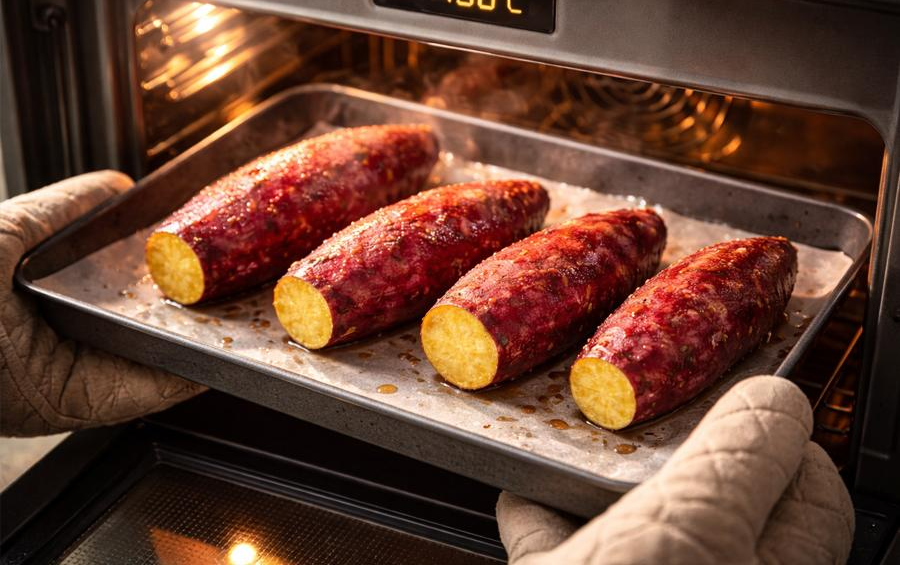
After the initial 40 minutes, flip the sweet potatoes over. Increase the temperature to 220°C (430°F) and bake for another 30 minutes.
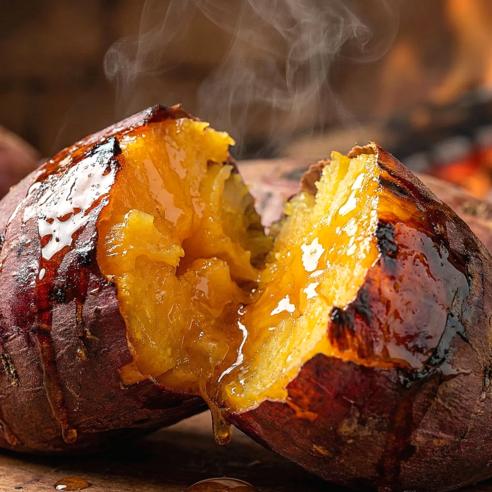
During this phase, the skin starts to turn golden brown and releases that unmistakable street-style roasted aroma. You might see caramelized sugars bubbling out onto the tray—this caramelization adds incredible flavor.
Since 220°C (430°F) is quite hot, keep an eye on them. Smaller sweet potatoes can scorch quickly, so check on them halfway through.
5. Step 3: Flip Again & Bake at 220°C (430°F) for 30 Minutes
After the first high-temperature phase, flip the sweet potatoes one last time and bake at 220°C (430°F) for a final 30 minutes.
This is the key secret to this method: 40 minutes at 160°C (320°F), flip, 30 minutes at 220°C (430°F), flip again, and 30 minutes at 220°C (430°F). Baking for a total of 100 minutes replicates that authentic, intense sweetness and smoky aroma from street food carts.
Not all sweet potatoes take exactly 100 minutes—timing depends on size, moisture content, variety, and fan settings. Check for doneness by inserting a skewer; it should slide smoothly into the center without resistance.
Oven-Roasted Sweet Potato Schedule
| Step | Temp & Time |
|---|---|
| Step 1 | 160°C (320°F) · 40 min |
| Step 2 | Flip over → 220°C (430°F) · 30 min |
| Step 3 | Flip again → 220°C (430°F) · 30 min |
| Total Time | 100 minutes |
※ Times are based on medium-sized sweet potatoes. Adjust according to size and oven performance.
6. Why Low and Slow Baking Unlocks Maximum Sweetness
Sweetness in roasted sweet potatoes isn't just a matter of baking longer. Sweet potatoes naturally contain starches, which internal enzymes convert into maltose sugar during heating.
This enzymatic reaction is temperature-dependent. Cooking at a moderate heat lets enzymes convert starch effectively. However, baking at too high a heat immediately dries them out and burns the surface before sweetness develops.
That's why starting at a lower temperature and finishing at a higher temperature works so well: the initial stage converts starches into sugar, while the final stage caramelizes the exterior for deep flavor.
Note that oven setting temperatures (160°C / 220°C) aren't the exact internal temperatures of the sweet potato. Internal heat builds up gradually, making this dual-temperature method a practical, foolproof approach for home ovens.
7. Tips for the Best Flavor & Easy Cleanup
- Rest before serving: Let them rest for 5–10 minutes after removing from the oven so they are easier to handle.
- Split open while hot: Tear them open while steamy to check internal moisture and texture.
- Add time for extra-large potatoes: If the outside looks done but the core feels firm, give them extra baking time.
- Use parchment paper: Line your pan with parchment paper to catch sticky caramelized drips for easy cleanup. (Always follow your oven's safety instructions regarding parchment paper).
Caramelized sugars that drip onto the pan can harden and become difficult to scrub off. Parchment paper saves time, but ensure it stays secured away from direct heating elements.
Frequently Asked Questions (Q&A)
Q. Does it really take 100 minutes in the oven?
My tested method takes 100 minutes total for medium potatoes. Smaller sweet potatoes will finish faster, while larger ones take longer. Test with a skewer to gauge doneness.
Q. Does soaking in cold water really increase sweetness?
In my experience, soaked sweet potatoes turned out sweeter and juicier. While soaking alone isn't a proven scientific magic trick, combining it with controlled baking temperature yields great results.
Q. Can I wrap the sweet potatoes in aluminum foil?
You can, but foil traps steam, resulting in a steamed texture rather than roasted. For a smoky flavor and caramelized skin, bake them uncovered.
Wrap-Up|Enjoy Street-Style Roasted Sweet Potatoes at Home
While roasting sweet potatoes is simple, adjusting temperature and timing makes a huge difference in flavor and texture.
To recap: wash, soak in cold water for 30–60 minutes, dry thoroughly, then bake at 160°C (320°F) for 40 min, flip and bake at 220°C (430°F) for 30 min, and flip again for a final 30 min at 220°C (430°F).
Give this method a try to enjoy rich, caramelized sweet potatoes right at home. Adjust cooking times slightly to match your specific oven!
How do you like to roast your sweet potatoes?
Share your favorite tips, air fryer experiences, or variety preferences in the comments below!
This recipe is based on personal home cooking experience. Results may vary depending on sweet potato size, variety, condition, and oven performance.
Recommended Reads:
How to Make Korean-Style Candied Chestnuts | What's the Differen
How to Make Korean-Style Candied Chestnuts | What's the Difference from Japan’s Kuri Kanroni? From Chestnut Benefits to Storag
How to Make Korean-Style Candied Chestnuts | What's the Difference from Japan’s Kuri Kanroni? From Chestnut Benefits to Storage TipsWhen autumn arrives, many people think of roasted chestnuts or chestnut rice.However, if you want to try something a bit d
zoomcook.co.kr


