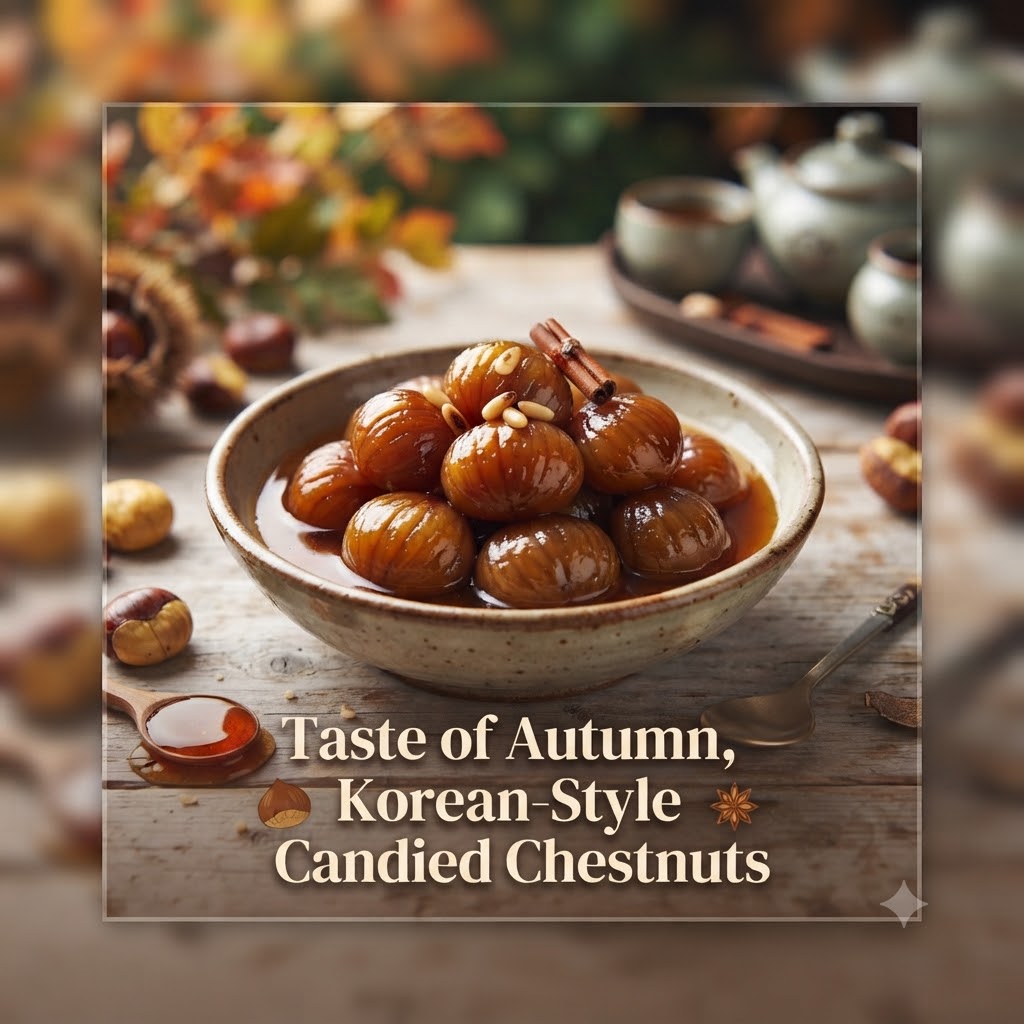
How to Make Korean-Style Candied Chestnuts | What's the Difference from Japan’s Kuri Kanroni? From Chestnut Benefits to Storage Tips
When autumn arrives, many people think of roasted chestnuts or chestnut rice.
However, if you want to try something a bit different with fresh chestnuts, I highly recommend making candied chestnuts.
Simmering peeled chestnuts slowly in a sweet syrup leaves their signature fluffy texture intact while giving them a glossy outer sheen and a subtle, mellow sweetness in every bite.
Adding a Korean touch with jocheong (rice syrup), honey, and a hint of soy sauce creates a rich depth of flavor that goes beyond a simple dessert.
How have candied chestnuts been enjoyed in Korea?
How are they different from Japan's Kuri Kanroni (栗の甘露煮)?
What nutritional benefits do chestnuts offer?
How to make them at home without failing, plus storage tips
🌰 What Are Korean-Style Candied Chestnuts?
First, we need to clear up one important point.
There isn't a single standardized, traditional recipe for "Korean-style candied chestnuts" that exists uniformly across the entire country.
In Korea, chestnuts have long been used in rice, rice cakes, porridge, and various dishes, and different regions and households have enjoyed preparing them sweet or incorporating them into meals in diverse ways.
In fact, even the Rural Development Administration introduces recipes like braised chestnuts and vegetables in soy sauce, proving that chestnuts pair wonderfully with savory soy sauce as well as sweetness.
Therefore, a great baseline for making Korean-style candied chestnuts at home is combining chestnuts + jocheong or honey + soy sauce + water.
Unlike Japanese desserts made overly sweet with loads of sugar, the key to the Korean style is adding just a tiny splash of soy sauce so that a subtle savory note lingers right after the sweetness.
What Is Japan's 'Kuri Kanroni'?
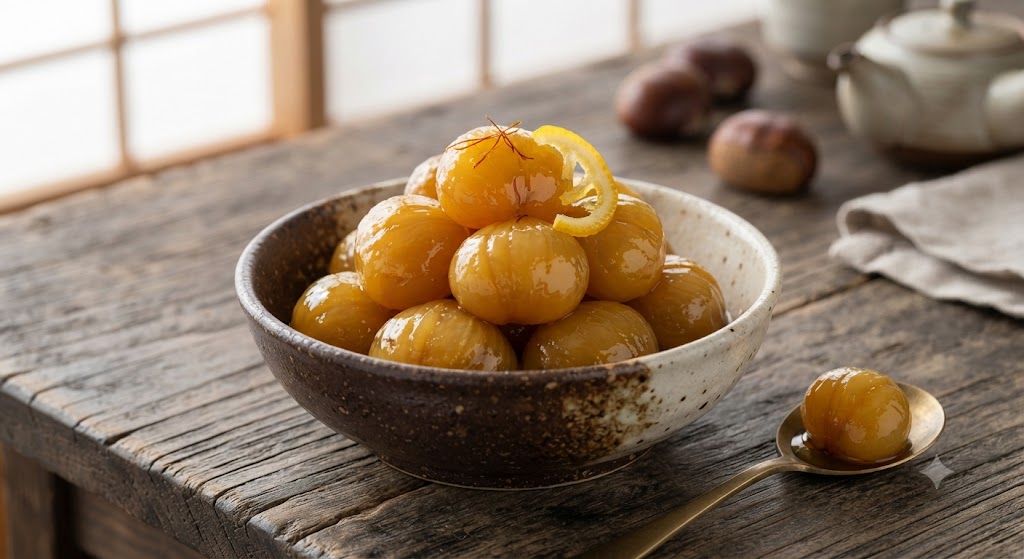
When looking up candied chestnuts, you'll frequently come across Japan's Kuri Kanroni (栗の甘露煮).
In Japanese, 栗 (kuri) means chestnut, and 甘露煮 (kanroni) refers to a cooking method where ingredients are simmered in a sweet syrup.
In short, Kuri Kanroni literally translates to "sweet-simmered chestnuts."
In Japan, chestnuts are boiled after thoroughly removing both the outer shell and the shibu-kawa (inner skin), then slowly simmered in a sugar syrup. Notably, recipes utilizing kuchinashi (gardenia fruit) to give the chestnuts a vibrant yellow color are widely known. Traditional Japanese recipes involve boiling the chestnuts with gardenia before steeping them repeatedly in sugar syrup over time.
These kanroni chestnuts are enjoyed on their own or used in Osechi (New Year's dishes), especially Japanese Kurikinton (sweet chestnut paste) and various desserts.
In fact, Japanese chestnut kanroni serves not just as a casual snack, but as a very useful ingredient for creating other dishes and sweets.
🇰🇷 Korean-Style Candied Chestnuts vs. 🇯🇵 Japanese Kuri Kanroni
| Category | Korean-Style Candied Chestnuts | Japanese Kuri Kanroni |
|---|---|---|
| Primary Flavor | Sweet with a subtle savory kick | Sweet sugar syrup |
| Main Sweeteners | Jocheong, honey, sugar, etc. | Sugar |
| Soy Sauce | Used in small amounts | Generally not used |
| Color | Natural chestnut brown | Vibrant yellow using gardenia fruit |
| Usage | Side dish, dessert, snack | Osechi, kurikinton, desserts |
Therefore, the easiest way to understand them is that while they share the basic concept of "sweetly simmering chestnuts," their flavor directions and uses are distinct.
Adding just a tiny drop of soy sauce to Korean-style candied chestnuts actually makes the chestnut's sweetness pop.
On the other hand, Japanese Kuri Kanroni focuses on creating sweet chestnuts with a bright, vivid color using sugar syrup and gardenia fruit.
🌰 Making Korean-Style Candied Chestnuts at Home
My top recommendation is not to make them overly sweet.
Since chestnuts naturally have an inherent sweetness of their own, using moderate amounts of jocheong or honey is more than enough.
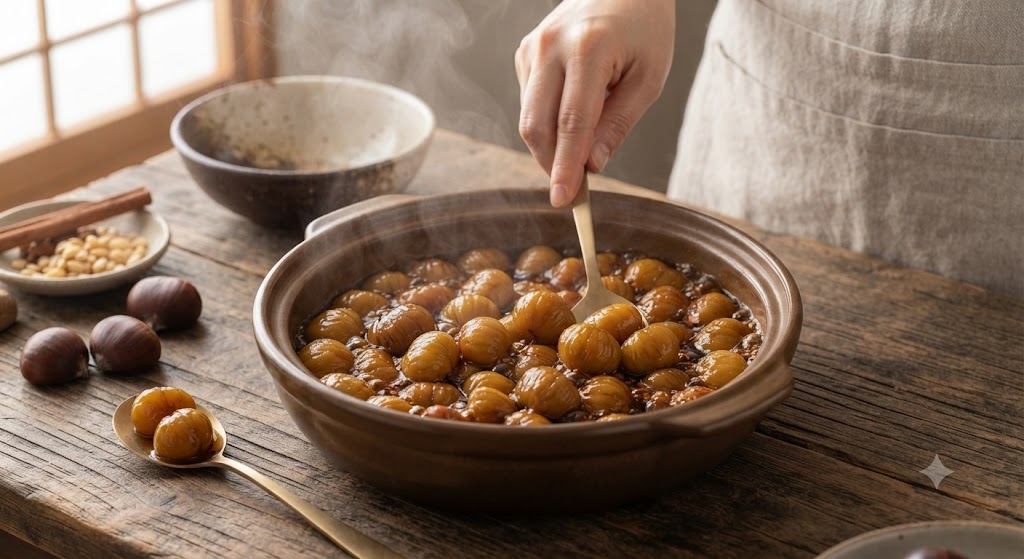
Ingredients
- 500g peeled fresh chestnuts
- 250ml water
- 3–4 tbsp jocheong (rice syrup)
- 1 tbsp honey
- 1 tbsp soy sauce
- A pinch of salt
- Optional: A cinnamon stick or a slice of ginger
① Prep the Fresh Chestnuts
Once you peel the fresh chestnuts, submerge them in water right away.
Because chestnuts easily discolor when exposed to air, it's best to drop them straight into water the moment they are peeled.
If peeling them yourself feels like too much of a chore, starting with pre-peeled chestnuts is a great alternative. Abroad, using frozen peeled chestnuts makes the process much easier.
② Pre-Boil the Chestnuts
Place the chestnuts and water in a pot and gently pre-boil them over medium-low heat.
Never boil them aggressively until they turn completely mushy.
Keep the heat low enough so that the chestnuts don't bounce around violently inside the pot.
This step is crucial because chestnuts break apart quite easily.
③ Add the Korean-Style Seasoning
When the chestnuts are about 70–80% cooked, leave a small amount of water in the pot and add the jocheong, honey, and soy sauce.
Adding too much soy sauce from the start will darken the color and make them too salty.
Think of the soy sauce not as a dominant flavor, but as a balancer to anchor the chestnut's natural sweetness.
④ Simmer Slowly on Low Heat
Leave the lid off and simmer slowly on low heat.
Avoid stirring constantly with a spatula during this phase.
Instead, gently swirl the pot so the glaze coats all the chestnuts evenly.
Turn off the heat once the simmering liquid becomes syrupy and a glossy sheen coats the surface of the chestnuts.
⑤ Cool to Let the Flavors Seep In
Candied chestnuts are actually much tastier when cooled down rather than eaten piping hot.
This is because the glaze gradually absorbs deeper into the chestnuts as they cool.
Tasting one while it's warm and thinking, "Hmm, is it a bit too bland?" and adding more jocheong is strongly discouraged.
It's much more accurate to check the flavor after they've cooled.
🔥 5 Golden Rules for Perfect Candied Chestnuts
- Don't boil the chestnuts for too long.
- Avoid rolling a heavy boil over high heat.
- Don't constantly stir with a spatula.
- Keep the soy sauce to a minimum.
- Let them cool thoroughly afterward so the flavors develop.
The third rule is especially critical.
One of the most common reasons candied chestnuts fail is "constantly stirring them in an attempt to distribute the flavor evenly."
Doing so might spread the taste, but it will break the chestnuts apart into a mashed disaster.
🌰 What Nutritional Benefits Do Chestnuts Have?
Because chestnuts are grouped under nuts, people often assume they are packed with fats like almonds or walnuts.
However, chestnuts are quite different.
Chestnuts lean closer to being foods rich in carbohydrates and starches rather than typical nuts.
They also contain dietary fiber, vitamins, and minerals, making them a fantastic seasonal snack or cooking ingredient for autumn. USDA nutrition data confirms that chestnuts contain carbohydrates and dietary fiber.
✔ Benefits of Eating Chestnuts
1. Great as a filling snack.
Packed with carbs and fiber, eating just a few chestnuts helps you feel reasonably satisfied.
2. Contributes to dietary fiber intake.
Dietary fiber is an essential component of a balanced diet.
3. A nut with relatively low fat content.
Their nutritional makeup is vastly different from high-fat nuts like almonds or walnuts.
4. Highly versatile across various dishes.
They can be used in both traditional Korean foods and desserts like chestnut rice, porridge, rice cakes, kanroni, lattes, and cakes.
Aside from the inherent nutrition of chestnuts, adding heaps of jocheong, honey, and sugar will drive up sugar and calorie counts. If health is a priority, it's best to let the natural flavor of the chestnuts shine and avoid going overboard with sweeteners.
🍯 So, What's the Best Way to Eat Chestnuts?
Personally, I recommend ranking them: Fresh or Roasted Chestnuts → Chestnut Rice → Candied Chestnuts.
While delicious, candied chestnuts ultimately contain added sweeteners.
Especially for anyone watching their diet or sugar intake, enjoying candied chestnuts as a small treat of 2 to 4 pieces like a dessert keeps the burden minimal.
Pairing candied chestnuts with nuts or plain yogurt also creates a wonderful combination that rises above a purely sugary dessert.
🌏 Why This Food Is So Fun for Foreigners, Too
Candied chestnuts are a fantastic subject when introducing Korean food overseas.
Mainly because the preparation process is remarkably straightforward.
Chestnuts → boil → season → simmer → cool.
The core process is that simple.
Fresh chestnuts are easy to find during autumn in Korea, and abroad, you can easily pull off a similar style by sourcing peeled chestnuts or frozen chestnuts.
If Korean jocheong isn't available, honey or maple syrup work great as substitutes.
If soy sauce feels intimidating, you can start by adding just a tiny drop.
Jocheong → Honey / Maple syrup
Fresh chestnuts → Peeled or frozen chestnuts
Soy sauce → Soy sauce
Malt syrup → Corn syrup or rice syrup
In short, you can easily adapt the recipe even in places where traditional Korean ingredients are hard to find.
Why Making Them Korean-Style Is Special
If Japanese Kuri Kanroni leans into a sugary sweetness centered around sugar syrup, Korean-style candied chestnuts build a more meal-like, savory depth using the rich sweetness of jocheong and the umami of soy sauce.
As a result, they can be enjoyed as a dessert or served alongside a meal like a side dish.
Especially after a heavy meat dish, popping one or two in your mouth leaves a clean, comforting finish thanks to the chestnut's characteristic wholesome and fluffy texture.
🫙 How Should You Store Candied Chestnuts?
There's an important rule to keep in mind here.
Never store homemade candied chestnuts at room temperature for a long time just because they contain sugar.
Home-cooked foods have different preservation conditions compared to commercially sterilized and sealed products.
Once finished, let the candied chestnuts cool completely and store them in a clean, airtight container in the refrigerator for safety.
The Rural Development Administration also guides that long-term storage of fresh chestnuts is best done by boiling and freezing them.
Similarly, Japanese recipes for chestnut kanroni instruct storing the finished product in clean containers in the fridge and consuming them as soon as possible.
Refrigerated Storage
I strongly recommend making small batches to consume within a few days.
Always use clean chopsticks or tongs when grabbing them, and discard them immediately if you notice any unusual smells, discoloration, or surface changes.
Frozen Storage
If you've made a large batch, portioning them into single-serving amounts for the freezer is a great option.
When freezing, seal them tightly to minimize air exposure, and thaw them in the refrigerator when you're ready to eat.
A traditional Japanese recipe also highlights portioning and freezing chestnut kanroni as a handy storage tip.
🍵 Ways to Enjoy Candied Chestnuts Even More
- With warm tea → The simplest autumn dessert
- With plain yogurt → A delightful match of chestnut sweetness and yogurt's tanginess
- On top of ice cream → Transforms into an upscale chestnut dessert
- Blended into a chestnut latte → Mash chestnuts and blend them with milk
- With glutinous rice cakes or dumplings → A traditional Korean autumn treat
- Served alongside chestnut rice → Used like a sweet side dish
Mashing up a few candied chestnuts and blending them with milk surprisingly makes an amazing Korean-style Chestnut Latte.
🌰 Ultimately, the Charm of Candied Chestnuts Is 'Savoring Autumn Longer'
Fresh chestnuts are delicious, but peeling them is tedious, and buying them in bulk brings storage worries.
However, once you prep and simmer chestnuts into a candied preserve, they double as an afternoon sweet with tea, a yogurt or ice cream topping, or a base ingredient for lattes and various desserts.
Comparing them to Japan's Kuri Kanroni makes it even more fascinating.
Japan uses sugar syrup and gardenia fruit to create bright, sweet chestnuts, whereas Korean-style candied chestnuts leverage jocheong, honey, and soy sauce to offer a more culinary, nuanced experience.
Neither style is objectively "better."
However, if you want something easy to whip up at home, Korean-style candied chestnuts shine because of their simple ingredients and adaptability anywhere in the world.
✔ Chestnuts are a quintessential autumn ingredient rich in carbs and fiber
✔ Korean-style candied chestnuts combine jocheong, honey, and soy sauce for a deep sweet-and-savory profile
✔ Japanese Kuri Kanroni focuses on sugar syrup and gardenia-dyed sweetness
✔ Low-heat simmering is essential since high heat easily breaks chestnuts apart
✔ Store refrigerated after completion and enjoy promptly
✔ Easily adaptable abroad using peeled or frozen chestnuts
✔ Pairs wonderfully with yogurt, ice cream, lattes, and rice cakes for a novel autumn dessert
❓ Frequently Asked Questions
Q. Are candied chestnuts and Japanese Kuri Kanroni the same thing?
While they share similar preparation methods, they aren't entirely identical. Both involve simmering chestnuts sweetly, but Japanese Kuri Kanroni typically relies on sugar syrup and gardenia fruit, whereas the Korean-adapted style incorporates jocheong, honey, and soy sauce for a balanced sweet-and-savory touch.
Q. Is soy sauce mandatory for candied chestnuts?
Not at all. Soy sauce is optional. However, adding just a tiny splash prevents the sweetness from tasting flat and adds a wonderful depth.
Q. Can I store candied chestnuts at room temperature?
Long-term room temperature storage for homemade candied chestnuts is not recommended. Keep them in a clean airtight container in the fridge and enjoy them within a short period.
Q. Can I use frozen chestnuts instead of fresh ones?
Yes, absolutely. Especially abroad, using frozen peeled chestnuts saves you from the hassle of manual peeling, making the process much more convenient.
Conclusion
If you buy chestnuts this autumn, don't just limit yourself to roasted chestnuts or chestnut rice—try making candied chestnuts at least once.
Just a spoonful of jocheong and a dash of soy sauce will completely transform the flavor profile of the chestnuts.
And while chestnuts are deeply familiar to Koreans, to foreigners, they represent a fascinating culinary experience: "Korean-style autumn chestnuts simmered with soy sauce and honey."
Korean-style candied chestnuts.
Framed this way, a simple batch of candied chestnuts turns into an excellent piece of food content that compares Korea's autumn food culture with Japan's Kuri Kanroni.
※ Chestnut nutritional values may vary depending on the variety, freshness, and cooking state. Candied chestnuts can increase in sugar and calorie content based on the amount of jocheong, honey, or sugar used. Storage longevity depends on hygiene, cooking methods, and fridge temperatures, so discard them if any signs of spoilage appear.
References: Rural Development Administration, Ministry of Agriculture, Forestry and Fisheries (MAFF) of Japan, and various Japanese culinary resources.
Recommended Posts to Check Out:
The Season of Jujubes: Jujube Latte & Jujube Milkshake | A Taste o
The Season of Jujubes: Jujube Latte & Jujube Milkshake | A Taste of Rich Jujube at a Songnisan Cafe
The Season of Jujubes: Jujube Latte & Jujube Milkshake | A Taste of Rich Jujube at a Songnisan CafeWhen autumn deepens, Boeun in Chungcheongbuk-do naturally comes to mind.While it might not be the first fruit you think of like apples or grapes, when it c
zoomcook.co.kr


