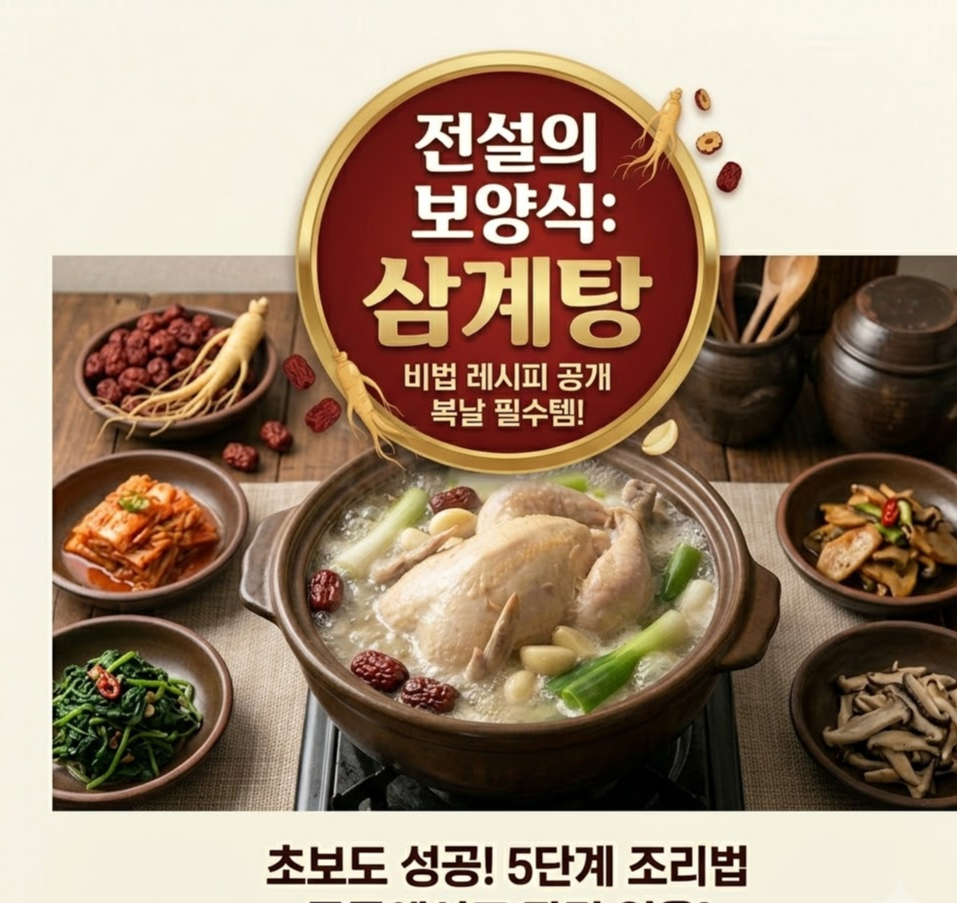
Essential Knowledge for 2026 Boknal: Samgyetang Benefits & Secret Recipe. If You Don't Know 'This', It Becomes Poison Instead of Medicine? (From Choosing Chicken to Medicinal Herb Compatibility)
Samgyetang (Ginseng Chicken Soup) is widely considered the ultimate stamina-boosting health food for the summer season. However, do you know how many scientific principles and historical backgrounds are hidden inside the single bowl of Samgyetang that we mindlessly consume every year? If you thought of it as a simple meat broth, you are sorely mistaken. If you fail to achieve the right nutritional balance or use medicinal herbs that do not suit your body constitution indiscriminately, it can actually strain your body.
This guide encompasses professional information found nowhere else, starting from the deep historical roots of Samgyetang to the core criteria that determine chicken quality, the benefits of individual medicinal herbs, and side dish combinations that double the flavor. By reading this article to the end, you will master the secrets of 'true medicinal Samgyetang' to perfectly safeguard your family's health this summer.
Table of Contents
- 1. Historical Origins and Modern Consumer Trends of Samgyetang
- 2. Foolproof Ingredient Selection: Spring Chicken vs. Old Hen & Benefits of Herbal Medicines
- 3. Nutritional Value of Samgyetang and the Best Side Dish Compatibility (Kkakdugi vs. Pickled Garlic)
- 4. Golden Recipes Tailored by Skill Level (Beginner, Intermediate, Expert)
- 5. Frequently Asked Questions (Q&A) and Final Summary
1. Historical Origins and Modern Consumer Trends of Samgyetang
The origin of Samgyetang dates back to the Joseon Dynasty. It began as 'Gyesamtang (鷄蔘湯)', which was enjoyed by the royal court and noble families. Interestingly, in the past, chicken was the primary ingredient and ginseng was the supplementary ingredient, hence it was called 'Gyesamtang'. However, as the public value and recognized efficacy of ginseng skyrocketed in modern times, the name reversed into 'Samgyetang'.
📈 Analyzing Stamina Food Consumption Trends with the Latest Data
According to the 2025 Food Consumption Behavior Survey data released by the Ministry of Agriculture, Food and Rural Affairs and the Korea Rural Economic Institute (KREI), Samgyetang ranked an overwhelming 1st place with 68.4% in stamina food preferences during the peak summer months (June to August) amidst persistent, historic heatwaves. (Source: Korea Rural Economic Institute Food Consumption Trend Report, Published December 2025)
Particularly due to recent inflation, the average price of dining out for Samgyetang has surged to 18,000 KRW – 22,000 KRW, causing the demand for 'homemade stamina food' prepared with high-quality, handpicked medicinal herbs at home to increase by 23% compared to the previous year. This explains why customized herbal Samgyetang tailored to individual body constitutions is trending heavily over mass-produced meal kits.
2. Foolproof Ingredient Selection: Spring Chicken vs. Old Hen & Benefits of Herbal Medicines

The very first step that dictates the flavor profile of Samgyetang is undoubtedly the 'chicken'. While countless types of chicken await us at markets or grocery stores, few people know the exact criteria for selecting the absolute best chicken for Samgyetang. Let us dive into a core comparison determining meat texture and broth depth to find the perfect match for your culinary goals.
⚖️ [Comparison 1] Tender Spring Chicken (Young Male/Baeksemi) vs. Deep Flavorful Old Hen (Native Chicken)
The texture of the meat and the components of the broth vary drastically depending on the chicken's breeding period and size. Check the comparison table below to determine which chicken fits your cooking needs.
| Category | Spring Chicken (Young Male / Baeksemi Size 5~6) | Old Hen / Large Native Chicken (Size 10 or above) |
|---|---|---|
| Breeding Period | Around 30 to 35 days | Over 1 year (Egg-laying hens or long-term bred native chickens) |
| Meat Quality | Extremely tender and chewy even up to the breast meat; minimal fat | Very tough texture, but grows savourier upon chewing; rich in collagen |
| Broth Style | Clear, light, and clean taste | Deep, rich, and savory broth with golden fat swirling on top |
| Recommended Cooking | Short-time cooking in a regular pot within 40 mins to 1 hour | Pressure cooker mandatory; must be boiled thoroughly for over 2 hours |
🔍 4 Core Freshness Standards for Selecting High-Quality Chicken
- Skin Color: The standard rule is that the outer skin should look overall milky-white, translucent, and carry a faint yellowish tint. Steer clear of chicken with pooled blood or a bluish hue.
- Elasticity: High freshness is guaranteed if the breast flesh springs right back like a sponge when pressed lightly with your finger.
- Pore Condition: Dense goosebumps (pores) and chicken skin that isn't overly thin or torn ensure that the meat retains its natural juices beautifully.
- Odor: Fresh, chilled chicken is virtually odorless. If it smells even slightly sour or fishy, a significant amount of time has elapsed since slaughter.
🌿 Key Supplementary Ingredients: Efficacy and Side Effects of Herbal Medicines
The defining factor separating Samgyetang from ordinary chicken soup lies in the 'medicinal herbs'. However, no matter how exquisite a herb is, it can backfire if it clashes with your body type. Based on the medicinal database of the Ministry of Food and Drug Safety (MFDS), we thoroughly break down the efficacy of 5 highly popular Samgyetang herbs.
- Ginseng (人蔘): The heart of Samgyetang. Packed with saponins (ginsenosides), it boosts metabolism and maximizes immunity. (Caution: Individuals who naturally harbor excessive body heat and experience easily elevated blood pressure should substitute or reduce ginseng in favor of milk vetch root.)
- Milk Vetch Root / Hwanggi (黃耆): Prevents vital energy from leaking outward during summer when sweating is excessive. It excels at bolstering skin immunity and soothing edema.
- Castor Aralia Bark / Eomnamu (해동피): Excellent for preventing arthritis and alleviating neuralgia. It is the number one contributor to neutralizing gamey chicken odors and rendering the broth refreshing.
- Jujube / Korean Date (大棗): Contains over 10 times the Vitamin C of a tangerine. Boasting warm properties, it serves to neutralize the harsh, potent traits of other medicinal herbs, harmonizing the overall dish.
- Licorice / Gamcho (甘草): True to the Korean proverb "like licorice in a pharmacy", it detoxifies all other medicinal elements and imparts a subtle, natural sweetness to the Samgyetang broth.
3. Nutritional Value of Samgyetang and the Best Side Dish Compatibility

Samgyetang transcends being merely a delicious meal; it is a 'natural supplement' condensed with high protein and rich amino acids. According to the National Institute of Agricultural Sciences Food Composition Table (2025 Revised Edition), a single serving of Samgyetang (based on approx. 800g) fulfills over 120% of the daily recommended protein intake. In particular, the characteristically thin and tender muscle fibers of chicken offer an exceptionally high digestion and absorption rate, making it perfectly structured to restore energy when gastrointestinal functions are dampened by summer heat.
Abundant essential amino acids like methionine and arginine assist in liver cell regeneration and heighten immune cell activity. When combined with the saponins from ginseng and the polysaccharides from milk vetch root, it stimulates blood circulation and rapidly breaks down lactic acid—the culprit behind physical fatigue.
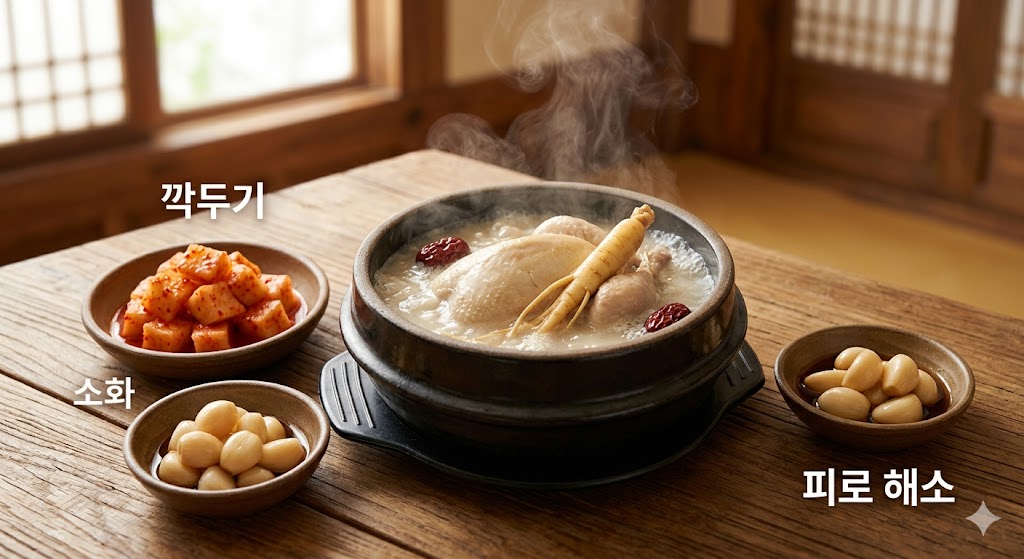
⚖️ [Comparison 2] Spicy, Refreshing Kkakdugi vs. Zingy Pickled Garlic: Who is the Ultimate Partner?
Because Samgyetang is a high-fat, high-protein food, eating it continuously can leave the palate feeling slightly greasy or heavy. We scientifically compare two representative side dishes that perfectly resolve this issue.
| Comparison Item | Sweet and Spicy Kkakdugi (Radish Kimchi) | Tangy and Zingy Pickled Garlic (or Seasoned Garlic) |
|---|---|---|
| Core Component | Diastase, Amylase (Natural digestive enzymes in radish that accelerate protein & starch breakdown) |
Allicin (Boosts the body's absorption rate of Vitamin B1 from chicken by more than 10 times) |
| Flavor Balance | Cool radish juice and spicy notes cleanly wash away the greasiness | A sour vinegar base coupled with garlic's sharpness instantly resets the palate |
| Stomach Sensitivity | Regulates gastric acid secretion to prevent symptoms of indigestion | Can irritate the gastric mucosa; gastritis patients should consume with caution |
| Recommended For | Those who want a hearty meal pairing the broth with glutinous rice | Those who want to savor the clean, pure texture of the chicken until the very end |
❌ Worst Incompatible Foods to Avoid: 'Manila Clams' and 'Ice Water'
There are critical combinations you must avoid when eating Samgyetang. Occasionally, people throw in Manila clams or shellfish to add a refreshing seafood twist to the broth. However, when the cold property of shellfish meets high-protein chicken, it easily triggers stomach aches or diarrhea in individuals with sensitive digestive tracks.
Furthermore, chugging down a glass of ice-cold water while eating piping hot Samgyetang causes the fats in the chicken to abruptly solidify inside the stomach, acting as the prime culprit that disrupts digestive enzyme functions. To protect your stomach health, it is best to accompany your meal with warm tea or lukewarm water.
4. Golden Recipes Tailored by Skill Level & Actionable Guide
Now, moving past theory, it is time to step into the kitchen, grab a pot, and recreate the absolute best flavors at home. Because culinary skills vary from person to person, we provide a customized guide tailored to your proficiency level to reduce your failure rate to zero percent (0%).
✨ [Mandatory Step] Chicken Prep That Changes the Entire Game (Success vs. Failure Benchmarks)
Before starting any recipe, failing to go through this thorough preparation will result in a heavy, gamey stench, no matter how many premium herbs you use. This is a critical checkpoint that many overlook, ruining their dish.
- Benchmark for Success: The chicken tail (a concentrated pocket of fat) must be completely lopped off, and the thick skin and fat around the neck removed. Most importantly, you must use a small brush or toothbrush to thoroughly scrub away the dark blood clots and residual innards stuck inside the ribcage under running water. This ensures the broth wells up crystal clear instead of turning murky.
- Benchmark for Failure: Merely giving the chicken a superficial rinse before tossing it straight into the pot. The fat from the tail melts into the soup, emitting a rancid, heavy grease smell, while the blood from the innards coagulates, rendering the broth dark, gritty, and unpleasant.
🍳 [Beginner Course] 1-Hour Pressure Cooker Samgyetang Using Commercial Herb Pouches
If you lack confidence in cooking and find temperature/fire control difficult, your wisest option is to use a pressure cooker (which minimizes moisture loss and forces the meat to become ultra-tender) and a pre-portioned commercial herbal medicine pouch.
- Prepare Ingredients: 1 spring chicken for Samgyetang (Size 5~6), 1 commercial herb pouch, 10 whole garlic cloves, 1 stalk of green onion, 1/2 cup of soaked glutinous rice.
- Stuffing the Chicken: Inside the cavity of the cleaned chicken, pack the soaked glutinous rice and 3–4 garlic cloves. Make a small slit in the skin of one thigh and cross the opposite leg through the slit to lock everything securely (preventing the rice from spilling out).
- Setting up the Pressure Cooker: Place the chicken, herb pouch, remaining garlic, and green onion into the pressure cooker. Pour in enough water to submerge about 2/3 of the chicken (approx. 1.2L – 1.5L).
- Heat Control and Timing: Heat on high until the pressure valve begins to rattle and spin vigorously. At that exact moment, turn the heat down to medium-low and time for exactly 15 minutes. Next, turn off the heat and let it depressurize naturally for 10 minutes. Avoiding a forced steam release is the secret to acquiring ultra-soft meat.
🍲 [Intermediate Course] Traditional Stovetop Pot Method for Clear and Deep Broth
This traditional method is for those who favor a chewy, elastic meat texture and a crystal-clear, deep broth over the heavily collapsed texture typical of a pressure cooker.
- Boil the Herbs First (The Secret): Throwing the chicken and herbs in together from the start results in overcooked, stringy, dry meat. In a large pot, bring 2L of water to a boil with milk vetch root, castor aralia, ginseng, and jujubes. Simmer on high for 20 minutes, then medium for another 20 minutes to extract the herbal broth first.
- Add Chicken and Skim Foam: Once the rich aroma of the herbs fills the kitchen, lower the prepped chicken into the pot. Maintain a high heat. As it comes to a rolling boil for the first 10 minutes, diligently skim off the bloody foam and floating fat with a ladle to achieve a brilliantly clear broth.
- Simmer Gently: Part the lid slightly, reduce the heat to medium-low, and let it simmer thoroughly for 40 minutes. Five minutes before turning off the stove, toss in the white parts of the green onion and a dash of black pepper to finish.
👑 [Expert Course] Scorched Rice Perilla Seed Samgyetang with Maximum Rich Viscosity
A specialty recipe that perfectly replicates the thick, nutty, and velvety flavors served at famous gourmet restaurants (such as Lee Woo-chul Oriental Samgyetang or Gyeongbokgung Samgyetang) right in your own kitchen.
- Crafting the Perilla Base: Instead of coarse perilla powder, mix 4 tablespoons of peeled fine perilla seed powder, 2 tablespoons of glutinous rice flour, and 1 teaspoon of toasted soy flour in a cup of lukewarm water, stirring thoroughly until completely smooth and lump-free.
- Preparing the Scorched Rice (Nurungji): Press cooked rice thinly onto a pan until both sides turn golden-brown and crispy, or prepare store-bought glutinous rice Nurungji.
- Combining and Finishing: Fully cook the chicken following the [Intermediate Course]. Ten minutes before finishing, pour the prepared perilla base into the boiling broth, stirring constantly in one direction. As the consistency thickens into a rich gravy, transfer it into a scorching hot earthenware tteokbaegi pot, lay the crispy scorched rice on top, and serve as the rice absorbs the savory broth and turns wonderfully chewy.
5. Frequently Asked Questions (Q&A) and Final Summary
We have selected and clearly answered 4 core questions that are most frequently raised when cooking or consuming Samgyetang.
❓ Detailed Q&A
Q1. Is it safe to eat the 'head' (node/crown) of the ginseng or milk vetch root when eating Samgyetang?
A. It is highly recommended to cut it off and avoid eating it. The node (top crown) of ginseng contains a high concentration of tannins, which can induce vomiting or gastrointestinal distress if consumed in large quantities, and it possesses strong properties that push heat upward to the head. It is safest to slice it off cleanly before cooking or eating.
Q2. How should leftover Samgyetang be stored safely?
A. Chicken is incredibly rich in protein and moisture, making it a prime breeding ground for food poisoning bacteria like Clostridium perfringens if left at room temperature. After your meal, transfer leftovers to an airtight container and refrigerate immediately (consume within 3 days) or debone the meat and freeze it along with the broth (keeps for up to 1 month). When reheating, ensure it is brought to a rolling boil all the way to its core.
Q3. Do store-bought Samgyetang meal kits or retort pouches offer the same nutritional value?
A. The protein and amino acid profiles remain largely identical. However, because retort products undergo high-temperature, high-pressure sterilization for long-term shelf stability, heat-sensitive nutrients like Vitamin B groups might be degraded. Furthermore, they are often heavily seasoned to taste good; thus, it is healthier to focus on eating the solid ingredients rather than drinking the entirety of the high-sodium broth.
Q4. Should people who constitutionally have a lot of body heat completely avoid Samgyetang?
A. There is no need to avoid it completely. However, you should swap out 'ginseng', which raises body heat, and increase the ratio of 'milk vetch root (hwanggi)', which helps lower blood pressure and acts as a mild diuretic. Additionally, throwing in a handful of 'mung beans' (which have a natural cooling property) will allow individuals with warm body types to reap full stamina benefits without any adverse side effects.
📌 Key Summary: Keep These in Mind!
- Chicken Choice: Choose a young spring chicken (Baeksemi) for a tender, clean taste, or a large native chicken paired with a pressure cooker for a deep, medicinal, health-tonic experience.
- The Prep Secret: Always completely eliminate the fat pocket on the tail and thoroughly scrub out the blood clots tucked inside the ribcage to completely banish gamey odors.
- Best Side Dishes: Reach for Kkakdugi if you struggle with digestion, or opt for pickled garlic if you want to supercharge your fatigue recovery speed.
- Consumption Warning: Shellfish (like Manila clams) or ice water are incompatible with rich, fatty chicken. Steer clear of them to prevent any sudden stomach aches or digestive issues.
We hope you enjoy a vibrant and healthy season amidst this year's historic summer heatwaves with a custom bowl of Samgyetang designed perfectly for your body type and family's preferences. When you head out to the grocery store today, make sure to apply the chicken freshness checks and herbal pairings you learned today!
You might also like:
The Ultimate Summer Thirst-Quencher!How to Make Rich Watermelo
The Ultimate Summer Thirst-Quencher!How to Make Rich Watermelon Juice (Tangmo Pan) at Home Like a Cafe
Essential Summer RecipeThe Ultimate Summer Thirst-Quencher!How to Make Rich Watermelon Juice (Tangmo Pan) at Home Like a CafeA professional home cafe guide to 100% replicating the sweetness and refreshment of specialty shops without adding a single drop of
zoomcook.co.kr


