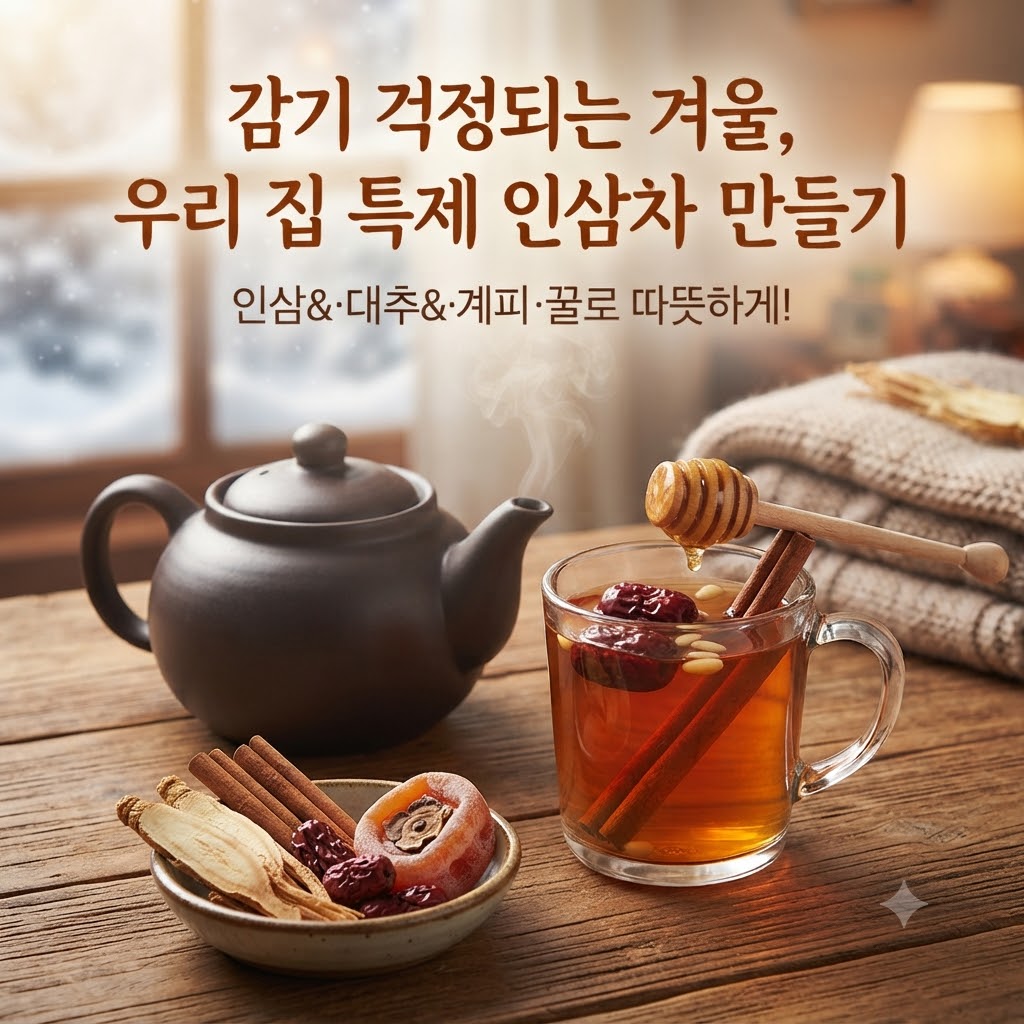
Chasing Away the Winter Chill: Our Special Homemade Ginseng Tea | A Warm, Healing Blend of Ginseng, Jujube, Cinnamon, and Honey
Whenever the weather turns crisp and chilly, nothing sounds more comforting than a hot cup of tea.
When winter arrives, I find myself reaching for one particular brew much more often than coffee: our family's special ginseng tea, slow-simmered with ginseng, dried jujubes, and cinnamon.
I originally started brewing it just to warm up my body, but the earthy, slightly bitter notes of the ginseng combined with the natural sweetness of jujubes and the aromatic warmth of cinnamon create an unexpectedly delicious harmony.
The secret lies in gently simmering ginseng, dried jujubes, and cinnamon for a long time to extract a deep flavor, then stirring in a touch of honey just before serving.
🌿 A Taste of Winter: Our Go-To Ginseng Tea
Ginseng tea often sounds intimidatingly bitter or medicinal, but simmering it with jujubes completely transforms the experience.
The jujubes naturally infuse the broth with a gentle sweetness and rich aroma, while the cinnamon adds a subtle, fragrant spice that beautifully softens the strong edge of the ginseng.
Finishing it off with a drizzle of honey brings a lovely, bittersweet balance, making it the ultimate cozy drink for cold weather.
Sipping a warm cup on a brisk morning or evening instantly soothes both body and mind.
🧾 Ingredients for Our Special Ginseng Tea
| Ingredient | Role |
|---|---|
| Ginseng | The star ingredient |
| Dried Jujubes | Natural sweetness and depth |
| Cinnamon | Warm and aromatic fragrance |
| Honey | Customizable sweetness at the end |
The ingredient list is surprisingly simple.
You only need ginseng, dried jujubes, and cinnamon sticks to build the base, and honey can be added to taste when you're ready to drink.
To brew a rich and concentrated tea using dried ginseng, a safe ratio is roughly 1 part ginseng to 20–30 parts water. 🌿 Recommended RatioIf you are simmering ginseng, dried jujubes, and cinnamon for over an hour, a great starting point is 20g of dried ginseng to about 1 liter of water.Start on high heat, and once it comes to a boil, reduce the heat to low and let it simmer slowly for about an hour. As the liquid reduces and turns a deep amber color, the flavor becomes wonderfully rich. Because the jujubes and cinnamon add extra body and flavor, a balanced recipe to start with is 20g ginseng + 5–8 dried jujubes + 5–10g cinnamon + 1L water. It’s best not to boil the honey; instead, stir it directly into your individual cup when serving. |
🔥 How to Brew a Deep, Rich Ginseng Tea
The most important element in my routine is simmering time.
Rather than boiling it quickly on high heat, I recommend bringing it to a boil first, then turning down the heat to let all the flavors steep thoroughly over time.
1️⃣ Prep the Ingredients
Clean the ginseng thoroughly, and give the dried jujubes a quick rinse under running water.
p data-ke-size="size16">Rinse the cinnamon sticks lightly as well to wash away any surface dust.
2️⃣ Combine in a Pot
I usually prefer using a heat-resistant glass pot or a ceramic pot.
Place the ginseng, dried jujubes, and cinnamon into the pot, and pour in plenty of water.
Instead of stressing over exact measurements, adjust based on how much you want to drink and your preferred strength. Since long simmering reduces the liquid, it's always best to start with generous amounts of water. (As a rule of thumb, use equal parts ginseng and jujube, or adjust to a 2:1 ratio if you prefer a stronger ginseng punch.)
3️⃣ Bring to a Initial Boil
Start by bringing the pot to a boil over high heat.
As soon as the water starts rolling and bubbling, lower the heat immediately.
4️⃣ Simmer on Low for Over an Hour
This is the core secret to our family recipe.
Keep the heat low and let it gently simmer for an hour or more.
Over time, the water deepens in color, and the combined aromas of ginseng, jujube, and cinnamon weave together into a rich, amber-hued tea.
Watching the color darken gradually is proof that all the goodness is steeping out properly.
🍯 When Should You Add Honey?
Rather than adding honey into the pot while brewing, I recommend stirring it into your cup right before drinking.
Just ladle out the hot brewed tea, add a small spoonful of honey, and stir well.
If you find the natural bitterness of ginseng a bit intense, feel free to add a little extra honey. If you love the authentic herbal flavor, just a tiny drop will do.
Also, because honey contains natural sugars, those monitoring their sugar intake should keep an eye on portion sizes.
🌰 Perfect Snacks to Pair with Ginseng Tea
Richly brewed ginseng tea is wonderful on its own, but I love pairing it with pine nuts or dried persimmons (곶감).
Taking a sip of warm, bittersweet ginseng tea followed by a bite of sweet, chewy dried persimmon creates an incredible flavor pairing.
Floating a few pine nuts on top also adds a nutty, savory depth that elevates the entire experience.
| Pairing Snack | Flavor Combination |
|---|---|
| Pine Nuts | Nutty and savory |
| Dried Persimmon | Sweet and chewy |
💪 Why Ginseng Tea is a Winter Wellness Favorite
Ginseng has long been treasured in Korea as a staple ingredient for vitality and wellness.
In particular, ginseng contains ginsenosides, a unique group of active saponin compounds known as its primary functional components.
That said, drinking a single cup of ginseng tea won't magically bulletproof you against colds or skyrocket your immunity overnight.
Instead, maintaining foundational habits—like getting adequate sleep, eating balanced meals, staying active, and washing your hands—remains the true core of winter health management.
Layering a cozy, comforting cup of tea into that routine, however, is a wonderful way to notice a positive shift in how you feel.
While ginseng tea isn't a medical cure-all, I've genuinely noticed that drinking it consistently helps me feel less affected by the cold and noticeably reduces seasonal bugs.
I recommend enjoying it as a soothing ritual to stay hydrated and support your everyday wellness during the coldest months.
☕ At-a-Glance: How to Make Our Special Ginseng Tea
| Step | Instructions |
|---|---|
| ① | Clean and prep the ginseng, jujubes, and cinnamon. |
| ② | Place the ingredients and water into a glass or ceramic pot. |
| ③ | Bring to a boil over high heat. |
| ④ | Once boiling, turn the heat down to low. |
| ⑤ | Simmer slowly for 1+ hour to extract a deep infusion. |
| ⑥ | Stir in honey to taste when serving. |
| ⑦ | Serve warm alongside pine nuts or dried persimmons. |
⚠️ Things to Keep in Mind
Ginseng isn't a one-size-fits-all ingredient where more is always better.
If you are currently taking regular medications or undergoing treatment for a specific medical condition, it's always safest to consult a professional before adding regular ginseng consumption to your routine.
While caffeine-free, individuals sensitive to ginseng might find it interferes with sleep if consumed late at night, so it's wise to test how your body responds initially.
Above all, enjoying a moderate amount warmly is much better than overdoing it just because you brewed it strong.
🍂 Embracing the Slow Moments of Winter
Real winter wellness doesn't come from grand, complicated gestures.
Drinking a glass of warm water in the morning, eating regular meals, taking a short walk when the weather permits, and slowly sipping a warm cup of tea in the evening.
It's these tiny habits that accumulate and help us navigate the winter season in good health.
Among them, our special homemade ginseng tea—slow-simmered for over an hour with ginseng, jujubes, and cinnamon—is the one I crave most on freezing days.
Brew a batch until it reaches a deep amber glow, add a brush of honey, and set out a few dried persimmons or pine nuts.
May this winter find you a little warmer in both body and soul with a comforting cup of ginseng tea. ☕🌿
📌 Frequently Asked Questions|Ginseng Tea FAQ
Q. How long should I simmer ginseng tea?
This recipe brings the water to a boil on high heat before lowering it to simmer slowly for 1 hour or more. The exact concentration can vary depending on your water-to-ginseng ratio.
Q. When is the best time to add honey?
Instead of boiling it into the tea, it's much easier to add honey directly to your individual cup when serving. (Plus, excessively boiling water can diminish the beneficial properties of honey.)
Q. Can I use red ginseng instead of fresh/dried raw ginseng?
You can, but red ginseng and raw ginseng undergo different processing methods, resulting in distinct flavor profiles and aromas. If you want the exact taste of this recipe, raw/dried ginseng is recommended.
Q. Why add jujubes and cinnamon to ginseng tea?
Jujubes contribute a natural sweetness and body, while cinnamon adds a warm fragrance that softens the sharp, bitter bite of the ginseng.
This post is shared for informational and culinary purposes to help you enjoy delicious ginseng tea. It does not constitute medical advice for the prevention or treatment of specific conditions. Always consider your personal health status and any medications you may be taking.
Related Posts You Might Enjoy:
Ever Heard of Korean Jelly? The Story of 'Gwapyeon,' a Royal Desse
Ever Heard of Korean Jelly? The Story of 'Gwapyeon,' a Royal Dessert from the Joseon Dynasty
Meta DescriptionGwapyeon is a traditional Korean fruit jelly that dates back to the Joseon Dynasty. This guide covers everything from its history and varieties to the unique flavors, health benefits, and simple tips on how to make and store it at home.Ever
zoomcook.co.kr


