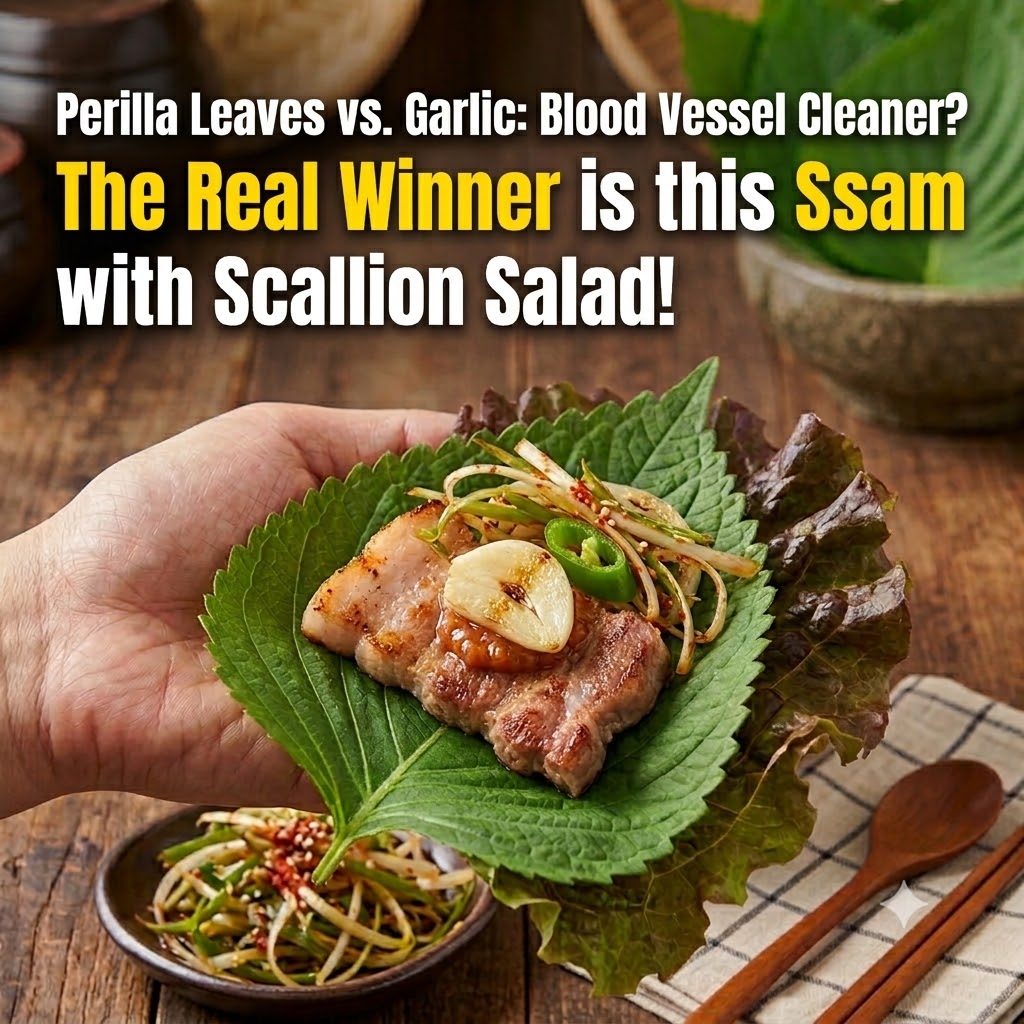
Are Perilla Leaves Real Blood Vessel Cleaners? The Truth Behind the Hype vs. Garlic & How to Eat Them Right
At the local grocery store, you can grab a bunch for just a couple of dollars. It’s the ultimate leafy green that no Korean pork belly (samgyeopsal) barbecue feels complete without: perilla leaves (kkaennip).
Did you know, however, that these humble leaves have recently caught the attention of international researchers regarding vascular health?
Online, you can often run into claims like this:
“Are perilla leaves even better than garlic at clearing out vascular waste and cholesterol?”
Is this really true? Do these everyday greens—not expensive health supplements or specialized pills—possess hidden powers we never knew about?
Actually, human clinical studies using perilla leaf powder have observed a decrease in serum oxidized LDL levels. However, this does not mean perilla leaves literally wash away built-up waste in your blood vessels or outperform garlic.
Today, let's take a closer look at where these studies came from, which key components are gaining attention, and how you can incorporate them smartly into your everyday diet.
1. Where Did the Claim That Perilla Leaves Benefit Vascular Health Begin?
To understand where this discussion comes from, we need to look back at a study published in 2020 in the international peer-reviewed journal Molecules.
Paper Title
Intake of Alpha-Linolenic Acid-Rich Perilla frutescens Leaf Powder Decreases Home Blood Pressure and Serum Oxidized Low-Density Lipoprotein in Japanese Adults
This study explored how consuming perilla leaf powder rich in alpha-linolenic acid affects home blood pressure and serum oxidized LDL in Japanese adults.
The researchers followed 60 Japanese adults over a six-month period to examine changes related to perilla leaf powder consumption. The results showed a significant decrease in serum oxidized LDL levels in the group that consumed the perilla leaf powder.
Important Context to Properly Understand the Findings
- The participant pool was relatively small, consisting of 60 individuals.
- The study used a specific processed perilla leaf powder, not standard raw perilla leaves.
- While a change in serum oxidized LDL levels was observed, it does not mean arterial plaque was physically cleared away.
- The study did not directly prove that perilla leaves are superior to garlic.
Therefore, this study is meaningful because it explores how perilla leaves can influence biomarkers related to vascular health. However, it cannot be generalized to mean everyone will experience the exact same effects simply by eating perilla leaves.
Check out the original research paper
View paper on PubMed Central (U.S. National Institutes of Health)
Paper DOI: 10.3390/molecules25092099
2. What Does "Clearing Waste from Blood Vessels" Actually Mean?
When people hear terms like "blood vessel cleaning," they often imagine grease sticking to the walls of their pipes being washed away by a certain food.
In reality, cardiovascular health is much more complex.
When LDL cholesterol in the blood increases or various changes occur within the vascular walls, atherosclerotic plaques can form. Oxidation of LDL plays a critical role in this process.
Oxidized LDL (Ox-LDL) refers to LDL particles that have undergone oxidative modification. While oxidized LDL is studied in connection with the atherosclerotic process, it is not identical to general LDL cholesterol levels.
The observation of reduced oxidized LDL levels in the perilla leaf study is an intriguing finding. Even so, it should not be directly interpreted as cholesterol accumulated in the blood vessels being washed away.
Based on current evidence, we cannot conclude that perilla leaves reduce atherosclerotic plaque or prevent heart attacks and strokes.
3. What Nutrients Are Found in Perilla Leaves?
① Alpha-Linolenic Acid (ALA)
Alpha-linolenic acid is a plant-based omega-3 fatty acid. It is abundant in perilla oil and flaxseed, and serves as an important component in perilla-related foods.
In the study using perilla leaf powder, participants showed an increase in alpha-linolenic acid levels within their red blood cell membranes. However, since perilla oil and perilla leaves are different food items, the nutritional characteristics of perilla oil cannot be applied wholesale to the leaves.
② Rosmarinic Acid and Polyphenols
Perilla leaves contain various phytochemicals such as rosmarinic acid, luteolin, and apigenin. These compounds are widely studied for their antioxidant properties.
However, just because a specific compound demonstrates antioxidant activity in a laboratory setting does not mean eating perilla leaves will directly cleanse a person's blood vessels.
③ Beta-Carotene and Other Carotenoids
Perilla leaves also contain carotenoids, including beta-carotene, which the body can convert into vitamin A.
Perilla leaves are a nutrient-dense vegetable that offers a mix of vitamins and phytochemicals. Rather than looking for a single "miracle nutrient," it is much more realistic to view them as part of a consistent habit of eating a variety of vegetables.
4. So, Are Perilla Leaves Better Than Garlic?
The short answer is: based on current evidence, it is difficult to declare one categorically superior to the other.
Garlic is also a food backed by substantial research regarding blood pressure and blood lipid levels. A 2025 systematic review and meta-analysis on garlic published in Nutrition Reviews analyzed 108 randomized controlled trials involving a total of 7,137 participants.
This analysis associated garlic intake with improvements in several cardiovascular risk markers, including total cholesterol, LDL cholesterol, triglycerides, and blood pressure. However, the exact form of garlic, dosage, duration, and baseline health status of participants varied across studies.
Check out related research data on PubMed
| Category | Perilla Leaves | Garlic |
|---|---|---|
| Key Compounds | Alpha-linolenic acid, polyphenols, carotenoids | Allicin and other sulfur compounds |
| Research Focus | Oxidized LDL and related biomarkers | Blood pressure and select lipid profiles |
| Things to Note | Human clinical studies remain limited | Formats and outcomes vary across studies |
There are no robust clinical trials directly comparing perilla leaves and garlic to determine which is more effective. Therefore, rather than assuming one is universally superior, it is best to incorporate both into a balanced, well-rounded diet.
5. How Should You Eat Perilla Leaves? Maximizing Flavor and Nutrition
Hearing that perilla leaves are healthy might make you feel like you need to gorge on them raw every day, but that isn't necessary.
The human study we discussed earlier used a specific perilla leaf powder. It is not yet definitively proven whether raw perilla leaves, steamed perilla leaves (jjim), or pickled perilla leaves (jangajji) offer the highest vascular health benefits.
Method 1. Raw Perilla Leaf Wraps (Ssam)
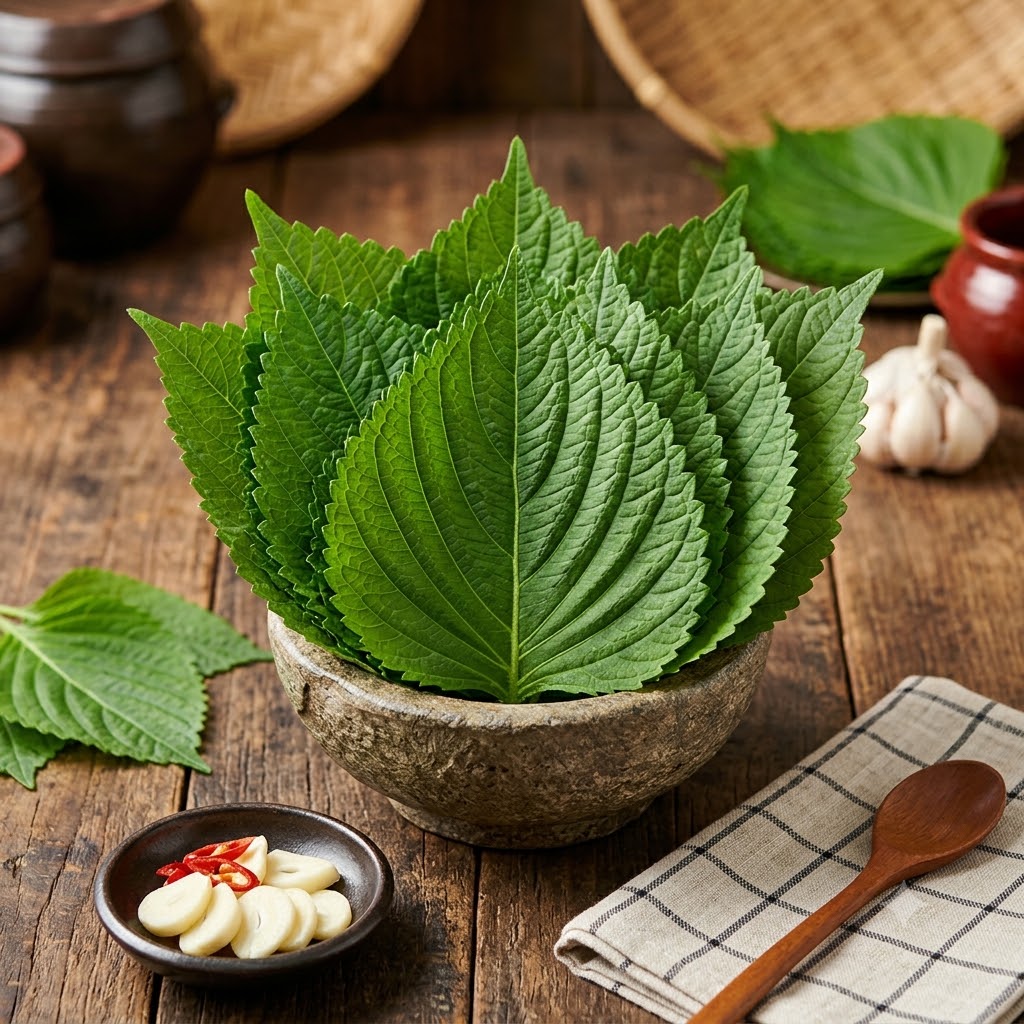
Accompanying meat dishes with perilla leaves is an excellent choice not only for taste, but for meal composition. Their distinct fragrance enhances the meat's flavor while helping you boost your vegetable intake.
- Perilla leaves + lean pork or chicken
- Perilla leaves + a slice of garlic + fresh onions
- Perilla leaves + tofu + a small dab of ssamjang (soybean paste sauce)
Tip for enjoyment: Wash perilla leaves thoroughly under running water on both sides and shake off excess moisture before eating. Use ssamjang and condiments sparingly to avoid excessive sodium intake.
Method 2. Perilla Leaf and Tofu Salad (Dubu-Muchim)
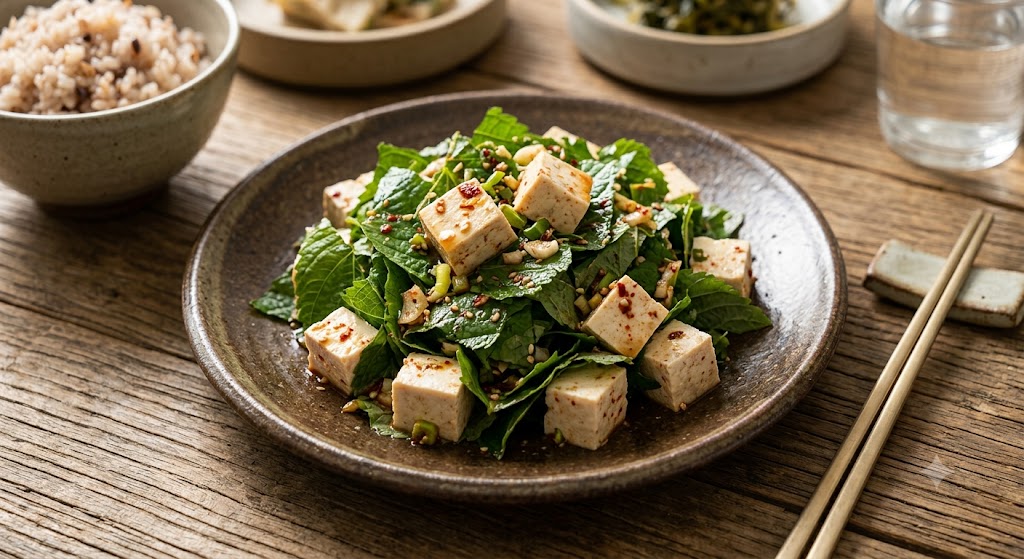
If eating raw perilla leaves feels too repetitive, try tossing them with tofu. Tofu provides plant-based protein, while perilla leaves add aroma and a wealth of micronutrients.
Ingredients
- 1/2 block of tofu
- 10 perilla leaves
- A pinch of minced garlic
- 1 tsp sesame oil
- 1 tsp soy sauce
- A pinch of toasted sesame seeds
Instructions
- Briefly blanch the tofu in boiling water, drain well, and mash it.
- Wash the perilla leaves, remove excess water, and slice them into thin strips.
- Combine the mashed tofu and sliced perilla leaves, then add minced garlic, soy sauce, and sesame oil.
- Garnish with sesame seeds to finish.
Avoid squeezing the tofu completely dry so it doesn't turn out chalky; leaving a little moisture keeps the texture soft. Start with a modest amount of soy sauce and add more gradually.
Method 3. Perilla Leaf Rolled Omelet
If you love the signature herbaceous aroma of perilla leaves, try cooking them into eggs.
Ingredients: 3 eggs, 5-6 perilla leaves, a handful of finely chopped onions, black pepper
- Beat the eggs and mix in finely chopped perilla leaves and onions.
- Add a light pinch of salt and stir well.
- Lightly oil a pan and cook slowly over low heat.
- Once the egg mixture is half-cooked, gently roll it up to cook through to the center.
Eggs supply protein while perilla leaves impart a fragrant twist. However, keep in mind that this specific combination itself is not clinically proven to lower cholesterol.
Method 4. Steamed Perilla Leaves (Kkaennip-jjim)
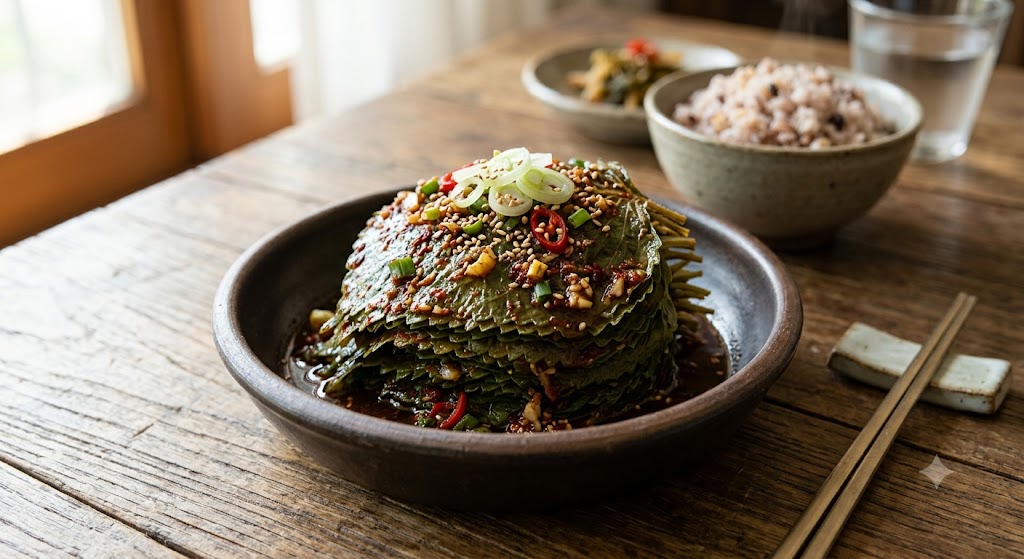
Steamed perilla leaves are a familiar side dish in Korean households. Because heavy amounts of soy sauce and sugar can drive up sodium and added sugars, it's wise to moderate the seasoning.
Ingredients: 20 perilla leaves, 1 tbsp soy sauce, 2 tbsp water, 1/2 tsp minced garlic, a pinch of chili powder (gochugaru), a few drops of sesame oil
- Mix soy sauce, water, minced garlic, and chili powder to create the seasoning sauce.
- Lightly brush the sauce between layers of perilla leaves.
- Steam briefly in a pot or steamer basket.
- Once the leaves become tender, turn off the heat and add a few drops of sesame oil.
Steaming them for too long will make the leaves mushy and dull their aroma. Apply the sauce thinly rather than drowning them to let the natural flavor of the perilla shine through.
Method 5. Perilla Leaf Pesto
If you eat perilla leaves frequently, sticking exclusively to wraps and side dishes can get repetitive. Try making perilla leaf pesto for a modern twist.
Ingredients: A handful of perilla leaves, 20g walnuts or almonds, 2-3 tbsp olive oil, 1/2 clove of garlic, a splash of lemon juice
- Wash the perilla leaves thoroughly and remove all moisture.
- Blend together the perilla leaves, nuts, olive oil, garlic, and lemon juice until smooth.
- Season with a small pinch of salt if needed.
- Spread sparingly over whole-grain toast, grilled vegetables, or tofu.
This creates a wonderful fusion of perilla fragrance, nutty richness, and olive oil smoothness. Because olive oil and nuts are calorie-dense, be mindful of portion sizes.
6. Foods That Pair Well with Perilla Leaves
While eating specific foods together doesn't magically amplify vascular health effects overnight, combining ingredients with diverse nutritional profiles helps balance out your overall meals.
Perilla Leaves + Fatty Fish
Fish like mackerel, sardines, and salmon provide EPA and DHA omega-3 fatty acids. The herbal notes of perilla leaves cut through richness and complement fish wonderfully in cooking.
Try pairing grilled mackerel with perilla leaves or wrapping grilled fish in them. Note, however, that the alpha-linolenic acid in perilla leaves and the EPA/DHA in fish are distinct fatty acids, and eating them together does not multiply blood-cleansing effects.
Perilla Leaves + Tofu & Beans
Beans and tofu supply plant-based protein. If your diet leans heavily toward red meat, incorporating tofu or legumes diversifies your protein sources.
Perilla Leaves + Tomatoes & Bell Peppers
Tomatoes and bell peppers provide vitamin C and various plant nutrients. Tossing them together into a salad with perilla leaves allows you to enjoy multiple types of vegetables at once.
Try cutting perilla leaves into thin ribbons, tossing them with tomatoes, bell peppers, and onions, and dressing lightly with olive oil and lemon juice.
Perilla Leaves + Garlic
Garlic is a food associated with positive shifts in blood pressure and lipid profiles across select clinical trials and meta-analyses. Adding a little garlic to a perilla leaf wrap offers a fantastic harmony of flavor and aroma.
However, consuming excessive amounts of garlic doesn't scale up benefits proportionally, and you should scale back if you experience stomach irritation.
7. Is Pickled Perilla Leaf (Jangajji) Something You Should Eat More of?
Pickling is a classic way to preserve perilla leaves for a long time. While they taste amazing with rice and stimulate appetite, you need to watch the seasoning if you care about health.
Soy-pickled perilla leaves can be very high in sodium. Individuals who need to monitor their blood pressure or kidney health should exercise extra caution.
When enjoying jangajji, rather than eating large portions at once, treat them as a moderate side dish and balance out the sodium levels of your other dishes accordingly.
Furthermore, remember that studies using perilla leaf powder do not validate the healthfulness of pickled variants. Cooking and preservation methods alter the exact compounds and sodium levels you ultimately ingest.
8. Things to Keep in Mind Before Eating Perilla Leaves
- Wash thoroughly: Clean both sides of the leaves carefully under running water.
- Control seasoning: Moderate the amount of salt and soy sauce in jangajji and steamed dishes.
- Eat a variety: Instead of relying solely on perilla leaves, combine them with other vegetables, legumes, whole grains, and fish.
- Do not replace medical treatment: If you have high cholesterol or a diagnosis of atherosclerosis, do not attempt to manage it solely with perilla leaves or garlic.
In particular, never arbitrarily reduce or stop prescribed cholesterol-lowering medication just because you're eating more perilla leaves.
9. So, What Is the Best Way to Enjoy Perilla Leaves?
Claiming that perilla leaves literally "cleanse" blood vessels is medically inaccurate. Even so, the observation of reduced oxidized LDL in small-scale human clinical trials using perilla leaf powder is certainly fascinating.
The key is not to treat any single food as a miracle cure, but rather to distinguish between what clinical research actually shows and what remains unproven.
If you're looking for practical, everyday ways to incorporate them, raw perilla wraps, tofu-perilla salads, and perilla rolled omelets are great starting points. They require no special ingredients and fit naturally into everyday meals.
When enjoying perilla leaves, pair them with fish or legumes, and keep salt and soy sauce usage balanced. Sticking to these sustainable dietary habits is far more realistic than pinning all your hopes on a single vegetable.
Key Takeaways
Perilla leaves are not a miraculous blood-washing food. However, they are a nutrient-dense vegetable backed by promising research regarding vascular health indicators. Incorporating them into a balanced diet alongside a variety of vegetables and protein sources is the most practical path forward.
Why not add some perilla leaves, tofu, fish, or other fresh veggies to your dinner table tonight?
※ This article provides general information on food and nutrition and does not replace professional medical diagnosis or treatment.
References
- Hashimoto M, et al. Intake of Alpha-Linolenic Acid-Rich Perilla frutescens Leaf Powder Decreases Home Blood Pressure and Serum Oxidized Low-Density Lipoprotein in Japanese Adults. Molecules. 2020;25(9):2099.
View Original Paper - Systematic review and meta-analysis on garlic supplementation and cardiovascular risk markers. Nutrition Reviews.
Check Research on PubMed
These studies investigated the components and select cardiovascular risk biomarkers of perilla leaves and garlic. They should not be interpreted as direct comparative trials proving superiority or the direct removal of plaque inside blood vessels.
Related Articles :
The Ultimate Cravings Fix: Yeolmu Bibim Guksu with Blended Pears f
The Ultimate Cravings Fix: Yeolmu Bibim Guksu with Blended Pears for a Sweet, Tangy, and Refreshing Kick!
The Ultimate Cravings Fix: Yeolmu Bibim Guksu with Blended Pears for a Sweet, Tangy, and Refreshing Kick!After indulging in greasy foods like fried chicken, pork belly, savory pancakes, or deep-fried dishes, you might suddenly find yourself craving somethi
zoomcook.co.kr


