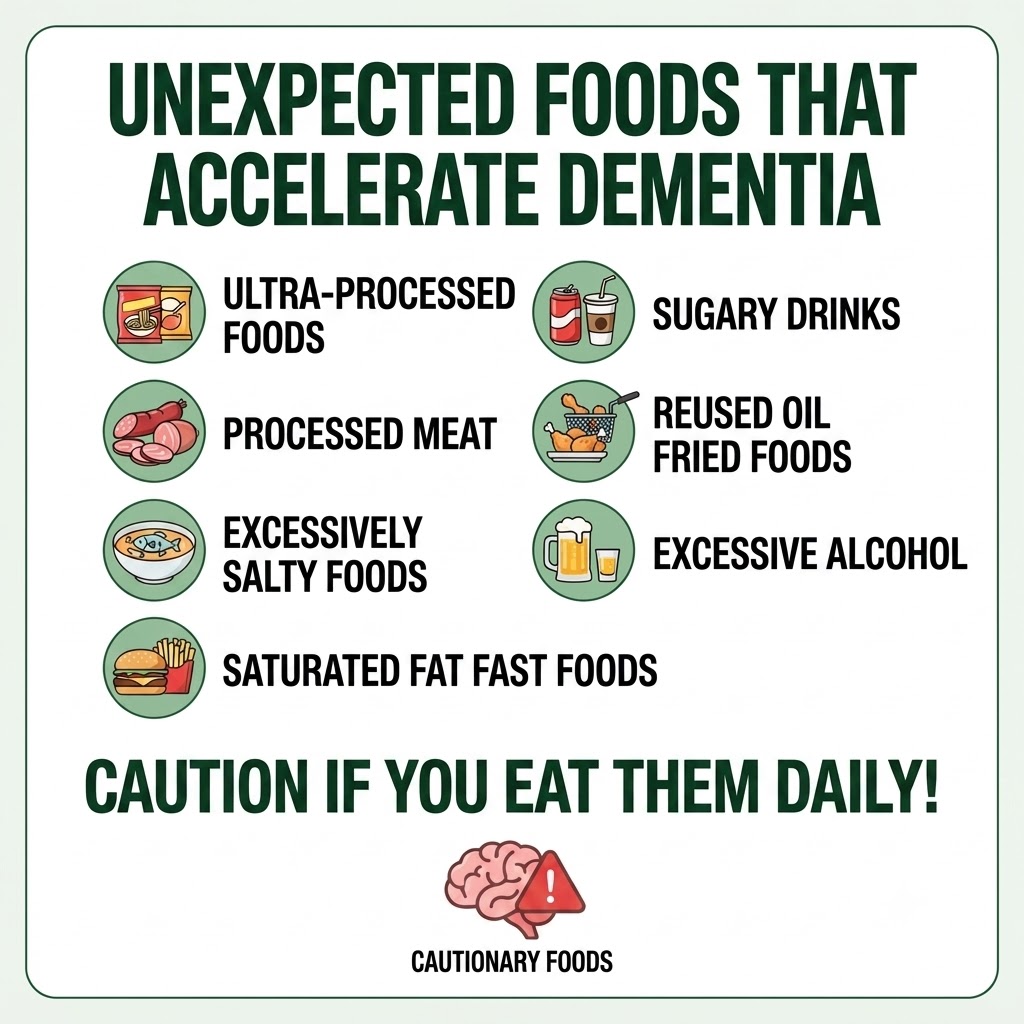
7 Unexpected Foods That May Accelerate Dementia—Be Careful If You Eat These Every Day
One of the most feared conditions as we age is dementia. While many people think of dementia as a simple part of aging, recent research shows that lifestyle habits—especially the food we eat every day—can have a significant impact on brain health.
Of course, eating a single specific food will not cause dementia. However, studies consistently show that long-term poor dietary habits can worsen cerebrovascular health, increase chronic inflammation, and raise the risk of cognitive decline and memory loss.
In this post, based on the World Health Organization (WHO), the Alzheimer’s Association, and recent nutritional studies, we will summarize 7 types of foods that may increase the risk of dementia, explained in an easy-to-understand way.
Why is food related to dementia?
Although the brain accounts for only about 2% of body weight, it is a highly active organ that consumes approximately 20% of the body's daily energy.
The brain receives oxygen and nutrients through blood vessels; if vascular health deteriorates or chronic inflammation persists, brain cells are directly affected.
Recent research suggests the following factors are linked to an increased risk of dementia:
- Chronic inflammation
- Rapid blood sugar spikes
- Insulin resistance
- High blood pressure (Hypertension)
- Obesity
- Dyslipidemia
- Vascular damage
Most of these issues are deeply related to our daily eating habits.
Dementia is significantly influenced by lifestyle habits rather than just genetics. Maintaining a healthy diet, exercising, managing blood pressure and diabetes, and quitting smoking are key elements in prevention.
① Ultra-Processed Foods
One of the most researched areas recently is Ultra-Processed Foods (UPF).
Ultra-processed foods refer to products containing large amounts of artificial flavors, emulsifiers, sweeteners, and additives, rather than just being processed.
Representative Examples
- Potato chips
- Snack foods/cookies
- Instant noodles
- Frozen fast food
- Processed meats
- Ready-to-eat meals
- Carbonated drinks
A study from the University of São Paulo found that higher consumption of ultra-processed foods was associated with a faster rate of cognitive decline.
This is analyzed to be a combination of nutritional imbalance, chronic inflammation, and deteriorating vascular health caused by these additives and high-processing methods.
While eating ultra-processed foods once or twice a week may not be a major problem, it is highly recommended to reduce habits where they are consumed as daily staples.
② Sugary Drinks
Sweet drinks can be worse for brain health than you might think.
Cola, soda, fruit-flavored drinks, energy drinks, and heavily sweetened coffee cause rapid spikes in blood sugar.
Repeatedly high blood sugar levels increase insulin resistance, which is not only linked to Type 2 diabetes but is also reported to be associated with cognitive decline.
Who should be especially careful?
- Those aged 50 and over
- People with diabetes
- People with obesity
- People with hypertension
- Those with abdominal obesity
While fruit itself is a healthy food, fruit drinks with added sugar are nutritionally different from fresh fruit.
③ Processed Meats
Processed meats like ham, sausage, bacon, and salami are recommended for limited consumption even by the World Health Organization (WHO) and the International Agency for Research on Cancer (IARC).
Processed meats often contain high levels of sodium, saturated fats, and preservatives.
These habits can raise blood pressure and deteriorate vascular health, eventually negatively affecting cerebral blood vessels.
- Chicken breast instead of ham
- Boiled eggs instead of sausages
- Fish instead of bacon
- Choose whole cuts of meat
④ Foods Fried in Reused Oil
Rather than fried chicken or tempura themselves, the bigger problem is cooking oil that has been reused multiple times.
Repeatedly heating oil leads to oxidation, which increases harmful oxidative compounds.
This oxidative stress is known to deteriorate vascular health and increase inflammatory responses in the body.
This issue can be more pronounced with street food or certain restaurants that frequently reuse oil.
You don't need to ban fried food entirely, but it is helpful to cook at home with fresh oil or use an air fryer.
⑤ Excessively Salty Foods
Many diets contain high amounts of sodium in soups, stews, kimchi, and salted fermented foods. While salt is an essential nutrient for our body, consuming too much can raise blood pressure and strain vascular health.
In preventing dementia, it is crucial to keep cerebral blood vessels healthy. Hypertension is a representative risk factor for vascular dementia and has also been linked to an increased risk of Alzheimer’s disease.
- The habit of drinking all the soup broth
- Instant noodle broth
- Salted fermented seafood (Jeotgal)
- Salty side dishes
- Processed foods
Eating mainly the solids and leaving the broth can significantly reduce your sodium intake.
⑥ Excessive Alcohol Consumption
You may have heard that moderate drinking is good for health. However, there is a more cautious view on alcohol today than ever before.
Excessive drinking promotes brain cell damage and can cause memory loss; long-term, persistent consumption is consistently reported to increase the risk of dementia.
In particular, binge drinking increases blood pressure, cardiovascular disease, and the risk of cerebral vessel damage, so extra caution is needed.
When it comes to dementia prevention, the best alcohol habit is to "drink as little as possible."
⑦ Fast Food High in Saturated Fat
This doesn't mean a hamburger is inherently evil. The problem is the habit of frequently eating hamburgers, french fries, fried chicken, and pizza.
These foods are often high in saturated fat and calories, which can lead to obesity, dyslipidemia, and hypertension, ultimately affecting brain vascular health.
If you do eat fast food, it is more important to consume vegetables alongside it and reduce the frequency of consumption.
So, what should you eat?
The diet most studied for dementia prevention is the MIND Diet. The MIND diet combines elements of the Mediterranean diet and the DASH diet and is known for its potential to help maintain cognitive function.
| Recommended Foods | Why |
|---|---|
| Leafy Green Vegetables | Rich in antioxidants |
| Berries | Contains flavonoids |
| Fatty Fish | Omega-3 fatty acids |
| Nuts | Provides unsaturated fatty acids |
| Olive Oil | Helps cardiovascular health |
| Legumes (Beans) | Plant-based protein |
| Whole Grains | Helps stabilize blood sugar |
Essential Habits for Life After 50
- Eat plenty of vegetables daily
- Eat fish at least 1-2 times a week
- Drink water instead of sugary drinks
- Reduce ultra-processed foods
- Eat a handful of nuts daily
- Reduce consumption of soup/stew broth
- Avoid overeating
- Exercise regularly
- Manage blood pressure and blood sugar
- Quit smoking
Frequently Asked Questions
Q. Is coffee bad for dementia?
Moderate coffee consumption is generally not considered a problem for most healthy adults. However, it is better to avoid coffee with excessive sugar and syrup.
Q. Should I avoid eggs?
Not at all. Eggs contain high-quality protein and choline, and consuming them appropriately as part of a balanced diet can be beneficial.
Q. Does changing diet alone prevent dementia?
No. Dementia is a disease caused by a complex combination of factors, including genetics, age, exercise, sleep, blood pressure, diabetes, and smoking. A healthy diet is just one of many important elements in prevention.
Conclusion
There is no "single food" that causes dementia. However, long-term dietary habits clearly affect brain health.
Frequent consumption of ultra-processed foods, sugary drinks, processed meats, fried foods using reused oil, overly salty foods, excessive alcohol, and fast food high in saturated fat can worsen vascular and metabolic health, which is linked to factors that increase dementia risk.
Conversely, a balanced diet centered around vegetables, fruits, whole grains, fish, nuts, and olive oil, combined with regular exercise, sufficient sleep, and management of blood pressure and blood sugar, can help protect brain health.
Dementia does not happen overnight.
The small choices you make at the dinner table today can determine your brain health 10 or 20 years from now.
※ Major References
- World Health Organization (WHO) Guidelines for Dementia Prevention
- Alzheimer's Association Diet and Dementia Prevention Materials
- National Institutes of Health (NIH) Research on Nutrition and Cognitive Function
- MIND Diet Research and Related Meta-analyses
- International Studies on Ultra-processed Foods and Cognitive Decline
| #Dementia #DementiaPrevention #BrainHealth #HealthyDiet #CognitiveHealth #MemoryCare #HealthyAging #WellnessTips #HealthyEating #UltraProcessedFoods #MINDdiet #MediterraneanDiet #VascularHealth #HypertensionAwareness #HealthyHabits #HealthBlog #SeniorHealth #HealthyLifestyle #NutritionFacts #BrainBoosting |


